
The Myrtle Bushes
June’s Specimen of the Month is kindly written by Vernon Burgess, tour guide.
Each month we feature two blogs by volunteers, one on an object in the Palace and another on a plant from the garden. There is no set format so please feel free to send in your ideas if you would like to contribute. It is an excellent way to learn more about the Palace and share what interests you with others!
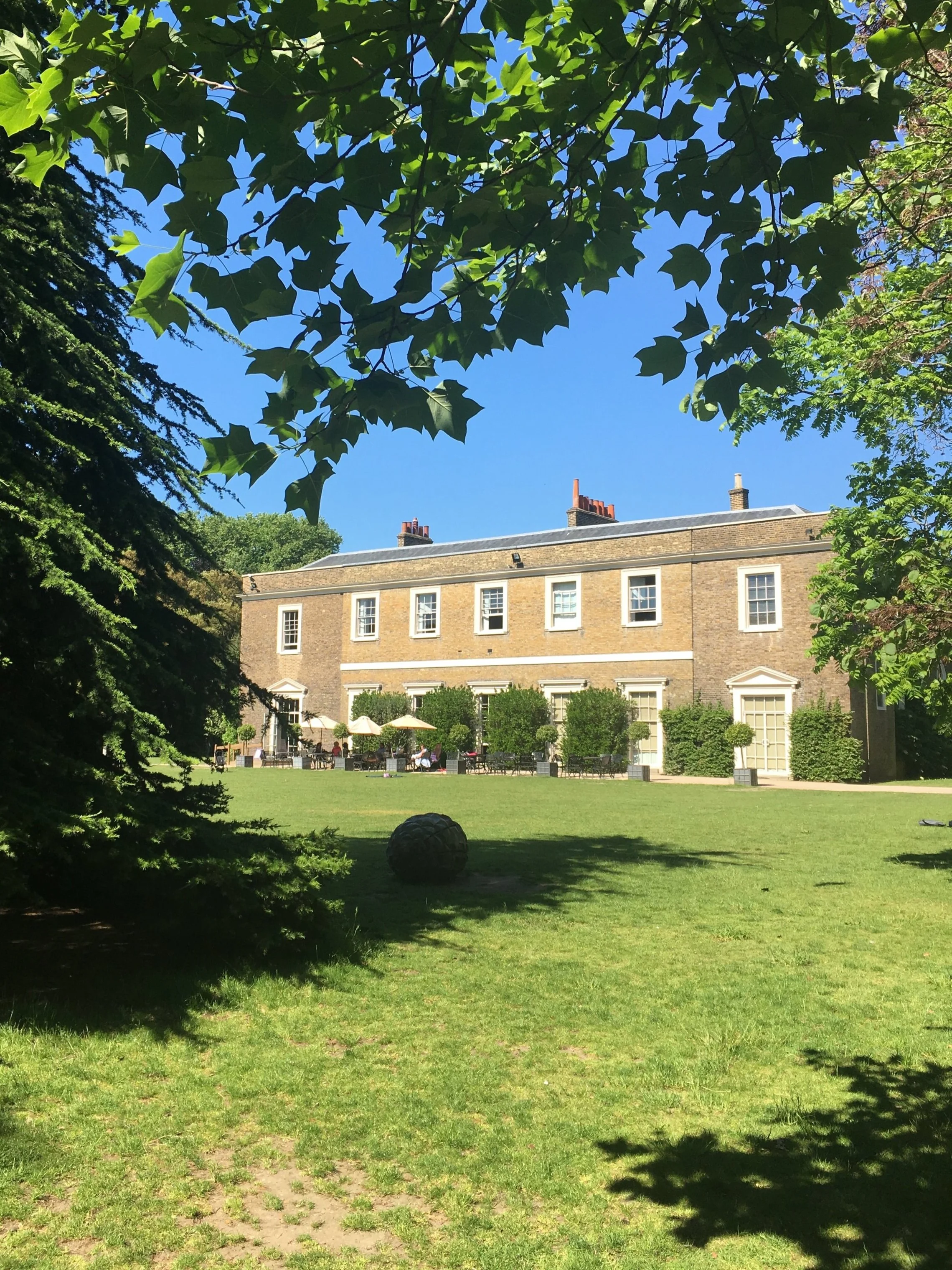
The myrtle bushes lining the cafe. Myrtle is an evergreen, typically growing to 5 metres tall and known for its fragrant essential oil.
It is time to get the story finally straight on the Fulham Palace website about the myrtle bushes outside the café. The journal ‘Notes and Queries’ tried to set the record straight many years ago. Even then, there were rumours that twisted the true story.
Since Queen Victoria’s reign, all the wedding bouquets carried by the Royal brides have had their contents and details listed in court circulars. This information is regularly published in the Times newspaper. Interestingly, Queen Victoria’s bouquet is not listed as containing myrtle.

The myrtle bushes against the Palace wall. On the terrace in the pots you can see bay trees too.
The actual story seems to be thus:
Myrtle was carried in the bouquet by the Royal Princess Victoria, the eldest daughter of Queen Victoria, at her wedding in 1858. The seventeen-year-old Princess Victoria married Frederick William, the Crown Prince of Prussia, at Queen Victoria’s insistence, at the Chapel Royal in St. James’s Palace, on 25 January 1858. Following the ceremony, the Queen herself commanded that the shrub should be propagated for future use.
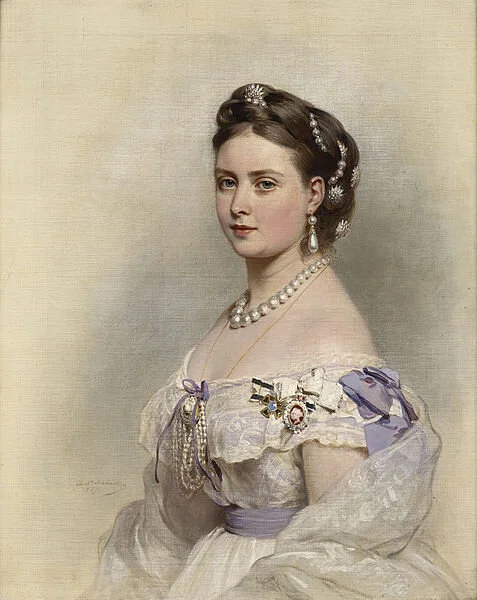
The Princess Victoria, Princess Royal, as Crown Princess of Prussia in 1867. Franz Xaver Winterhalter, 1867, oil on canvas, 80.8 x 64.6 cm, Royal Collection, RCIN 404906.
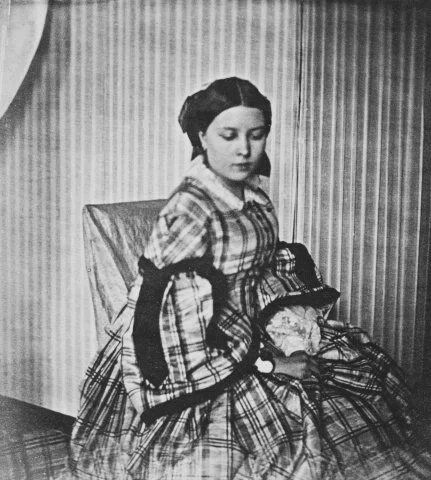
Queen Victoria, Empress of Prussia, photographed in 1859. Her title of Empress made her technically outrank her mother, Queen Victoria of the United Kingdom, which spurred her to self-designate the title Empress of India to equal her daughter.
The confusion, therefore, comes simply from two people sharing the same name, in the same household. Orange blossom is the preferred flower of Queen Victoria of the United Kingdom, as is the white-flowered Heather. So yes, the myrtle bushes at Fulham Palace are most likely from that wedding bouquet and could well have been given to the Bishop (who is Dean of the Chapel Royal) for propagation and spreading around, just as he spread the gospel around the country.
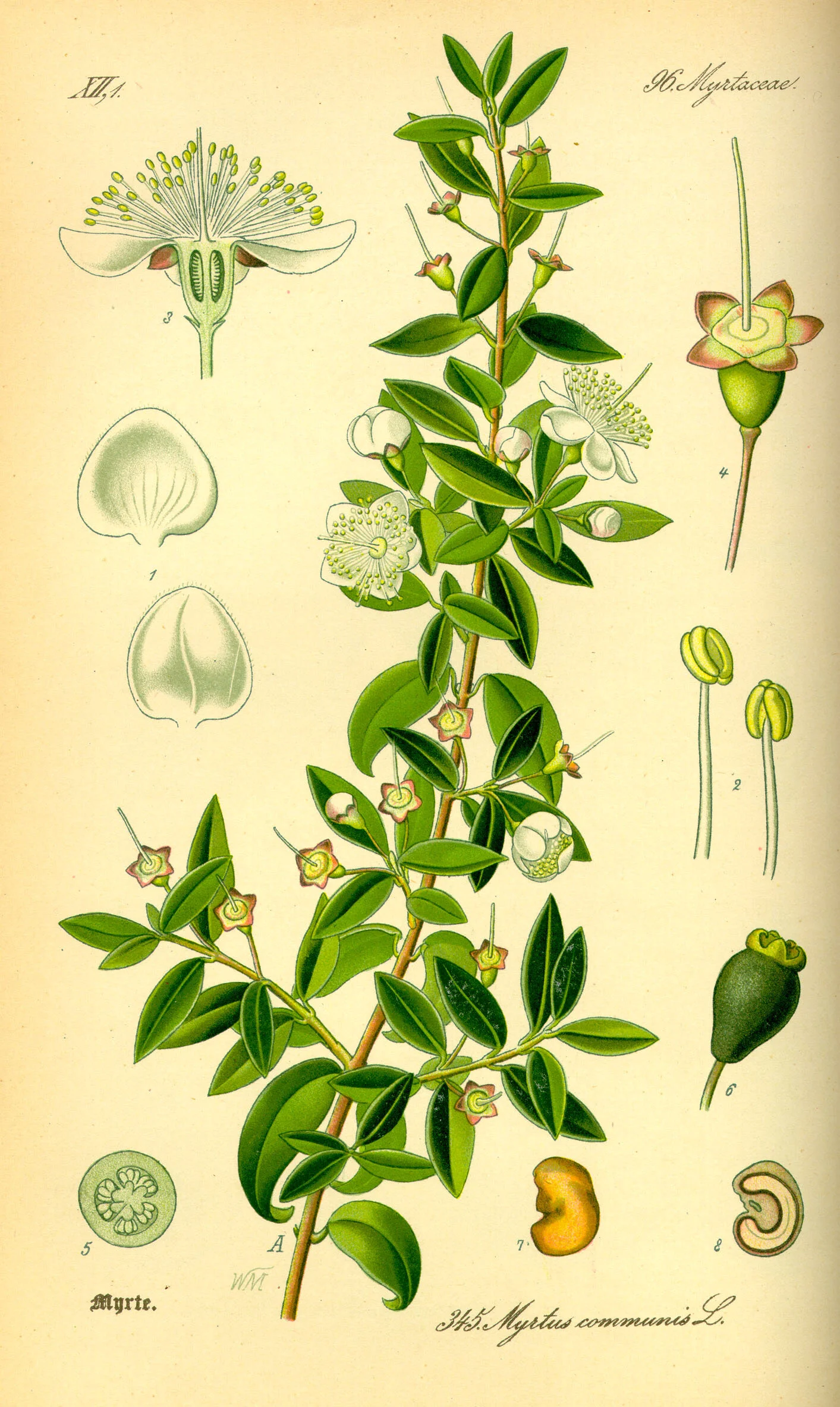
Myrtus communis, from the family Myrtaceae. Illustration book source: Prof. Dr. Otto Wilhelm Thomé, Flora von Deutschland, Österreich und der Schweiz, 1885, Gera, Germany
Now, myrtle is widely used as an ornamental plant in gardens and parks. It is often used as a hedge plant due to its small leaves, clean shearing and fragrance. It was indispensable to Roman gardens for its sacred associations to the Goddess Aphrodite.
It is also considered the flower of love, marriage, and lasting fertility, so a sprig of it in a wedding is not unusual. The royal evergreen woody shrub is sourced from a special place: Queen Victoria's own 170-year-old garden at Osborne on the Isle of Wight. Queen Victoria is said to have bought back the cutting from Germany where it is tradition to have it in wedding bouquets and grow it at Osborne.
Its history with the Queens has added yet another layer to its history, making the plants a perfect fit for the Palace.