
Every month we feature two blogs written by volunteers, one describes an object in the Palace and one a plant from the Garden. It is a great way for us all to learn more about the Palace. If you would like to contribute there is no set format so, please do send us your ideas!
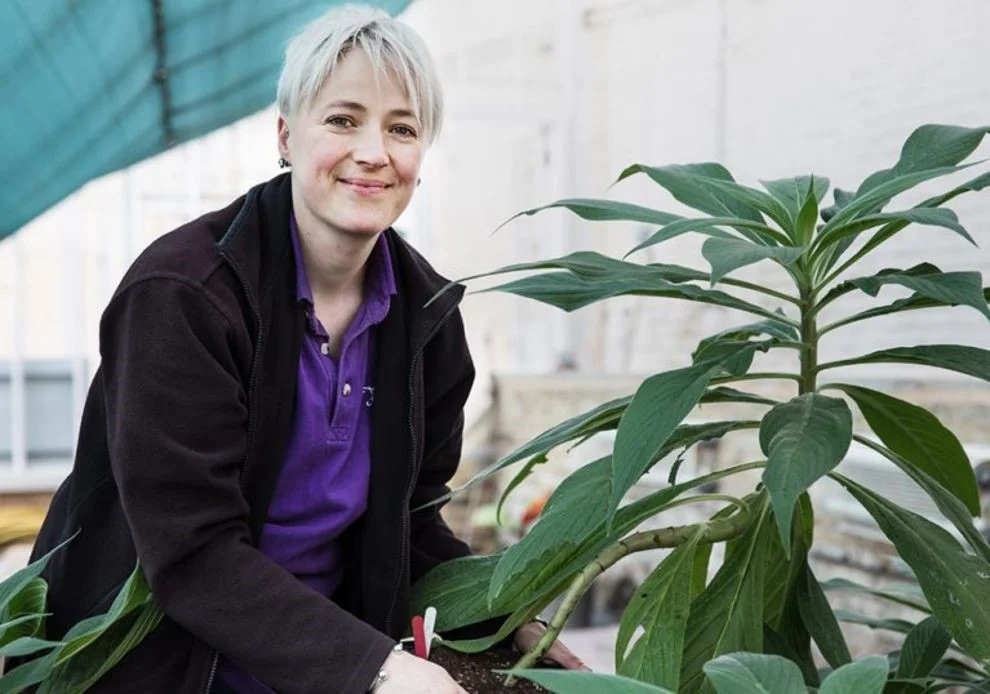
Head Gardener Lucy Hart
On Tuesday 7th May 2019, Head Gardener Lucy Hart gave a fascinating talk on her work with botanist and curator Dr Mark Spencer to track down the plants that would have filled Bishop Compton’s gardens at Fulham Palace. For those who missed the talk, please read on to find out what we learnt.
Bishop Henry Compton was the Bishop of London from 1675 to 1713. As a passionate plantsman he used his position and travels to bring plants from all over the Caribbean, Africa, India and North America back to England. Compton employed George London, an influential nurserymen and garden designer of the late seventeenth and early eighteenth century to help re-design the Palace’s grounds.
One aspect of the current restoration project, part-funded by the National Lottery Heritage Fund, sent Lucy and the volunteers on a mission to plant 80 species in the ‘Cultivating Compton’ area. This runs along the outside of Fulham Palace’s walled garden facing the river. The new beds are surrounded by a handmade wattle fence made from hazel wands.
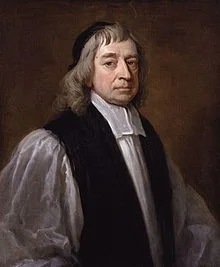
Bishop Henry Compton
Lucy began sourcing species that Compton once grew at the palace from nurseries and botanic gardens across the UK and as far as Cape Town in South Africa. She has plans to travel to the US to collect seeds from Virginia to form an important part of the planting scheme.
We learnt some interesting facts such as Compton’s love for spicy food and how he put flowers in his salad before it became fashionable! He grew over 1000 exotic plants and one of the first coffee plants was grown here at Fulham Palace. Lucy revealed that despite all of Compton’s excellent planting and cultivating he regretted spending so much money on the gardens. Perhaps this suggests that Compton’s passion for gardening and botany took precedence over his role as the Bishop and one could argue the gardens received more attention than the Palace itself which was left in a neglected state.
It was very enlightening to learn how the plants were shipped in the 17th and 18th Century. Lucy showed us images of how cuttings of plants were transported in various ways such as being pressed in books or sealed in paper envelopes. It was very challenging to keep the plants alive and make them useful for cultivation.
Lucy told us to look out for the star of the show which is the new Magnolia virginiana and I look forward to seeing this species as well as all the other wonderful species which Bishop Compton was either the first, or one of the first, to propagate in England at Fulham Palace.
A huge thank you to Lucy for an informative talk and we wish her and the team the best of luck with the landscaping works!
Emily Lafoy,
Learning Placement Student
Please send your ideas for Object / Specimen of the Month blogs to rachel.bagnall-bray@fulhampalace.org. If you would like some help, please let us know.
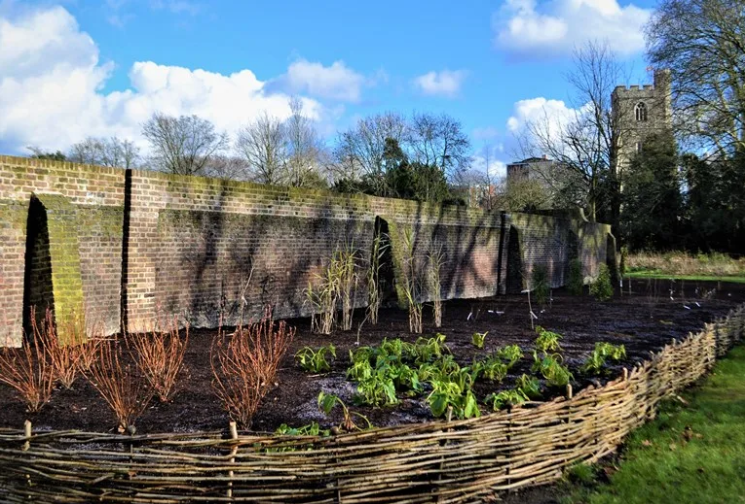
The Compton Bed at Fulham Palace