
Hello, my name is Adreanna Uttke and I am an MA Museum and Gallery Studies student from Kingston University. As part of my degree I am on a year long work placement mainly working with the collections team. I also help with the learning department and front of house where I have met many of you.
On Tuesday 12 November I took part in the Oral History training day with a small group of volunteers and staff from across the Palace. This topic is particularly interesting to me as I am originally from an area where the indigenous people did not have a written language until less than fifty years ago, and therefore much of the local history is still passed down through oral traditions. The training was run by Sarah Lowry, The British Library, who gave a very informative training session full of examples and practical activities.
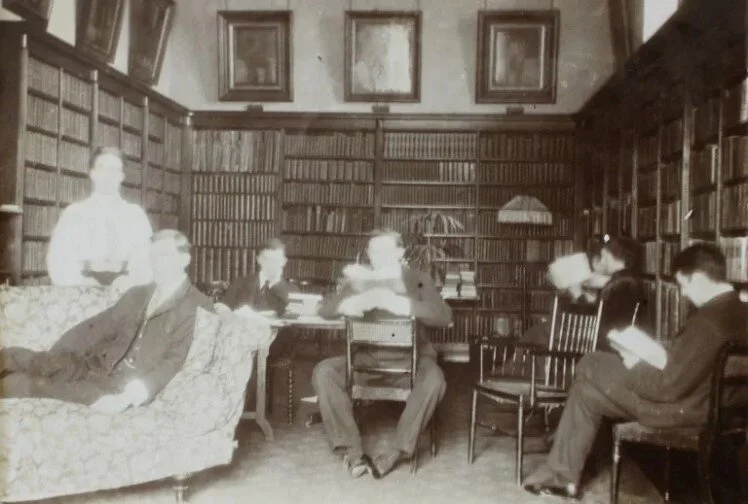
The library in the late nineteenth century - we believe the family pictured are the Creightons
You might be wondering what oral history is and what part it plays in Fulham Palace. According to the University of Leicester, oral history is “the recording, preservation and interpretation of historical information, based on the personal experiences and opinions of the speaker.” Arguably, it is the oldest form of history. If you think of “The Iliad” or “Beowulf” these were both oral histories until they were written down. Here at the palace we have collected oral histories from some of the people who lived and/or worked at the palace and gardens throughout the past. Looking forward we would like to expand this collection. These histories are used not only to expand our knowledge of the palace and those who were here throughout the past, but can be incorporated into future exhibitions.
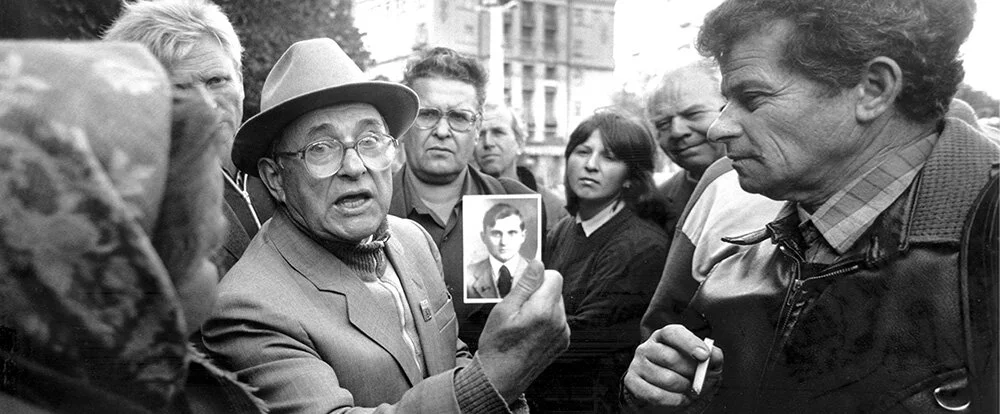
Show and tell - bringing the past to life. Image from the Oral History Society
The first half of the training focused on how to effectively collect oral histories. Sarah explained the difference between recording an interview and recording an oral history. What it mainly comes down to is proper use of equipment and minimal input from the interviewer. Unlike a traditional interview, oral histories are not a back and forth between the interviewer and interviewee. Rather it is the responsibility of the interviewer to establish the context of the oral history (who, what, when, where, why, etc.) and to keep the interviewee on topic, but otherwise keep their verbal responses or questions to a minimum so as to not influence the way the interviewer presents their story. Any questions about expanding on interesting points can be asked at the end of the initial interview.
It is also important to make sure that the environment you are recording in is as comfortable as can be for all involved and has as little outside noise as possible. This also means that the interviewer is actively listening and making sure the interviewee is okay to keep on with the recording. Especially as recounting memories can be an emotional process, and the interviewee may need breaks.
The second half of the training focused on practical work and legal information. First we broke up into small groups and practised a simulated interview. We had to think about what background research we would need to do to prepare, where to interview, and any questions or points of interest we would like to bring up for the interviewee to answer. This gave us a chance to work with the six key points Sarah brought up during the first half of training:
1. Do not interrupt,
2. Open and neutral questions,
3. Listen- fully and actively,
4. Clear, short and to the point questions,
5. Give plenty of time,
6. Know who you are interviewing
The training day ended with information about informed consent, paperwork, and legal responsibilities.
Do you know anyone who has interesting information about the history of Fulham Palace? Perhaps they lived or worked at the Palace, or have a family connection with a Bishop of London. They could be a local person, a retired volunteer, a friend… or a current volunteer! Please get in touch with Rachel (rachel.bagnall-bray@fulhampalace.org) if you know someone who could be interviewed.