
Every month we feature two blogs written by volunteers, one describes an object in the Palace and one a plant from the Garden. It is a great way to learn more about the Palace. If you would like to contribute there is no set format so please do send in your ideas.
This November we are grateful to tour guide and archive research volunteer Jane Bowden-Dan for researching St Thomas à Becket, and ‘Beckford’s Folly’.
***
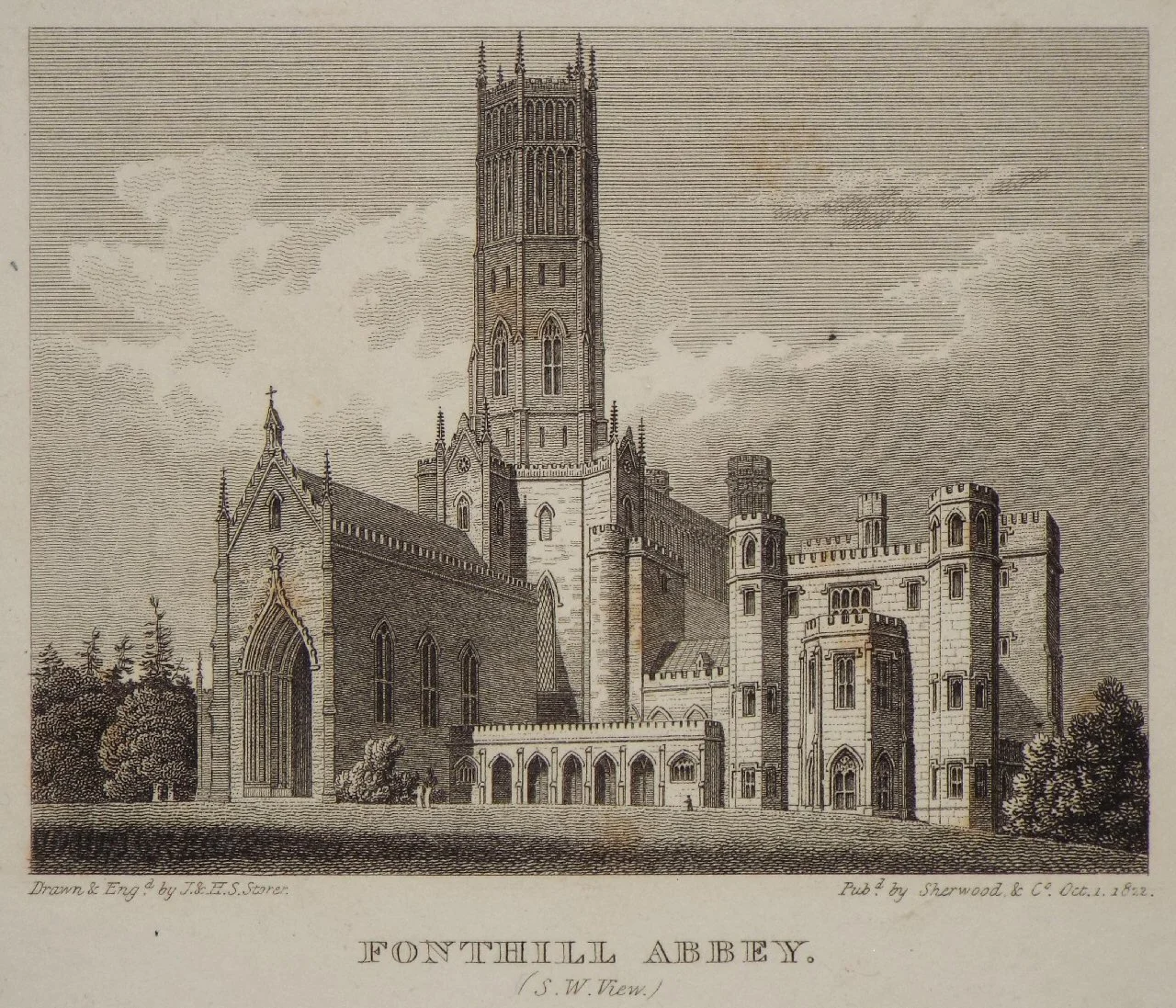
As a History Tour Guide, I have been intrigued by the two ‘cartoons’ or designs painted in oil on paper laid on canvas - in about 1798 - by the American-born artist Benjamin West (1738-1820) who became the President of the Royal Academy. These designs were for stained-glass windows at Fonthill Abbey, Wiltshire, home of connoisseur and art collector William Beckford (1760-1844). They have recently been moved to the west wall of the Great Hall at Fulham Palace.
The first design is of St Margaret of Scotland. A fellow Archive Research Volunteer is studying this.
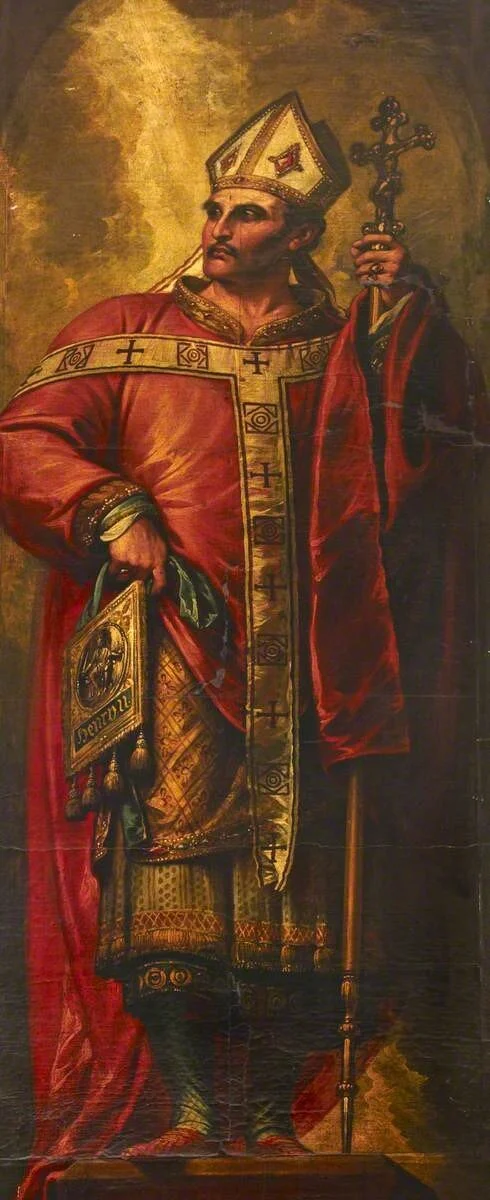
Art UK Image from Fulham Palace Art Collection LW_FPAC_CC8
The second design is of St Thomas à Becket (c. 1118-1170), pictured on the left.
The text added to the Museum Tablets inside the historic rooms at the Palace, by our collections and research officer, Lisa Voden-Decker, explains that, as Archbishop of Canterbury, Becket quarrelled with King Henry II. The King resisted papal reforms that would have weakened his control of the Church. Murdered in Canterbury Cathedral by four knights of the Court, Becket was soon after canonized.
The stained-glass window of Becket, based on West’s design, was made and installed at Fonthill. It had been commissioned by Beckford, who was a knowledgeable art collector. However, he was also a novelist – known famously for his Gothic work, Vathek (1786) – and a profligate. His property Fonthill Abbey was also called ‘Beckford’s Folly’. Beckford lived there until 1822 when he lost two of his Jamaican sugar plantations in a legal action, and was forced to sell.
I was already aware that most of Fonthill Abbey collapsed under the weight of its poorly-constructed tower during the night of 21 December 1825. Until recently, I had been misleading visitors to Fulham Palace by suggesting that West's completed stained-glass window of Becket was lost when much of Fonthill was destroyed! In fact, the window has survived. The arms dealer, John Farquhar, who bought Fonthill and its contents in the forced sale, immediately auctioned the art and furnishings in the so-called ‘Fonthill Sale of 1823’. Apparently, the window was acquired by the Bristol Corporation and is now in the Lord Mayor’s Chapel of St. Mark on Bristol’s College Green. Pevsner’s Buildings of England describes the stained glass there as of good quality, and tells me that the Becket window is the east one in the south aisle.
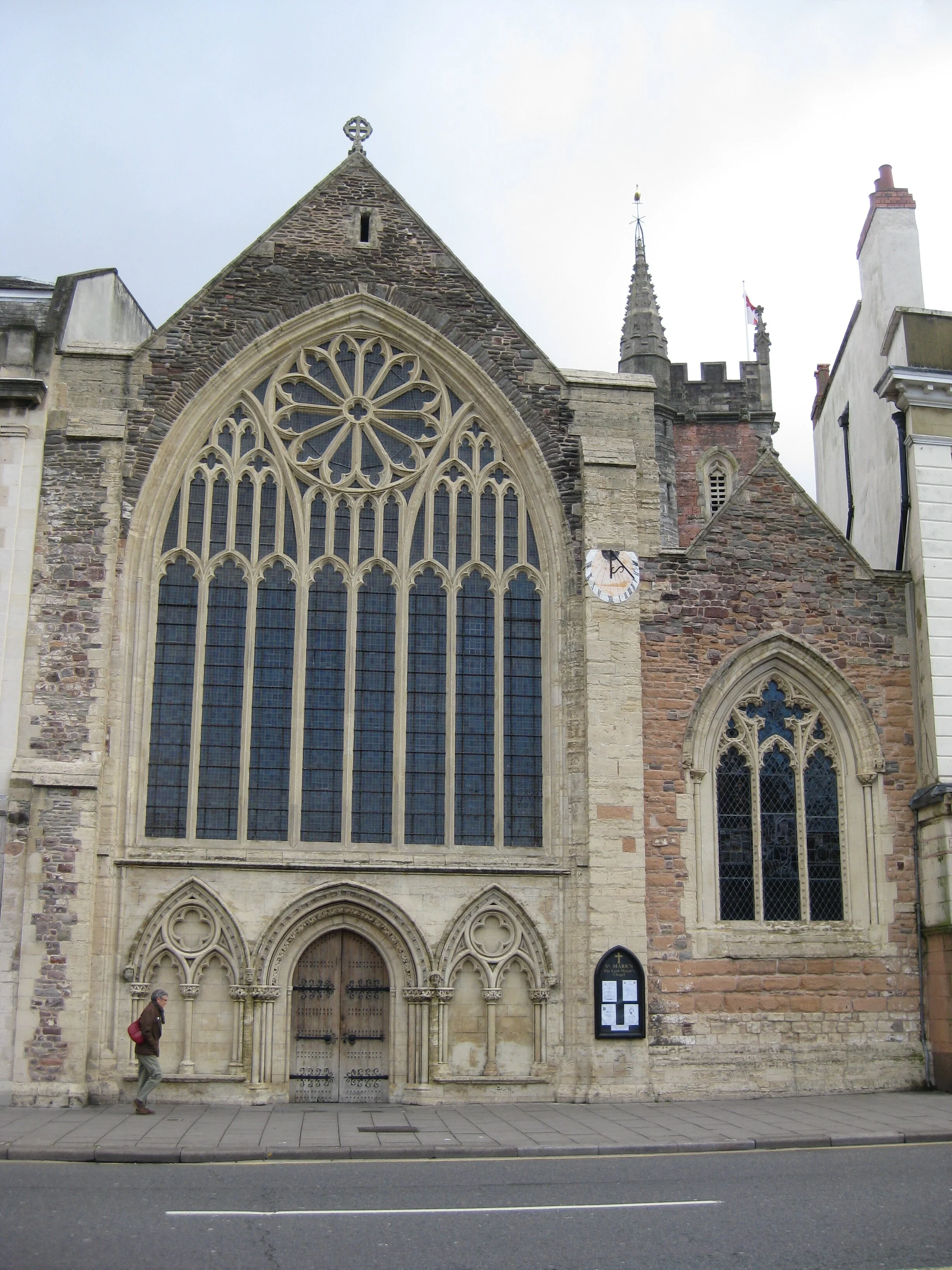
Exterior of the Lord Mayor’s Chapel, Bristol
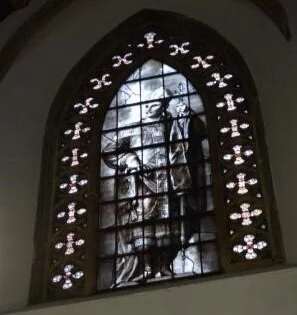
St Thomas a Becket Stained Glass in the Lord Mayor’s Chapel, Bristol
In mid September, I attended the British Society for the History of Medicine [BSHM] bi-annual Congress in Bristol, and tried to see inside the Lord Mayor's Chapel. I had learnt that it is the only remaining building of the 13th century Hospital of St Mark, and became the official place of worship for the Mayor and Bristol Corporation in 1721. But, sadly, it is "currently closed for public visits" and the building seems to be in need of some TLC. However, I think this is a picture to the right - from Trip Adviser - of the window I sought, in vain.
Two days later, I was surprised to meet the Lord Major herself, Councillor Jos Clark, and her consort, Hugo Clark, who were guests of the BSHM at our Congress Dinner in Bristol's Sansovino Hall, Corn Street (wearing heavy gold regalia!).
Jane Bowden-Dan,
Front of house, archive research and history tour guide volunteer
Thank you to Jane for this blog. Please send your ideas for object or specimen of the month blogs to rachel.bagnall-bray@fulhampalace.org. If you would like some help, please let me know.