
Our thanks to Paul Russell, Saturday garden volunteer, for this wonderful blog about the volunteers’ coach trip to Painshill Park on Saturday 12 October 2019. Read on for a taster of our day together…
Well it was wet. There’s no denying it, the rain was dripping from trees, umbrellas and noses, but somehow, all the faces still had smiles on them.
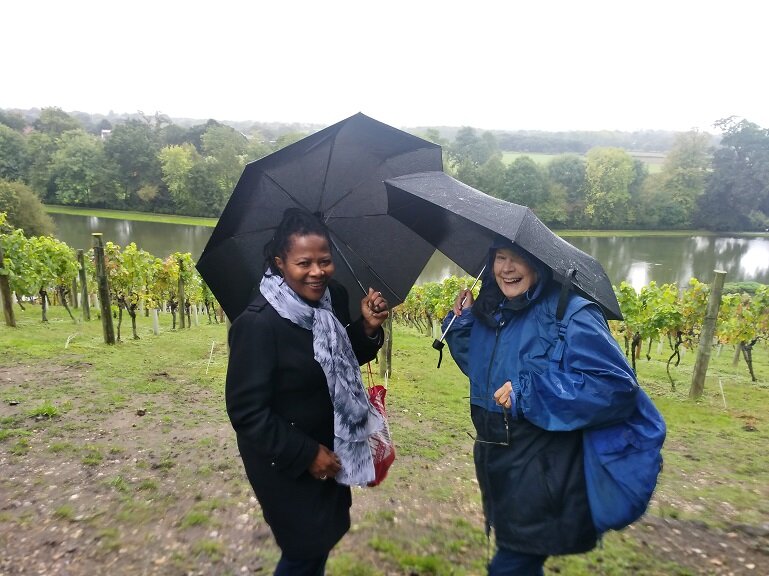
Two Yvonnes together in the vineyard
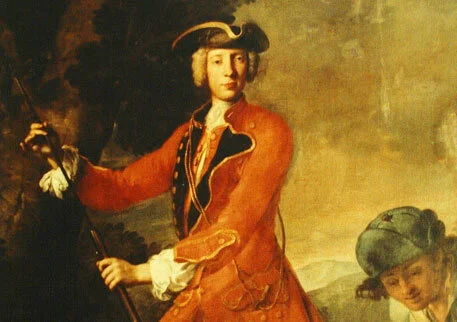
Honourable Charles Hamilton, 1704 - 1786, original owner of Painshill Park
The journey to Painshill was very quick and we were ushered in through security gates, like celebrities in disguise, in no time at all. After a refreshing cup of coffee and a quick introduction by the staff we set off on our adventure around the 160 acre garden.
The garden was started by a certain Honourable Charles Hamilton who, while not being rich (relatively speaking), had a great interest in plants. A contemporary of Capability Brown, he was described as the amateur version of Capability, so lots of people went to the Hon Mr Hamilton for ideas (I suppose he was cheaper!). Consequently, the gardens themselves have recognisable hints of Capability Brown, including magnificent Cedrus libani (cedar of Lebanon - those magnificent evergreen pines that stretch up into the sky and look like giant green clouds with flat tops) hidden vistas and vanishing points as well as a huge 14 acre lake.
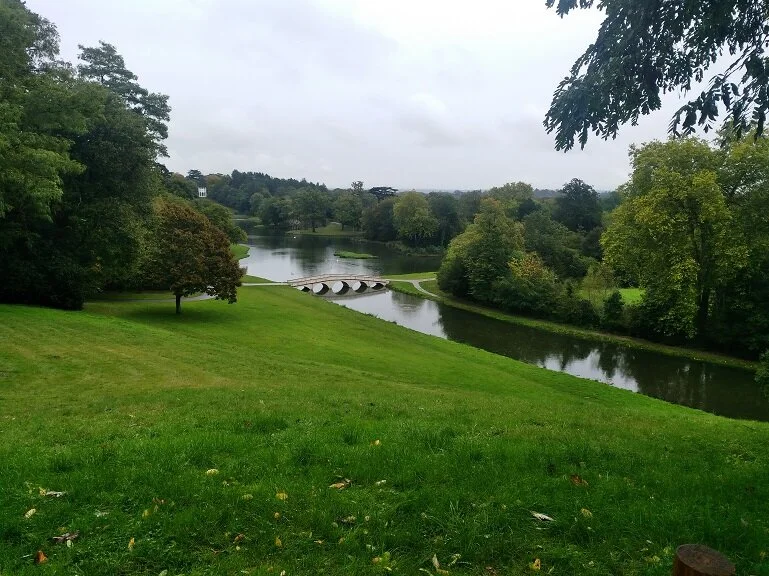
Iconic Painshill view from the Turkish Tent taking in the Arch Bridge and Gothic Temple in the distance
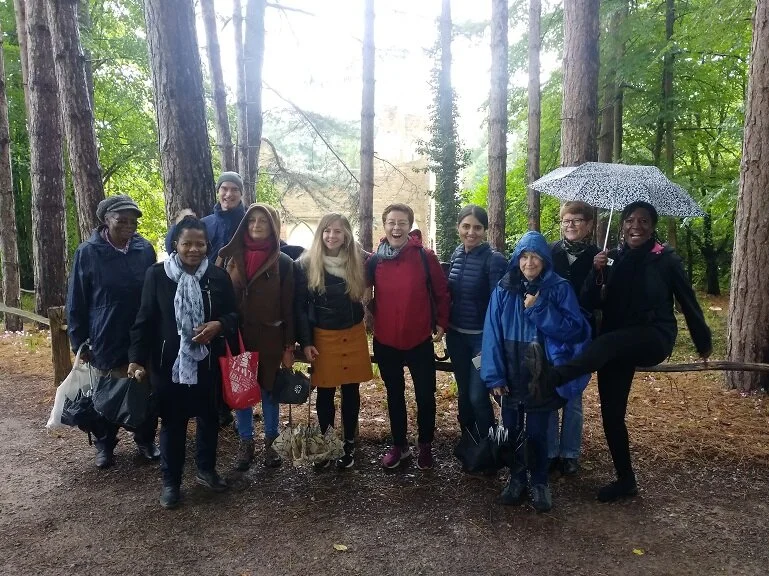
Our tour group in front of the ‘ruined Abbey’
Originally the garden would not have had many flowering plants (there weren’t actually all that many available in England when the garden was created - 1738 to 1773) but Mr Hamilton was creative with the types of trees and shrubs that he planted in the garden, including quite a few from the New World - North America. They provide seasonal interest in different colours, used in clever ways.
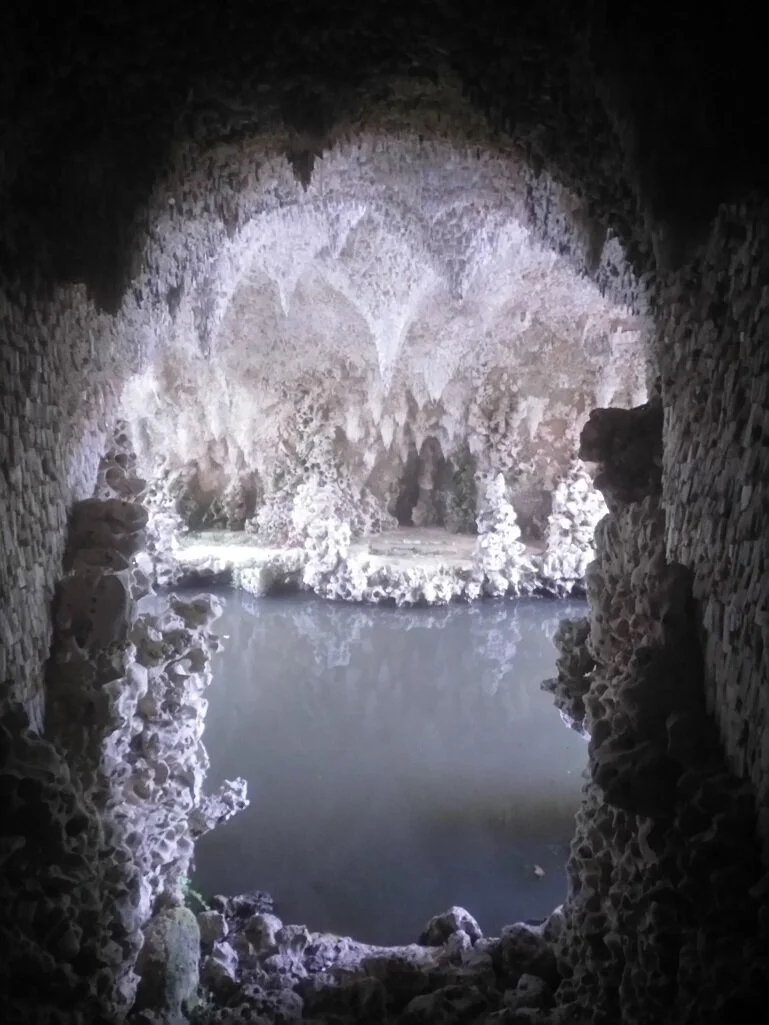
Peering out of the Crystal Grotto
There is a vineyard (although none of the original plants survived, it has been reinstated in much the same place) producing several tonnes of grapes each year that are used to make sparkling roses and whites. Key points of interest are the artistic views over the North Downs, the two bridges and Turkish tent, but the main attraction is the fantastical, cave-like crystal grotto. Most of it was destroyed over the years and then rebuilt, eventually in 2012, with every piece of crystal being set by hand - extraordinary stalactites and stalagmites. I liked the ruined Abbey (neither an Abbey nor a ruin as it turns out!).
After our walk around the main area of the garden, with the interesting observations of our Painshill volunteer guides, Chris and Moyra, we then strolled through the segmented walled garden, which even despite the heavy rain inflicted on it, remained quite enchanting and with some beautiful vegetables still growing (the multi-coloured chard looking particularly lovely in the muted light).
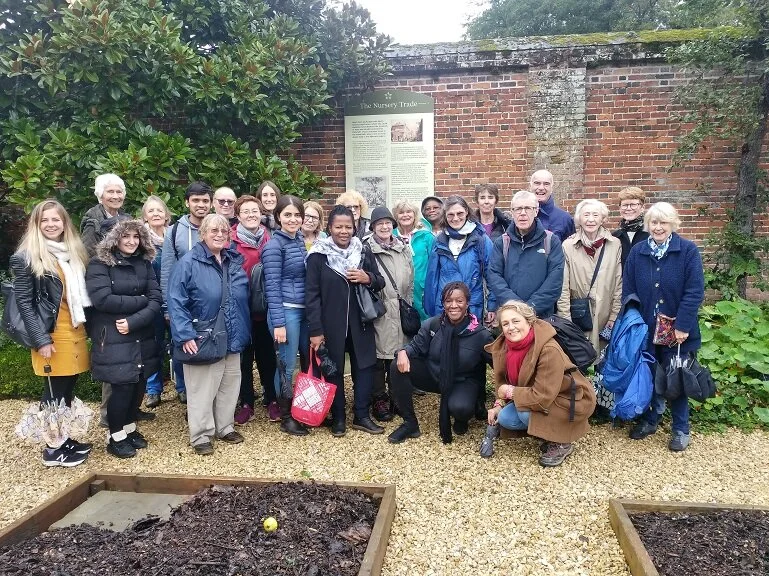
Painshill Park Explorers: Fulham Palace Volunteers, 12 October 2019
We returned to Fulham Palace inspired by a wonderful garden and having renewed our friendships with other Fulham Palace volunteers who we don’t always get to mix with so often.
Paul Russell, Saturday garden volunteer, 15.10.19