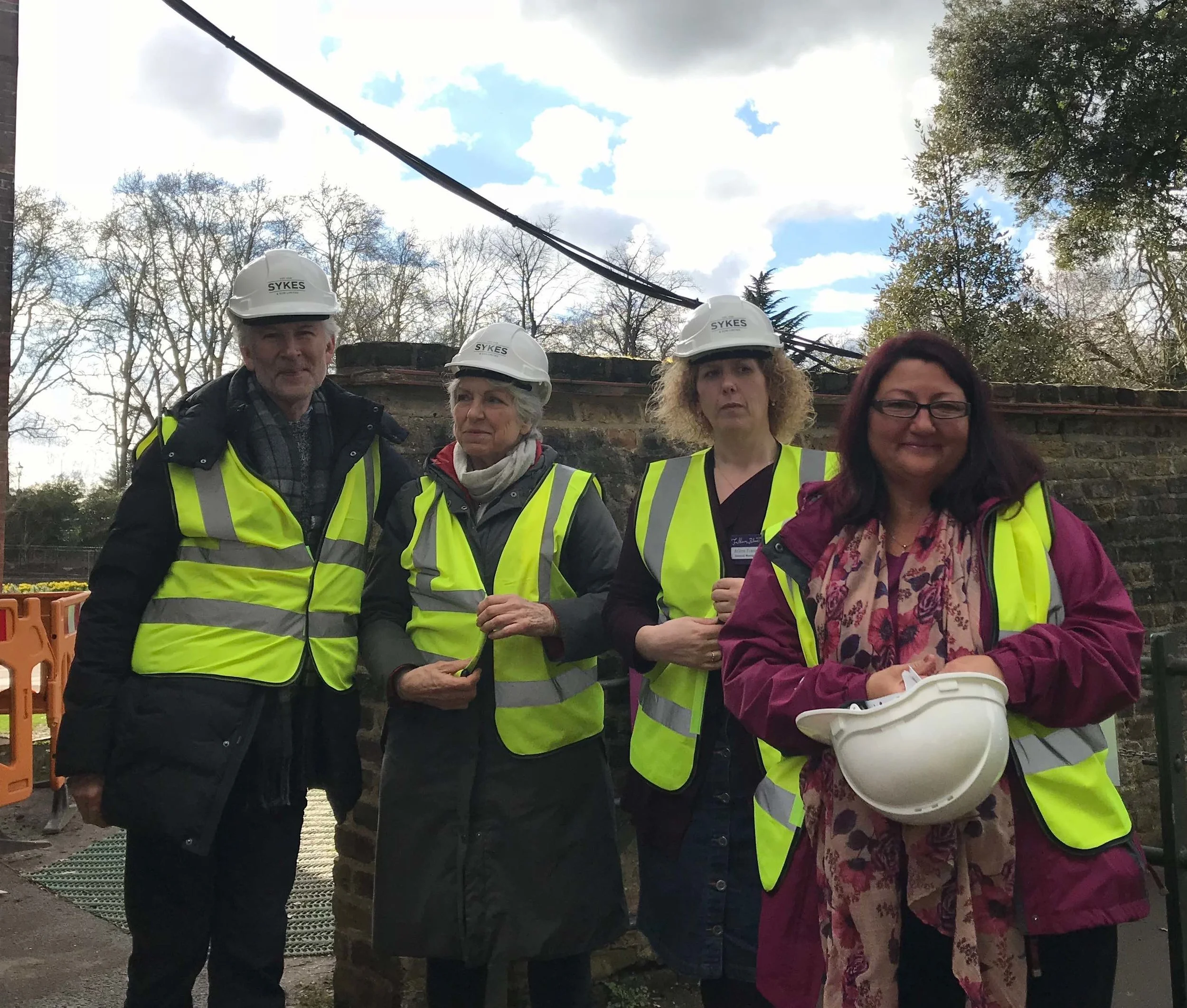
With the Palace Restoration Project now well underway a group of Volunteers were given an early opportunity to see the recently exposed spaces on the top floor of the north and west ranges of the courtyard. Construction is very much in progress and these spaces have now been stripped back to reveal historical features and details not seen for many years and that will be covered up very soon as the new offices will be ready for tenants from the summer. The historical integrity of the building will be retained and as much of the existing fabric and features will be retained as is possible but much of it will be hidden from view.
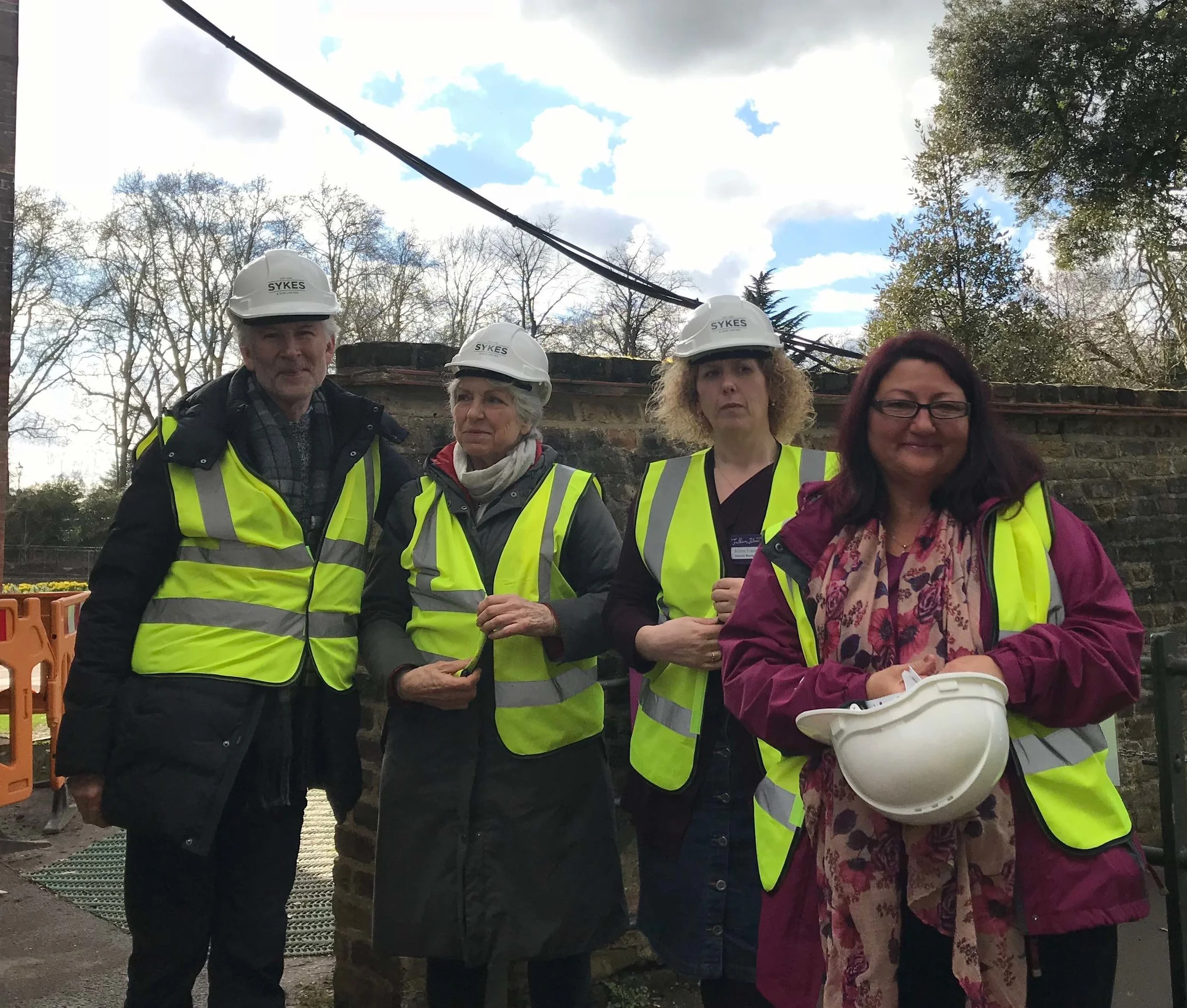
After an introductory talk from Nia the tour began with us donning hard hats and high-vis jackets as the site is very much a working building site. Led by volunteer guides we were taken through a series of rooms on the upper floor starting with a room in an area of the courtyard marked as the Brew House on early plans and with the Malt Room next-door, where original ventilation holes provided further evidence that these were working rooms from very early times at the Palace.
The tour continued through what had been servant's bedrooms, Bishop Bonner's library and ordinands room amongst others. Many rooms featured beautiful quality wide, oak floorboards but it was clear that over the centuries many floors had sunk and a number of old ceilings were dangerously bowed giving the building team some challenging repairs. Below are a few of the historical highlights that have been brought to light.
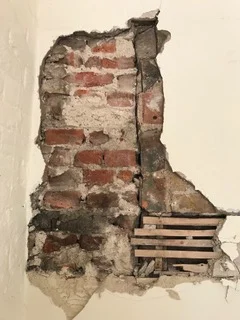
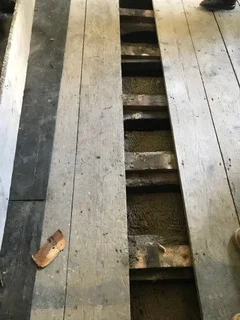
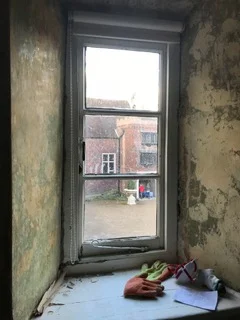
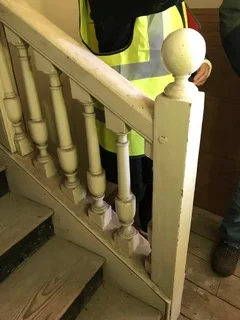
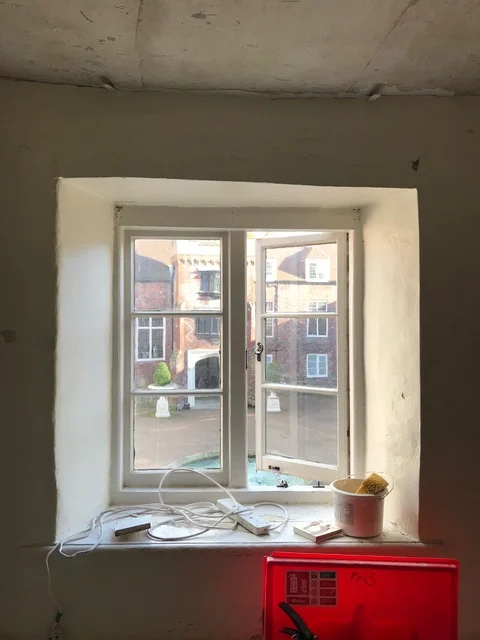
Historical Details revealed (working from left to right):
1. All kinds of wall construction have been uncovered, including lathe and plater, alongside brickwork from many different eras
2. With the floorboards lifted, very early support beams are visible beneath later struts put in to raise the floor.
3. A number of the windows remain relatively unchanged since their original installation, many are in this 'flared' style, designed to maximise light, the thickness of the wall is evident in this image.
4. This quite ordinary looking banister on a back stairway is in fact very old and may date back to Tudor times.
5. At the very top of this picture two small metal supports are just visible - these are very early curtain supports.
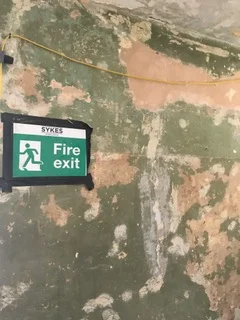
6. The green distemper that has been uncovered on some the walls may date from the First World War when this part of the Palace was used as a hospital.
New discoveries are coming to light all the time and understanding and interpreting them is still on going. More precise information regarding dates and certain features will be forthcoming as further research is undertaken.
The tour finished with a look at the restoration of the brick work and the painstaking work that is being undertaken. The earliest bricks date back to very early times c. 1500 and, as with the rest of the project, as much of the existing material is being retained as is possible. The old mortar (mainly Victorian) is being removed and being replaced with breathable lime mortar, in the process some badly decayed bricks will need to be replaced.
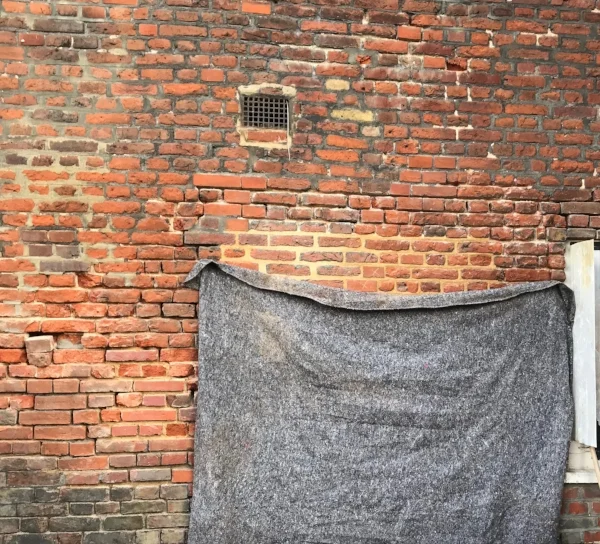
The area above the grey blanket shows experimenting with treatments with the new lime mortar. Areas where bricks will have to be replaced are also clear.
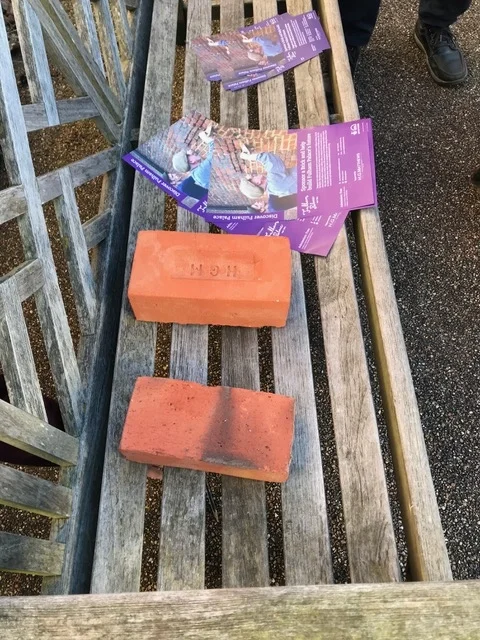
We concluded with questions and answers with Steve the very knowledge site supervisor, a chance to handle the new (very heavy) bricks along with an explanation of the traditional firing process of these authentic bricks. The sponsor a brick programme was given a new relevance and seems a fitting way to be part of the redevelopment project at the Palace. For more on Sponsor a Brick.