
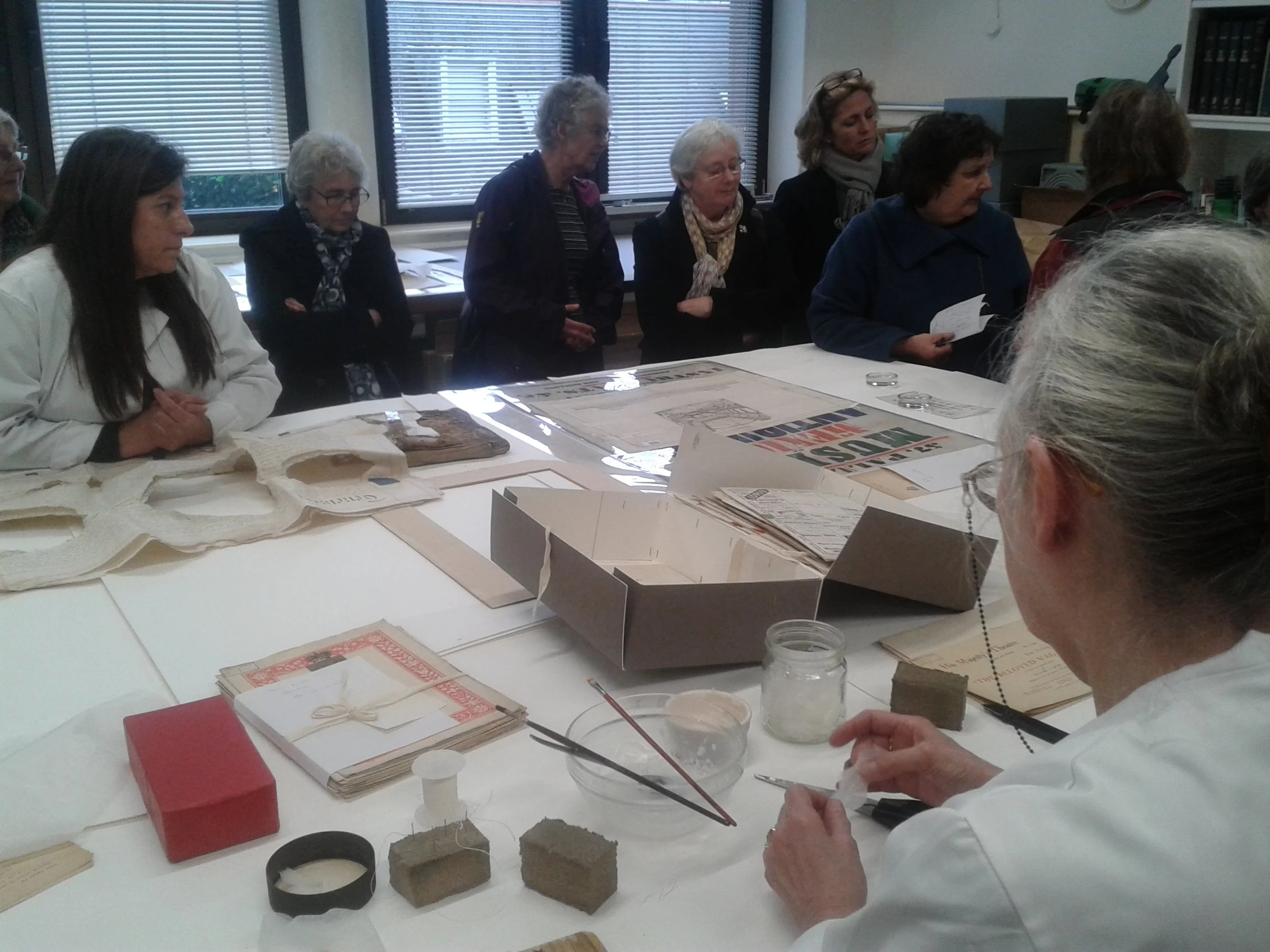
Last Wednesday a group of about 20 volunteers, from various departments, gathered at the Westminster Archives for a fascinating tour of these huge archives. Alison Kenney gave us an overview of the scope of the archives and the wealth and breadth of the material they hold for Westminster, Marylebone and Paddington from Tudor times to the present day. The collection has a unique range of social history records for this very important part of London - they hold parish records, workhouse and poor law records as well as a host of legal and court records. The built environment is an important aspect of their records and attracts a lot of architects and architectural researchers with fascinating maps that chart the evolution of London streets. The archives of notable Westminster businesses including Liberty Ltd and Waring & Gillow Ltd are also stored here.
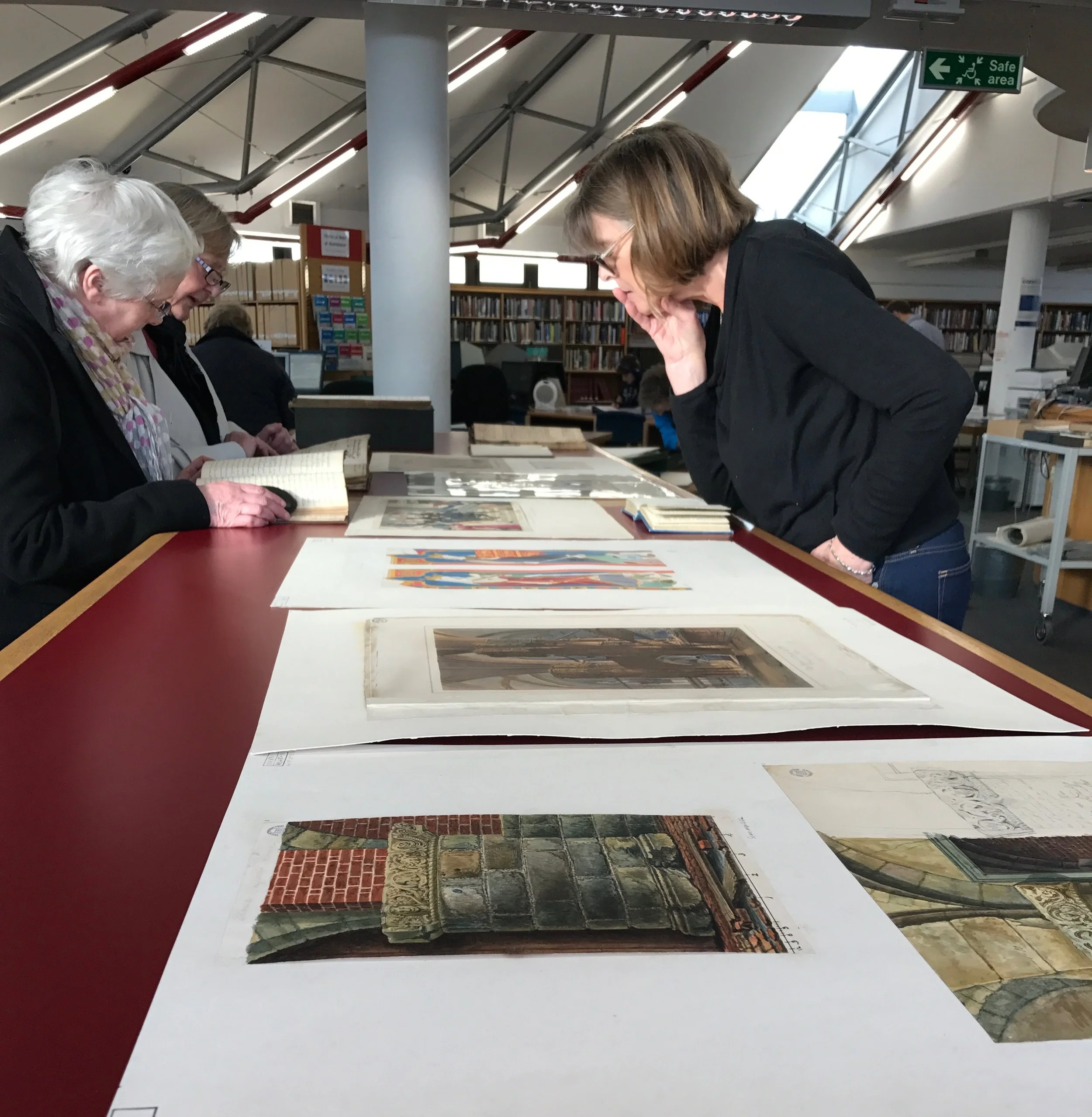
We were taken to the Searchroom on the top floor of the archives where a selection of interesting books, documents and prints were laid out for us to see and Alison helped interpret them for us. Amongst the things laid out for us were court records from the 17th Century detailing the gruesome punishment dealt out to a woman described as a 'scold' – being dragged from one side of the Thames to the other, an alternative to the ducking stool. We saw a few of the many hundreds of original cartoons they hold and a fascinating little book that detailed the names and addresses of people of fashion in late 18th century London. We saw an undertaker's book that recorded details of all the funerals they organized, including that of Charles Rennie Mackintosh’s rather grand funeral in 1928.
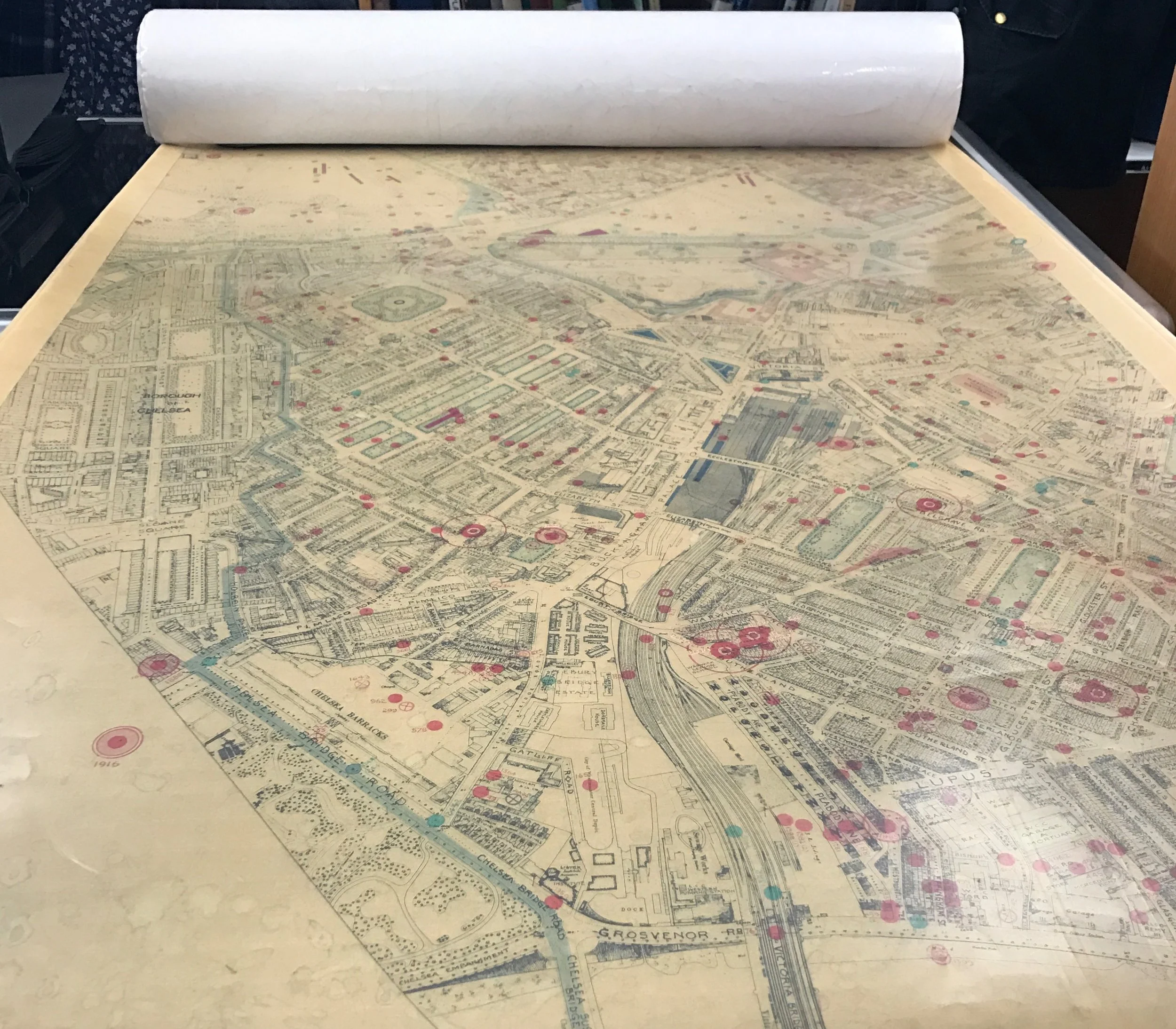
A large bomb map from World War II detailed each bomb that had fallen within an area of Chelsea, each type of bomb had its own particular symbol. To accompany the map the archive also had a record book detailing all the emergency and support vehicles that attended each incident and an album of photographs that vividly showed the damage done by the bombs.
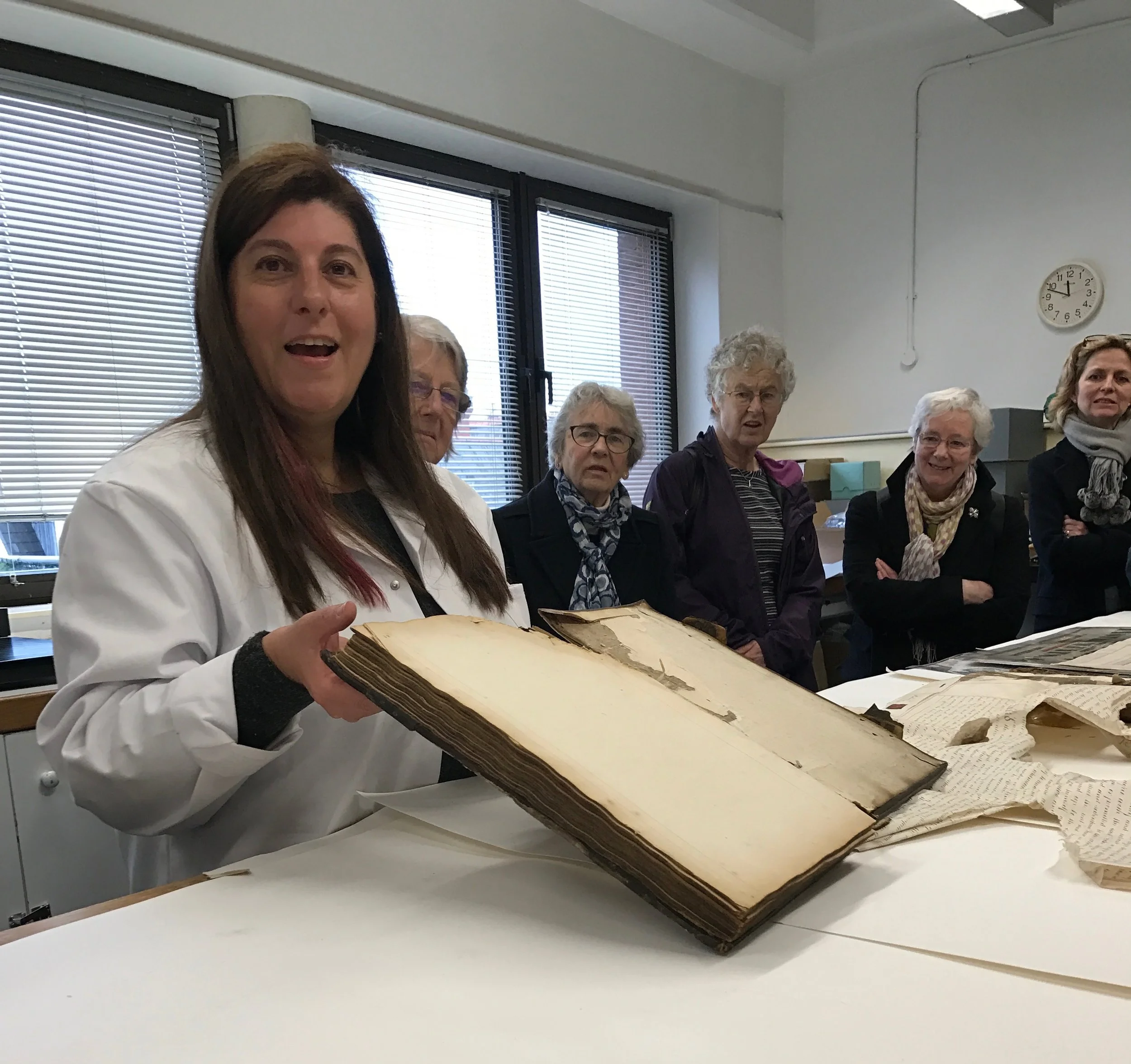
Our next stop was the Conservation room where Georgia Vossou gave us an illuminating introduction to the work of her department. We learnt the difference between preservation, conservation and restoration and that most of the work in the archives falls into the preservation (providing a stable environment) and conservation (stopping further deterioration by removing or treating things that are damaging the artefact) areas. Very little restoration is undertaken. We saw how fine hand-made Japanese tissue was applied to help strengthen and stabilise fragile paper. The archive holds a huge quantity of theatre programmes and it has been the task of conservation volunteers to work through the hundreds of boxes and carry out straightforward conservation tasks. We also saw a number of examples of books and paper that had been so badly stored that they were beyond any kind of conservation or restoration.
The visit finished in the Strong Room were Alison showed us the oldest object in the archive collection: a royal seal!
If you would like to join us for the next volunteer visit it is on Wednesday 19th April 2017 to Two Temple Place. Two Temple Place is a magnificent Neo-Gothic mansion on London's Embankment built by the first Viscount Astor, William Waldorf Astor in the 1890s. For more details and to book a space click here.
Thanks for reading and please do comment below!
Gwen,
Communications Assistant