
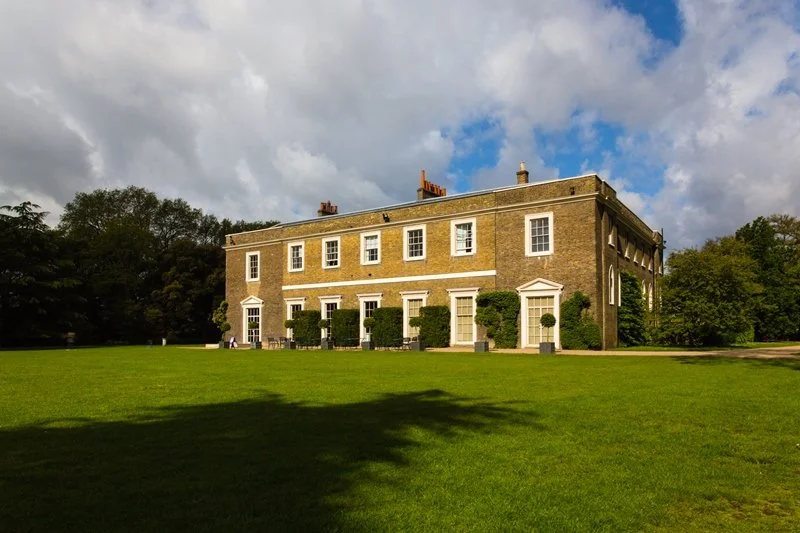
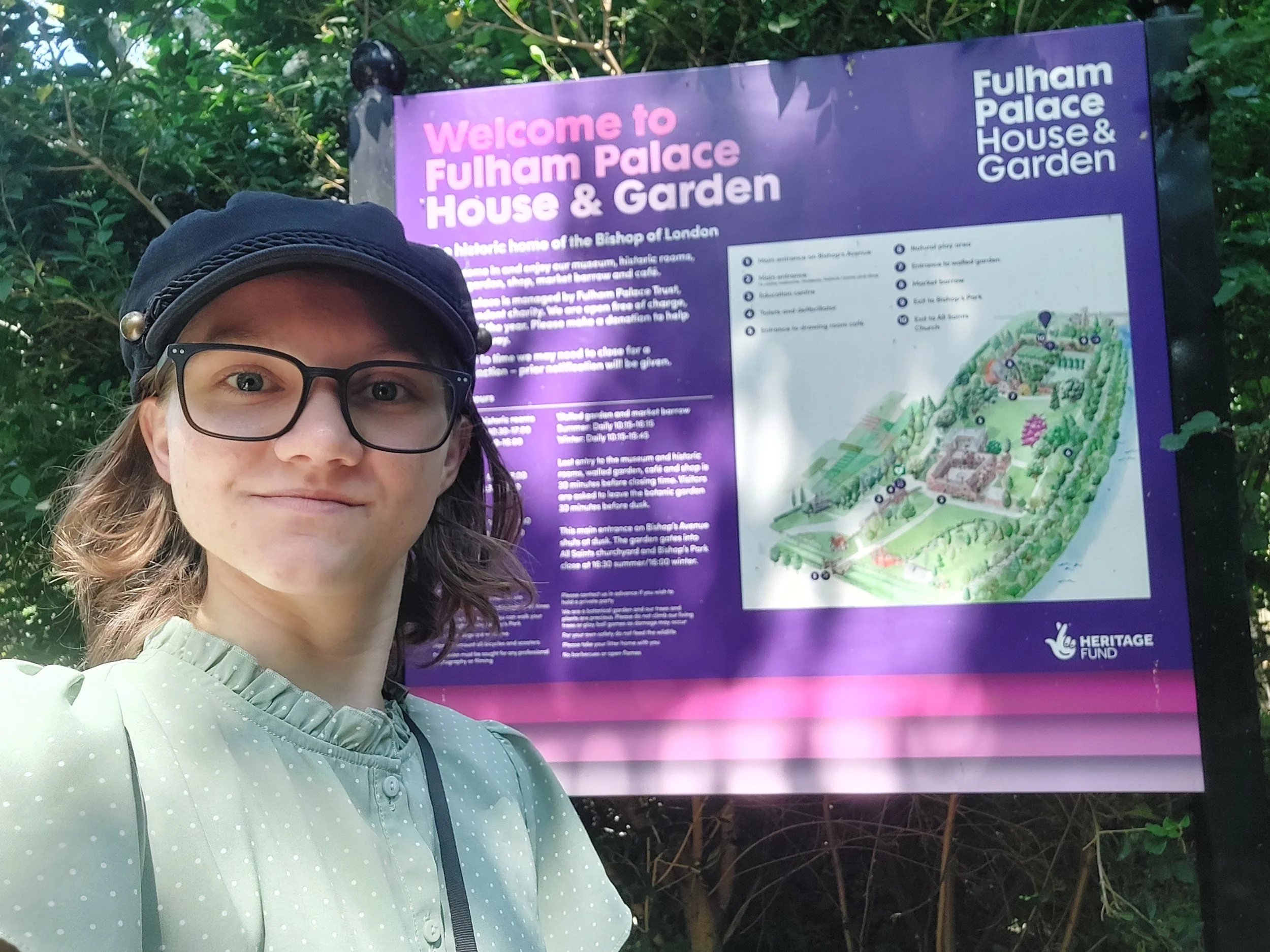
Beth next to Fulham Palace sign.
Visitor engagement placement volunteer Beth Nielsen shares her thoughts on the evolution of the Palace’s moat over time.
Hello! I’m Beth, an intern from the United States. That’s a pretty big place, so to narrow it down, I’m from a very small desert town in northern California, but I’m studying at a university in Utah. I started working here at Fulham Palace a month ago now as another volunteer with the front of house department.
So far, my favourite place in the house is the library, followed closely by the lesser-known east courtyard. The latter is rather small, and no one goes there, but I like the smallness of it, and I like the open air surrounded by old building. The ‘old buildings’ in my hometown are nothing like the handsome brick I keep encountering in my time in London; this place is a beautiful treasure wherever I look. Yet even more exciting to me than secret library doors and encompassed courtyards is the Palace’s moat.
I suppose I am somewhat of a child for my fondness of moats. To be fair, they are an excellent defence system, but mostly, I think they’re cool. Coming to Fulham Palace - coming to the UK, really - was exciting for me so many times, and in so many ways, but one memory that stands out was learning about the moat.
We know the trivia. It was England’s longest domestic moat, over a mile long and encompassing 36 acres. It has sluices so as to be filled at high tide or drained at low tide. Not living terribly near a great body of water myself, the concept of the Thames as a tidal river is just as intriguing as a moat, and learning about the sluices left me grinning at the genius of it all. Entirely man-made and in need of filling, the moat simply had doors (of sorts) to open and either let in or let out water - sluices that depended on the tide of the river. Where I’m from, we don’t have tidal rivers, and I had perhaps twice in my life seen a river big enough to even try to be a moat.
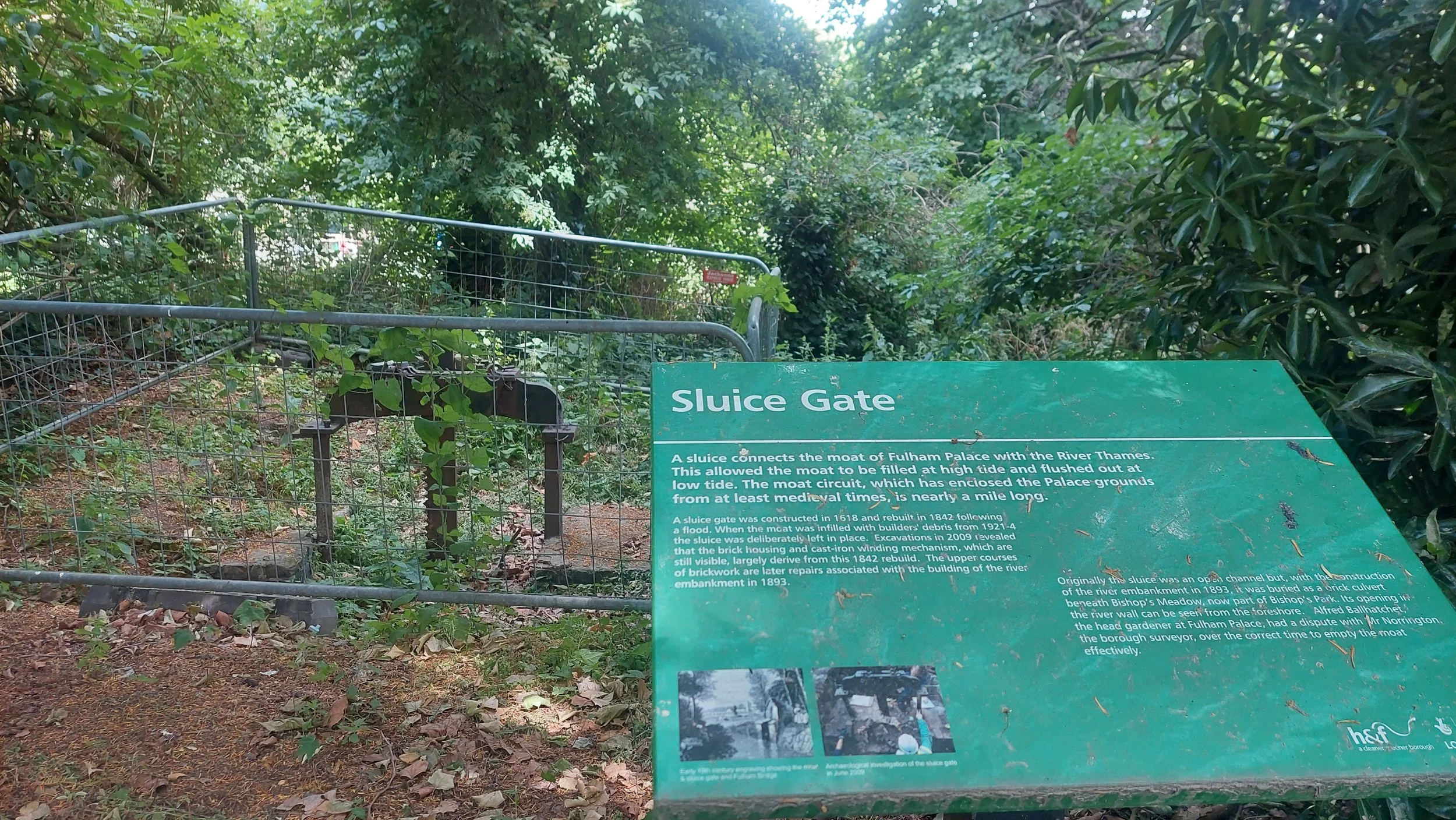
The old sluice gate of the Fulham Palace moat, with accompnying signage.
So, of course, after my first shift, when I needed to leave the front way rather than the back way, I was giddy to cross over an actual moat. I peered over the edge to see it, down there. It’s filled with grasses and greenery, now, instead of the contained power of the Thames. Only a bit of a ditch. Still, it was once a moat.
As a work placement student from the United States, I wanted to make the most of my time in London, and was recently able to visit the Tower of London. There, too, is a moat, somewhere around 50 metres wide and surrounding about 12 acres. Like our moat at Fulham Palace, the Tower’s moat was also filled by the River Thames - of course it was, as incredible as that river is. Most of all, just like the moat of Fulham Palace, the Tower of London’s moat is devoid of deep water now, filled instead with green.
How mighty a thing, a moat! You dig a ditch so deep you can’t climb out of it, then fill it with water. Intruders are forced to use the designated points of entry you have established, or to attempt the swim - only to find themselves facing an insurmountable wall, if they have the luck to not be shot by archers (or, in cartoons, eaten by alligators). Now, the moat at Fulham isn’t quite all that, and we technically don’t know what its original purpose was. It could date as far back as the late Anglo-Saxons; we suspect the land Fulham Palace now stands on was once an encampment or part of a trading route. Could the moat have been to deter others, or to aid in the movement of goods? Regardless, the moat is an obstacle for any unwelcome guests.
There is a feeling of power of some kind, standing in what once was a moat and now is a field of flowers. It is a power that chose peace. It is the power of choice; choosing to be a field of flowers for people to walk through instead of an angry wall of water to stop them.
After an excavation in 2011, we have been able to showcase a part of the moat again, after it had been filled in by generations past. The moat is deep. It was dug deep purposefully, a long time ago, meant to stop others. And now…? It lets others in. In Fulham, we have the Moat Trail, a beautiful part of nature that I’ve enjoyed following after my shift at the Palace. I was once a moat, the trail says, but now I provide for you. Now I show you the wonders that I previously experienced alone. Let me show you the Thames, it says. Let me show you the trees. Let me show you the other people who have come to experience joy with me.
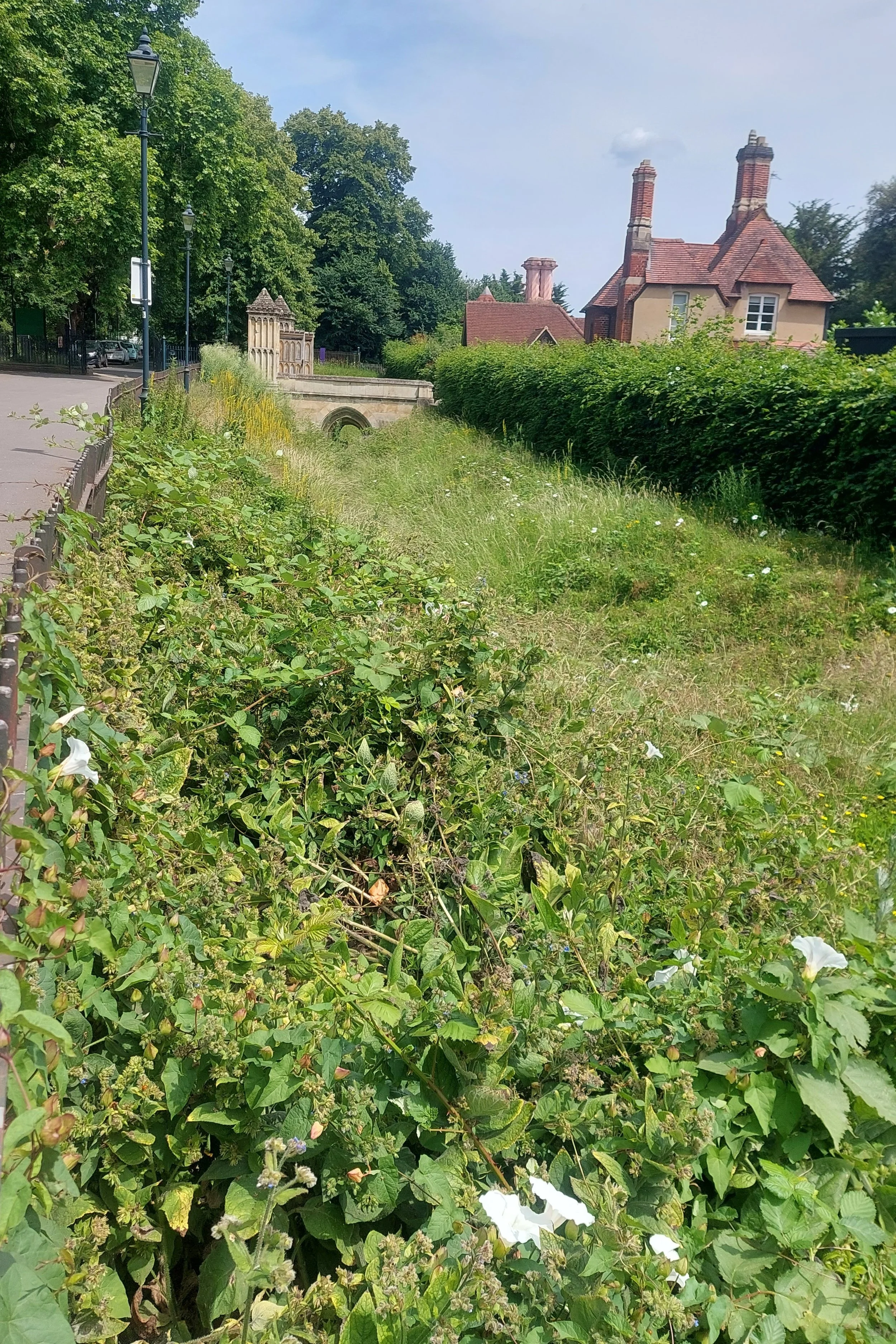
Wide shot of the moat with white flowers.
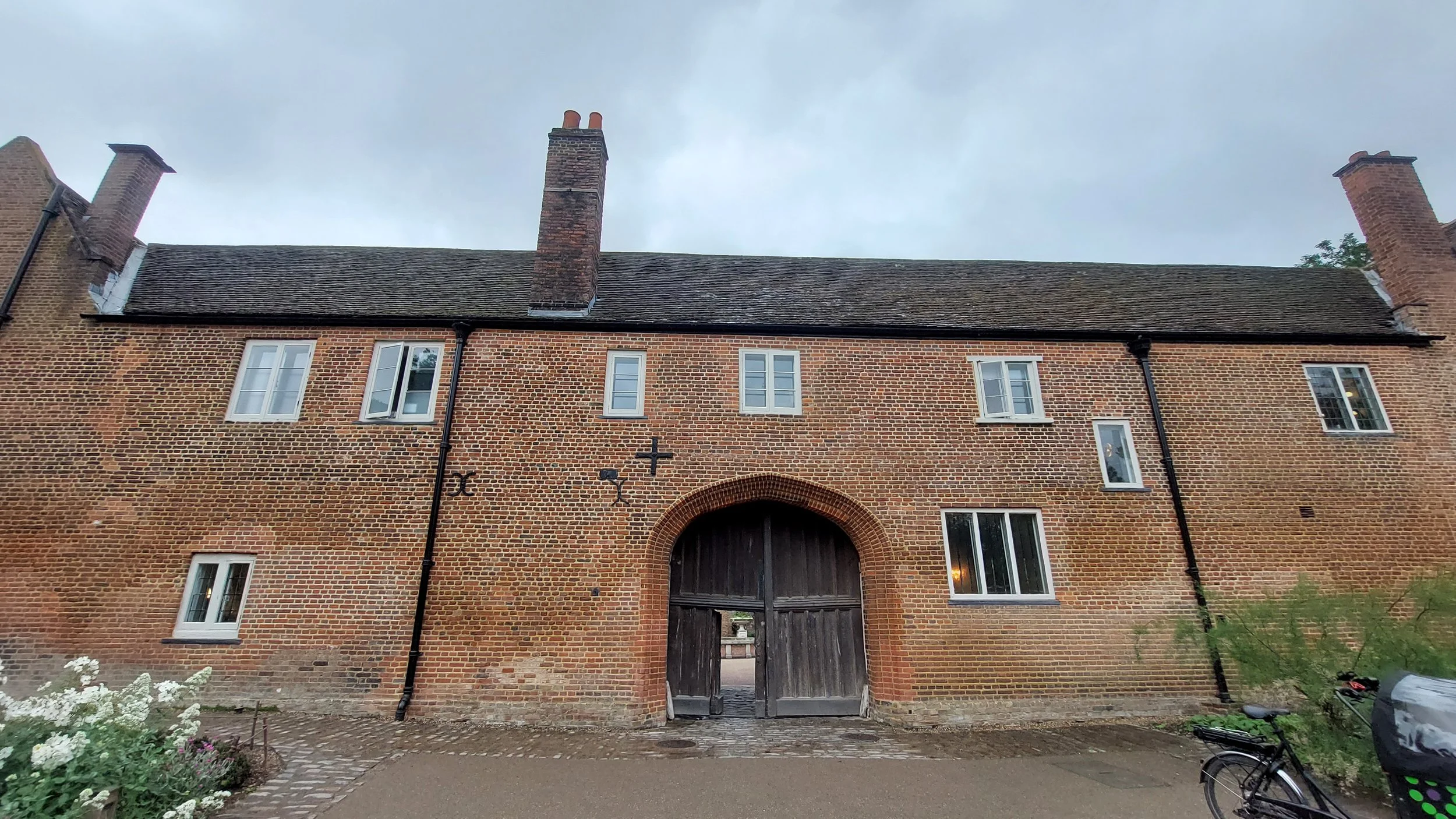
Main entrance to Fulham Palace, just past the moat.
And at the front of the Palace, where the moat runs deep? The moat says, let me show you what I once was, and let me show you the way in. We are no longer enemies. Come and see the treasures on the other side. Come see the Palace and the Garden I protected. I want to share them with you, now.
We found treasure in the moat. Archaeological digs uncovered ancient wonders now on display in the museum of Fulham Palace. But if you cross the moat, and peer over and look in, you can still find treasure there. For the flowers are in bloom and the grass is green, and the moat now welcomes visitors, exclaiming, All is well!
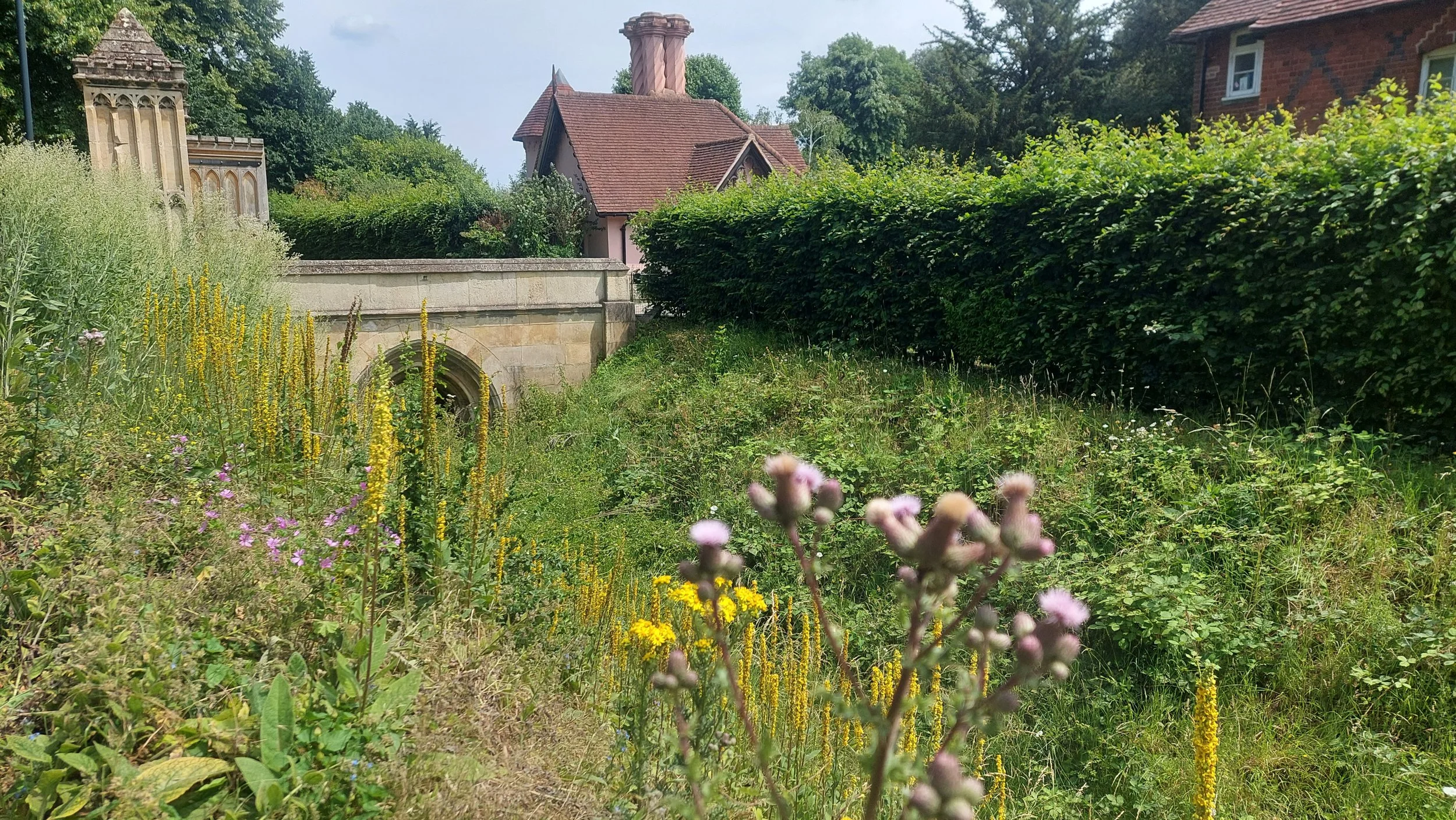
Moat and bridge outside Fulham Palace, filled with green plants and yellow and purple flowers.