The final installment of Anne Connaughton’s public morality council series- many thanks Anne for sharing all your research with us!
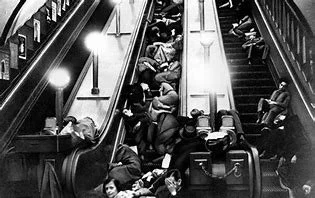
Can readers remember how London underground stations, became makeshift refuges during the Blitz? Imagine how many lives were informed by the experience!
Meanwhile, the Public Morality Council (PMC) patrols were busy searching for evidence of “immorality in dimly-lit corners” in public air-raid shelters. The patrols were motivated by reports that, at one London shelter, “undesirable women were using the shelter...for wrong purposes “. Reportedly, one woman would bring in “different men each time...keeping to a dark section of the shelter...and rather making a fuss if anyone attempted to take her particular corner.”
Another shelter was patronised by “ a girl of 17...who invites boys of her own age to share her blanket “ and who “commandeers the darkest parts of the shelter “. According to a shelter marshal, “this shelter is nothing more than a brothel “. Morality patrols observed a deterioration in moral conduct “very noticeably on the nights when drinking is heavier”, and particularly near popular thoroughfares “when on Saturday nights there is a large influx of casual visitors” and on “pay nights”.
Some shelterers enjoyed gambling, often “confined to small groups of people in secluded corners or bays, often with an audience of children.” Morality patrols notwithstanding, potential remained for “initiating many youths in gambling habits, providing such opportunities as card sharps are quick to embrace.” Sharps thrived on the seclusion of, and movement between shelters “with youths and women easy prey” and whose “reluctance to admit to being had, makes them shy to report offences”.
The intrusiveness of morality patrols was often unwelcome. One shelter promised “a rough reception“ should the PMC come calling. “The prowlers of the PMC “ wrote one London clergyman, “would be better employed serving cups of tea...there would be no time to stick their noses into dimly-lit corners, except perhaps to comfort a child or mother.”
A self-described “tourist of air-raid shelters “ wrote that reported goings-on in such places were exaggerated. The war had, unquestionably, cramped the public’s style where it concerned normal recreational outlets. The dynamics of air-raid shelters evolved when the roles of shelter and ARP wardens were reinforced. Contemporary evidence records that pastoral; educational and cultural initiatives were facilitated by a range of agencies, such as The Salvation Army. The PMC held fast to the “constant need for vigilance “, whilst acknowledging that the general standard of morals “reflected in public behaviour is on an upward trend”.
Useful Sources, including for italicised extracts:
File concerning behaviour in Air-raid Shelters 1940-1941 (LMA)
File relating to the First Annual Public Meeting 1941 (LMA)
“Immorality in Shelters”: p.10, Daily Mirror, Wednesday 6 November 1940 (BNA)
“Paul Pay on Tour”; p.10, Saturday 9 November 1940 (BNA)
“The Truth About Shelter Morals”: The Weekly News, Saturday 29 March, 1941 (BNA)
“Shelter Morals are better than ever”: Daily Mail, 8 March 1941.