August Object of the Month - Books

Every month we are going to feature two blogs written by volunteers, one will describe an object in the Palace and one a plant from the Garden. It is great way for us all to learn more about the Palace, if you would like to contribute there is no set format so send us your ideas!

I am a member of the library care team and can be found every Friday morning in the bishop's library along with Cerys armed with special brushes, dusters, a small vacuum cleaner and a laptop. Our job is to dust and inspect the books and log onto a database our findings. I am now familiar with the terms loose joints, detached sections, foxing and ingrained stains.

However this paragraph from a post by the British library book care team expresses very eloquently how I feel when handling these volumes.

"As conservators our first sight and handling of an object can play like a movie of its life. We experience the ageing character and material signs of use and damage known so well of leather, parchment, threads and paper. Even the smells and stains, the cuts, marks and tears of a hundred scholars thumbing the pages are brought to life as we hold it in our hands. There was mysterious cuts to the tail of many folios, which suggested a purposeful extraction.  Could this have been to remove mould, mistakes or secret text? Perhaps the parchment was stolen for love notes by a fifteenth century student?"

Our library is a little more mundane and so far no love notes! The library is eclectic and some volumes ascribable to a certain bishop or family members. Some have bindings and end papers to die for and sadly some have no signs at all of one yet alone hundreds of scholars thumbing the pages.
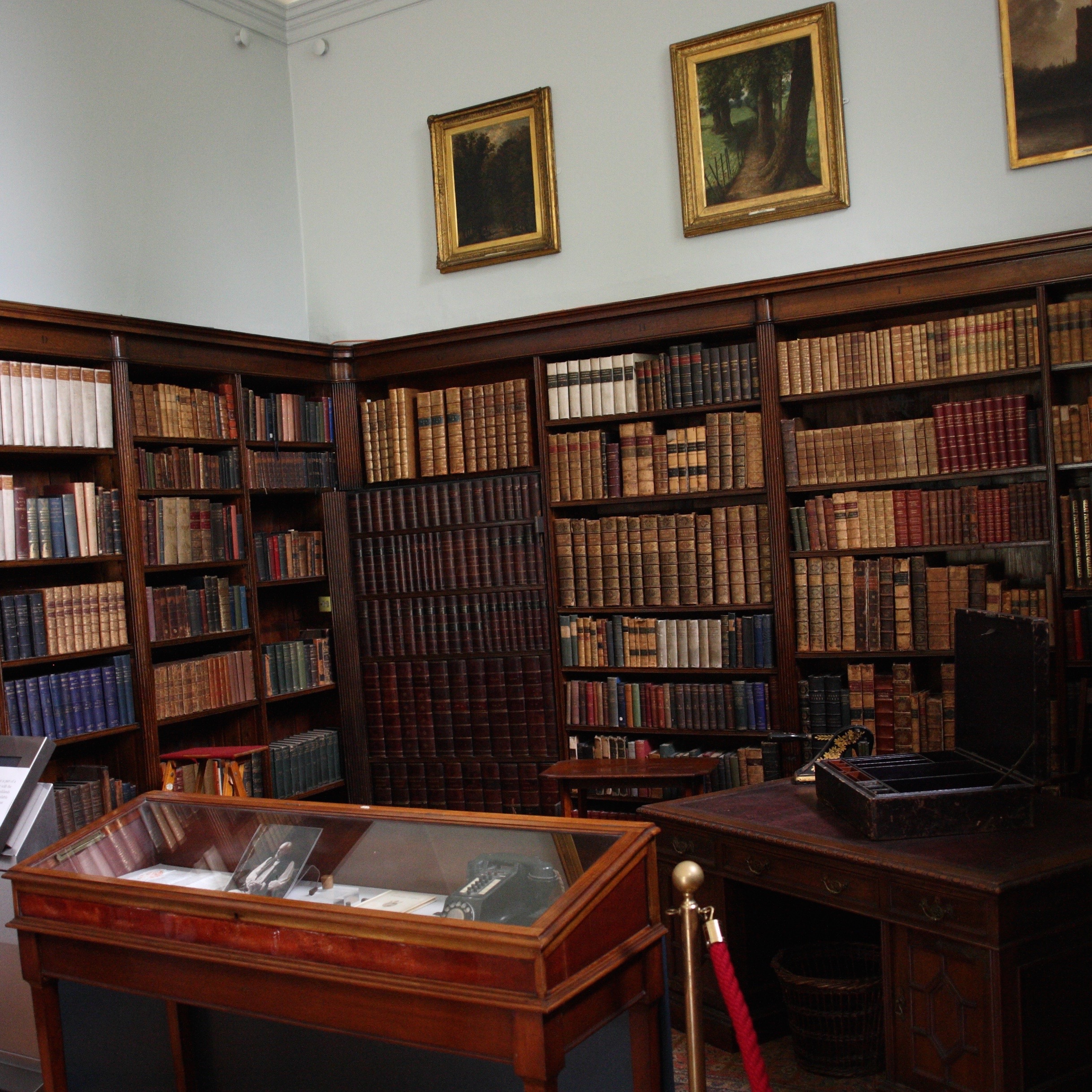
The Fulham Palace Library

The Fulham Palace Library

The greatest joy is finding graffiti, names, bookplates, inscriptions, annotations which have you reaching back in time. The faintest trace of candle wax on a cover, a volume read by candlelight,  schoolboy jottings of latin homework etc. The discovery of a vast range of items used as a book mark from poignant letters, christmas and birthday cards, leaflets to exhibitions. In one very academic religious text book a photograph of a pig.

I sometimes think Miranda must despair at the rate of progress.  As much time is spent just enjoying these volumes and the wistful hope that one Friday she would say no cleaning today just read the books then I would pick out a volume with wonderful binding and end papers interesting content and leave it a love note.

Jennifer Osborne - library care team volunteer

Please send your ideas for blogs to commsvolunteer@fulhampalace.org If you would like some help, let us know.
August Specimen of the Month - A Riddle

Every month we are going to feature two blogs written by volunteers, one will describe an object in the Palace and one a plant from the Garden. It is great way for us all to learn more about the Palace, if you would like to contribute there is no set format so send us your ideas!

You'll find me in pineapple thrice,

Elephants contain me twice,

My third at the end of rain in Spain,

And also with kiss - again and again,

At five, I sing of something for two,

Extreme, at each end, is the number six clue,

The man in the moon's beginning is seven,

And O is at eight - yearning for heaven,

Start with nine ladies dancing to reach the end.

Now what do you think I may portend ?


P

E

N

S

T

E

M

O

N

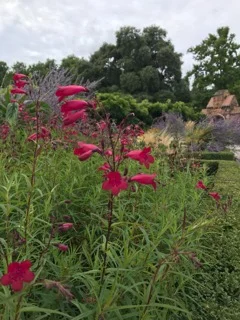
Penstemon in the Walled Garden

Penstemon in the Walled Garden

Jamie Atwell - Garden Volunteer

Please send your ideas for blogs to commsvolunteer@fulhampalace.org If you would like some help, let us know.

Mariana Spater has been appointed the new Chair of Fulham Palace Trust!

We are pleased to announce the appointment of Mariana Spater as Chair of Fulham Palace Trust following the retirement of Tim Ingram on 11 September 2017.

Mariana Spater will assume the role of Chair of Fulham Palace Trust in September.

Mariana Spater will assume the role of Chair of Fulham Palace Trust in September.

Mariana is a Chartered Accountant who, until recently, was Managing Director of Fountain Television Ltd, which was home to shows such as “The X Factor”.  She has served as Chair and Board member for a number of charities and not-for-profit organisations over many years, including Chair of the Royal Surgical Aid Society from 2010 to 2014. Mariana is currently Chair of the M&S Energy Society and on the Board of Wey Valley Solar, both of which seek to utilise solar power for the benefit of stakeholders and local communities.

Mariana said “I am delighted and honoured to have been appointed Chair and welcome the exciting opportunity to be part of the next phase in the long and rich history of the Palace.  I am particularly grateful to Tim for his hard work, dedication and enthusiasm which have contributed so much to the opportunities that lie ahead, and I am looking forward to working with Sian Harrington, her team and the rest of the Board”.

As the inaugural Chair of Fulham Palace Trust, retiring Chair Tim Ingram has led the organisation for six years, from its inception in April 2011 through to the Trust’s recent successful £1.88 million bid to the Heritage Lottery Fund in support of a £3.8 million, three year restoration project.

Tim said “Fulham Palace is a truly wonderful place and so very rich in history.  It has been a great privilege and pleasure to have been Chairman since the creation of Fulham Palace Trust in April 2011.  I am hugely grateful to the Chief Executive, staff and volunteers, trustees and all the very many supporters who make Fulham Palace the great place that it is, and who have made my role such a pleasure.  I am delighted that Mariana is succeeding me as Chair and that the Trust will therefore be in such good hands.  I am also delighted to report that the fundraising for our £3.8 million restoration project is progressing very well with nearly 95% raised, and I am so very grateful to all of our supporters for their great generosity.  I have been asked to stay as Chairman of the Campaign Board for a little while beyond September to complete the fundraising campaign, and I will be pleased to do this."

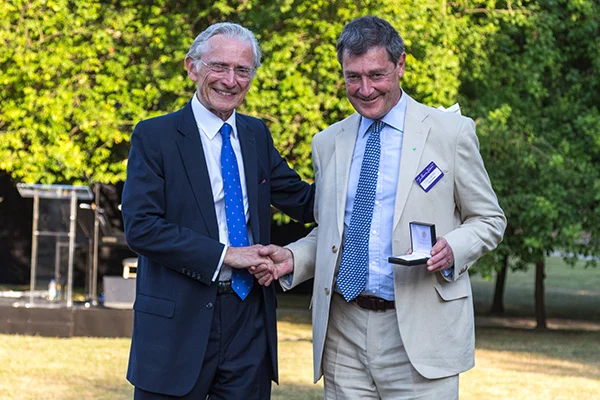
Last month The Rt Hon. The Lord Fowler (left) presented retiring Chair Tim Ingram (right) with the Bishop Compton’s Medal for his outstanding contribution to the ‘Discovering the Bishop of London’s Palace at Fulham’ restoration project.

Last month The Rt Hon. The Lord Fowler (left) presented retiring Chair Tim Ingram (right) with the Bishop Compton’s Medal for his outstanding contribution to the ‘Discovering the Bishop of London’s Palace at Fulham’ restoration project.


Recipe of the Month - July

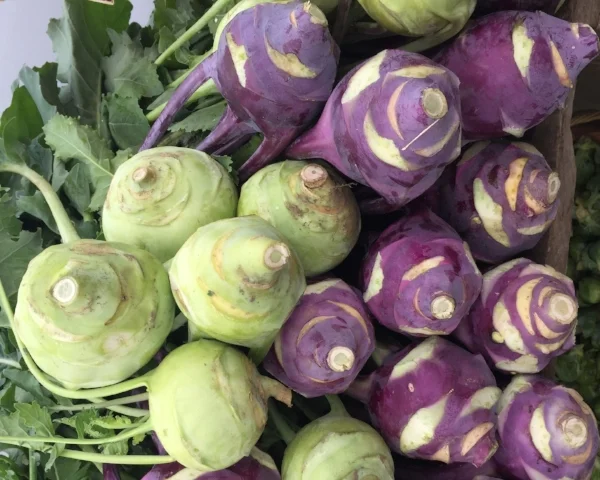
Kohlrabi - an unusual looking vegetable!

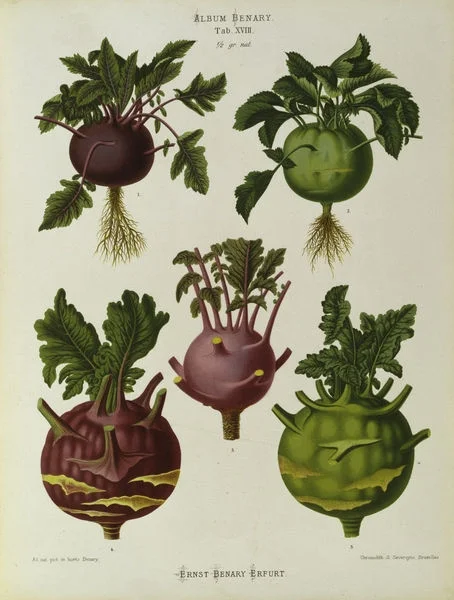
You may have spotted Kohlrabi on the barrow in the walled garden this month and it can be a bemusing vegetable – it looks pretty scary but in fact it is mild in flavour and pretty versatile as you can enjoy it raw or cooked and you can eat both the bulb and the leaves. Kohlrabi is not a root vegetable but part of the brassica family with a swollen base to its stem. In flavour the bulb resembles a large radish or a mild turnip, the leaves resemble kale and can be prepared in the same way.

The smaller the bulb the sweeter the flavour (6-10cm is ideal) and it is good to buy bulbs with the leaves still attached. Remove the leaves and wrap them in damp kitchen paper and put in a sealed plastic bag and use within a day or two, the bulb will keep for a few weeks in the fridge. The bulb needs to be peeled as the skin is tough and doesn’t soften much even with cooking.

Kohlrabi has a delicate flavour and is best served in a simple way.  It is perfect as a side dish; cut the peeled kohlrabi into cubes and steam them lightly until just tender and then dress with olive oil or butter, a squeeze of lemon juice and a sprinkling of chopped parsley.


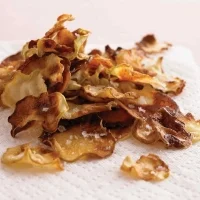
Kohlrabi crisps

This is a pleasingly simple recipe and the crisps are rather addictive.

Slice the Kohlrabi very finely (you can leave the skin on for this), toss the slices in olive oil and season with salt. Spread the slices in one layer on non-stick baking parchment. Bake in a medium/hot oven turning once for about 35 minutes or until nice and crisp and a rich brown. Drain them briefly on some kitchen paper and season to your taste.

chip01-0611mld106124_vert.jpg


Kohlrabi is great raw as you get to enjoy it's radishy crunch, it is a good ingredient for a coleslaw with a difference, and the salad below is an elegant use for Kohlrabi.

Kohlrabi carpaccio

1 medium (or 2 small) kohlrabi
4-6 anchovy fillets, cut into thin strips
50g hard goat's cheese (or crumbled Feta)
1 tsp fresh thyme leaves
Juice of 1 lemon
2 tbsp rapeseed oil
Salt and freshly ground black pepper

Peel the kohlrabi, slice it into thin slivers with a vegetable peeler and divide these between four plates (or even one larger platter). Scatter the strips of anchovy fillet on top of the kohlrabi, then shave the goat's cheese over, again using a vegetable peeler. Sprinkle on the thyme leaves, squeeze over a spritz of lemon juice and trickle on a little rapeseed oil. Season with salt and pepper to taste, and serve at once.


Kohlrabi, Album Benary /Farblithographie Botanik: Kohlrabi - Brassica oleracea. - Glaskohlrabi'.  (Ernst Benary) 1876-1893

Kohlrabi, Album Benary /Farblithographie Botanik: Kohlrabi - Brassica oleracea. - Glaskohlrabi'.  (Ernst Benary) 1876-1893


Cope and Mitre of Bishop Winnington-Ingram

Every month we are going to feature two blogs written by volunteers, one will describe an object in the Palace and one a plant from the Garden. It is great way for us all to learn more about the Palace, if you would like to contribute there is no set format so send us your ideas!

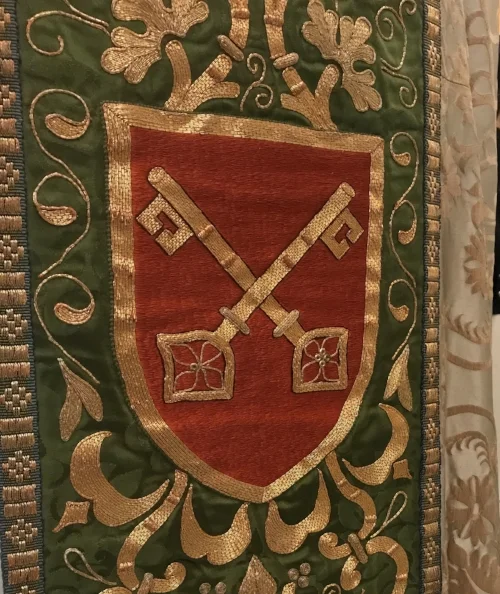
The crossed keys are the emblem of St Peter and the Diocese of York

The crossed keys are the emblem of St Peter and the Diocese of York

The Cope and mitre created for Bishop Winnington-Ingram is a fantastic example of different forms of stitching and embroidery with its unusual depictions of former Bishops.

Clare Bowring - Volunteer

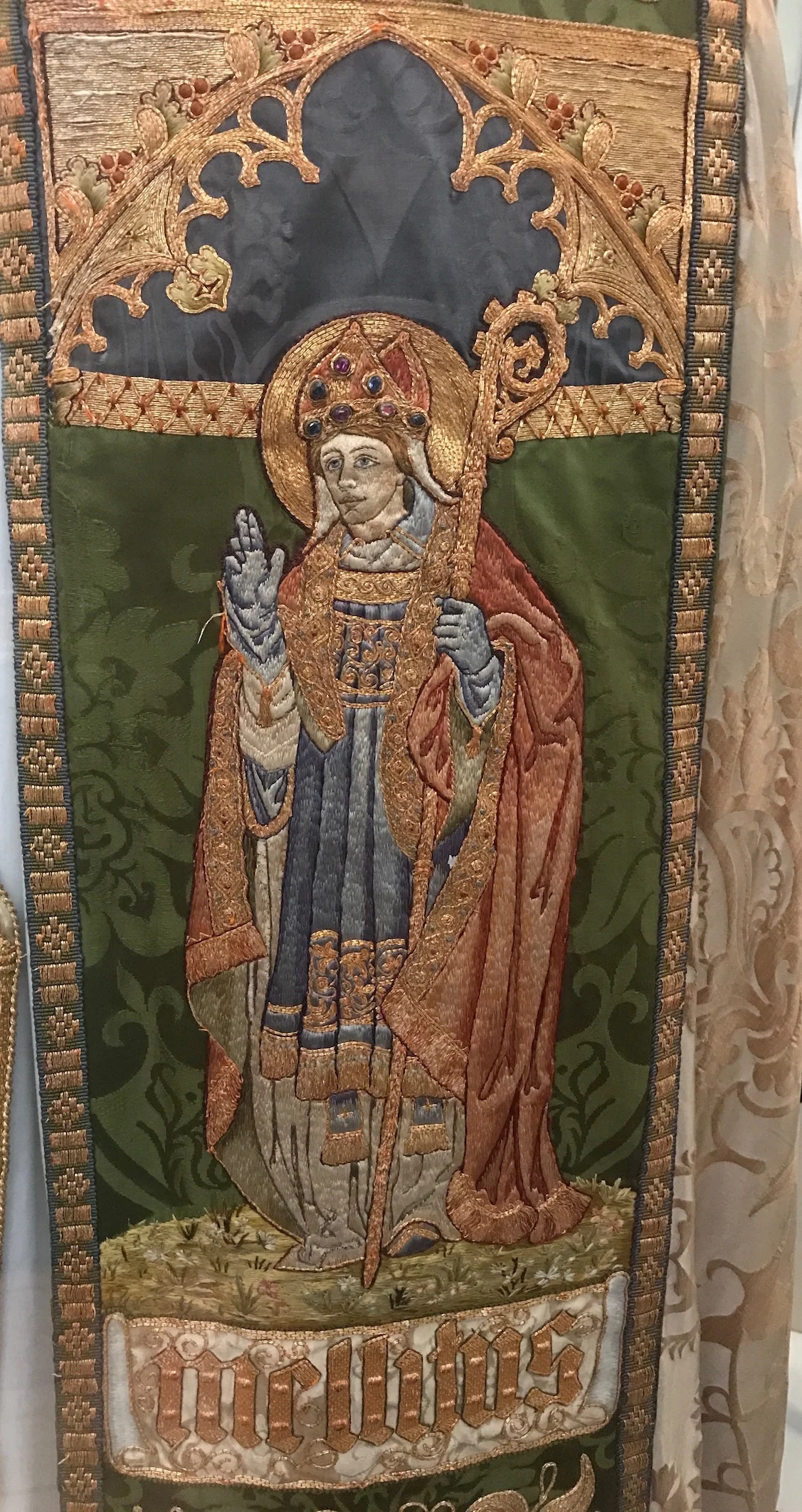
The embroidered image of Bishop Mellitus who was a Bishop of London during the Saxon period

The embroidered image of Bishop Mellitus who was a Bishop of London during the Saxon period


Some further information taken from the Museum display featuring the Cope and Mitre:

The makers of the Cope and Mitre are unknown, possibly the firm of Watts, but we know it was produced between 1901 and 1910. The professional embroiderers used many different stitches and the silk-damask is set with semi-precious stones. Depicted on the cope are Mellitus, an early Bishop of London, and St Paul. The crossed swords are the emblem of St Paul and the Dioceses of London; the crossed keys that of St Peter and the Diocese of York.

Bishop Winnington-Ingram wore these impressive objects on many occasions, including the Queen's coronation in 1937, and he is wearing them in the portrait of him in the museum.

Please send your ideas for blogs to commsvolunteer@fulhampalace.org If you would like some help, let us know.
The Tree That Time Forgot

July Specimen of the month. 

Every month we are going to feature two blogs written by volunteers, one will describe an object in the Palace and one a plant from the Garden. It is great way for us all to learn more about the Palace, if you would like to contribute there is no set format so send us your ideas!

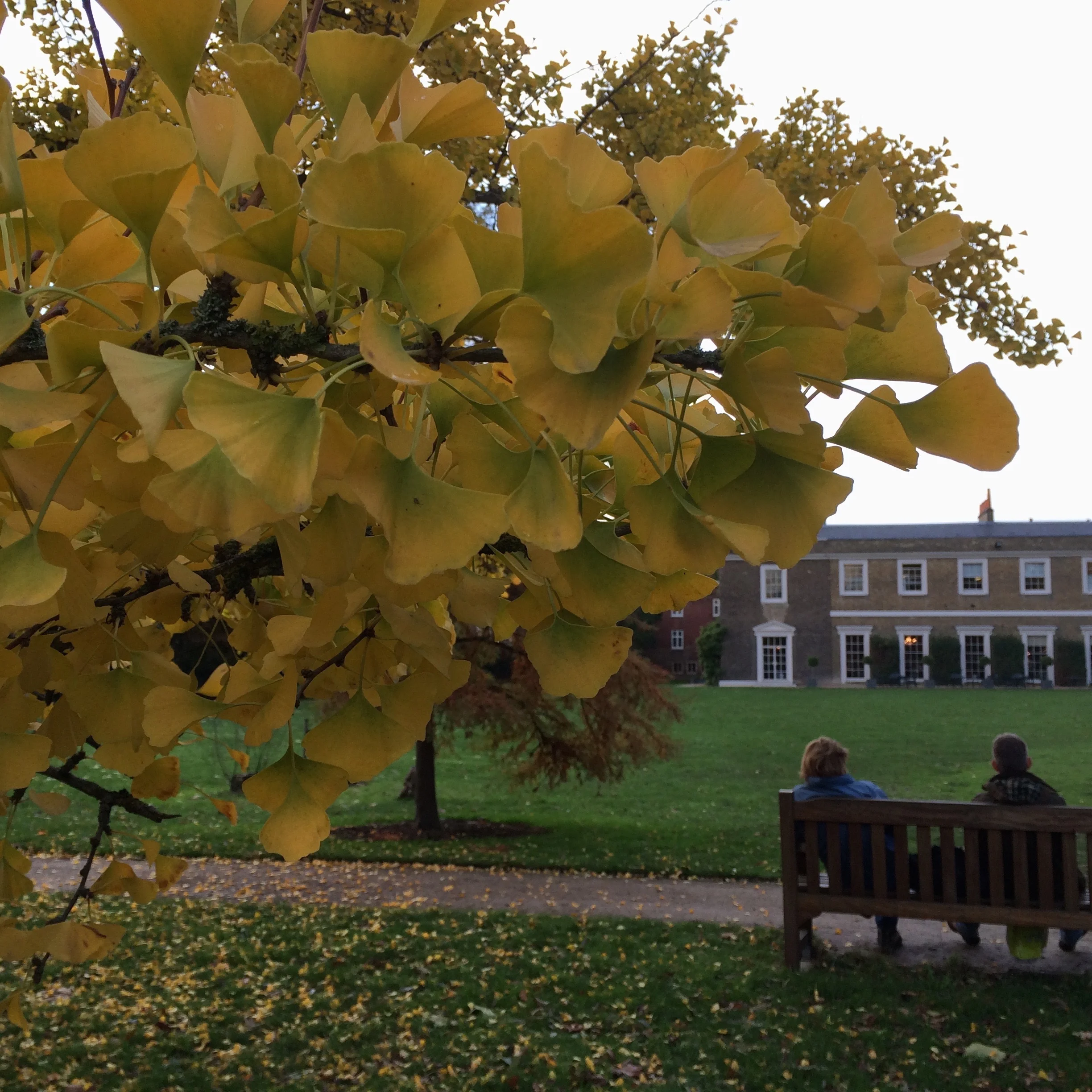
My name is Ronnie Bendall. I have been a garden volunteer at Fulham Palace for five years. The many beautiful Palace trees give pleasure to us all. My favourite is the stately Ginkgo biloba which stands guard outside the Walled Garden entrance.

IMG_1144.jpg

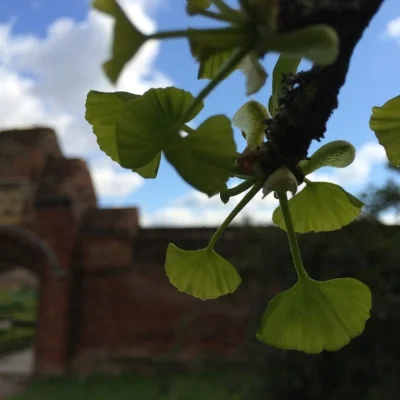
I follow this tree’s progress from early bud in spring, to the miraculous bright yellow carpet which appears after its sudden autumn leaf fall. In the summer the Ginkgo offers a lovely bright green, leafy canopy over the visitors’ bench.

Botanist author Peter Crane calls the Ginkgo “The tree that time forgot”. Ginkgos were around with the dinosaurs. They are known to be our planet’s most durable trees. Nowadays they grace parks, gardens and city streets worldwide.

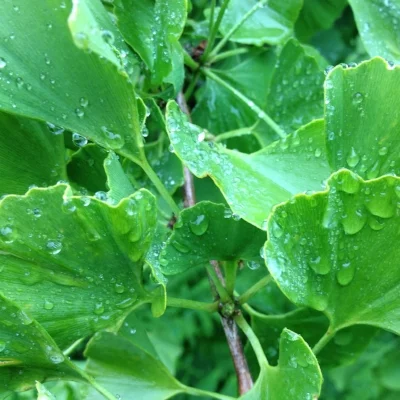
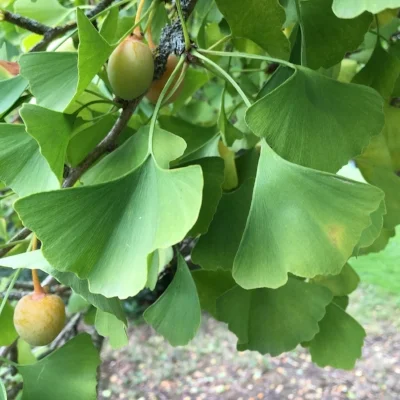
The wonderful fan shaped leaves are continually fascinating to me. These leaves are manufactured into an important medical extract to aid memory.  In striking contrast the female trees drop their stinking fruit in autumn. The brave will find inside an edible kernel - a much beloved delicacy which appears in Japanese bento boxes.

Take a look at my photographs and I hope I have encouraged you all to have a look at ‘my’ Ginkgo when you next pass through the gate to the walled Garden!

Ronnie Bendall - Garden Volunteer

Please send your ideas for blogs to commsvolunteer@fulhampalace.org If you would like some help, let us know.


A Walk In The Walled Garden With Fran

I caught up with Fran, Fulham Palace's newest Garden Apprentice, and asked her a few questions as a way to introduce her to you all. 

What excites you most about gardening at Fulham Palace? 

The broad diversity of gardening tasks and the learning opportunities. I have learned the correct stone fruit training in fan form but also how to grow potatoes. I now know how to drive the triple mower and also how to seed a lawn. I can try, but still sometimes fail, most importantly though I always learn so much about all aspects of gardening. And then there are so many exciting projects on the way (as well as those already accomplished) that gives us apprentices the unique opportunity to be a part of the development of a botanical garden.

If you could pick a tree/ flower /plant, what would it be and why? 

That is a really tricky question for a gardener! That is like saying, which of your children is your favourite! But as a former florist I can tell you that flowers are my great passion - so I will try to pick one for every season: Fritillaria meleagris in Spring, you can spot them along our woodland path. The different varieties of sweet peas that we have planted in our vegetable garden and which we pick now to create gorgeous, fragrant flower posies to sell on the Barrow. The Dahlias in Autumn (here at Fulham Palace, the precious Bishop Dahlias in the Walled Garden are already blooming!). And in Winter, the unique Helleborus niger (Christmas rose).

Which is your favourite part of the Palace?

The Walled Garden, there is such an intimate atmosphere in this garden surrounded by history and nature. I love it. And of course everywhere, where our lovely mice hunter and garden cat is hanging around - he knows the best spots! 

What dish do you love to cook?

As cooking is one of my big passions, I love to experiment with all the flavours and ingredients the world provides. I like to cook a fresh meal every day, often with vegetables from the garden at Fulham Palace - so yummy!

What is the one song you can't get out of your head?

'Shake it off' by Taylor Swift. Thank you, dear Lizzy, the whole garden staff is humming it now.

What is your favourite book or film?

I love French movies, so an all time favourite is 'Amélie'. And as a keen reader, the English bookshops are a paradise for me, especially for garden literature.

Thanks Fran!

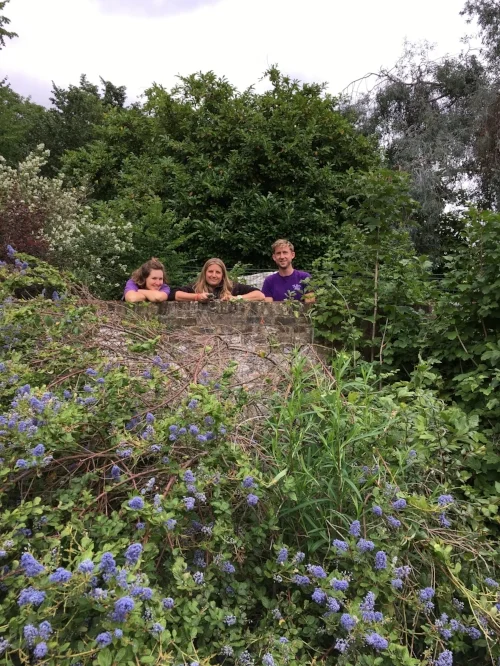
From left to right: Fran, Lizzy and Josh - our Garden Apprentices. Photo taken by Isabel Wooller, Garden Volunteer.

From left to right: Fran, Lizzy and Josh - our Garden Apprentices. Photo taken by Isabel Wooller, Garden Volunteer.

Ahou - Volunteer Comms Assistant