Garden

Introduction to Growing Vegetables Course: Free for Volunteers!

Spring has arrived so time to get out in the garden!
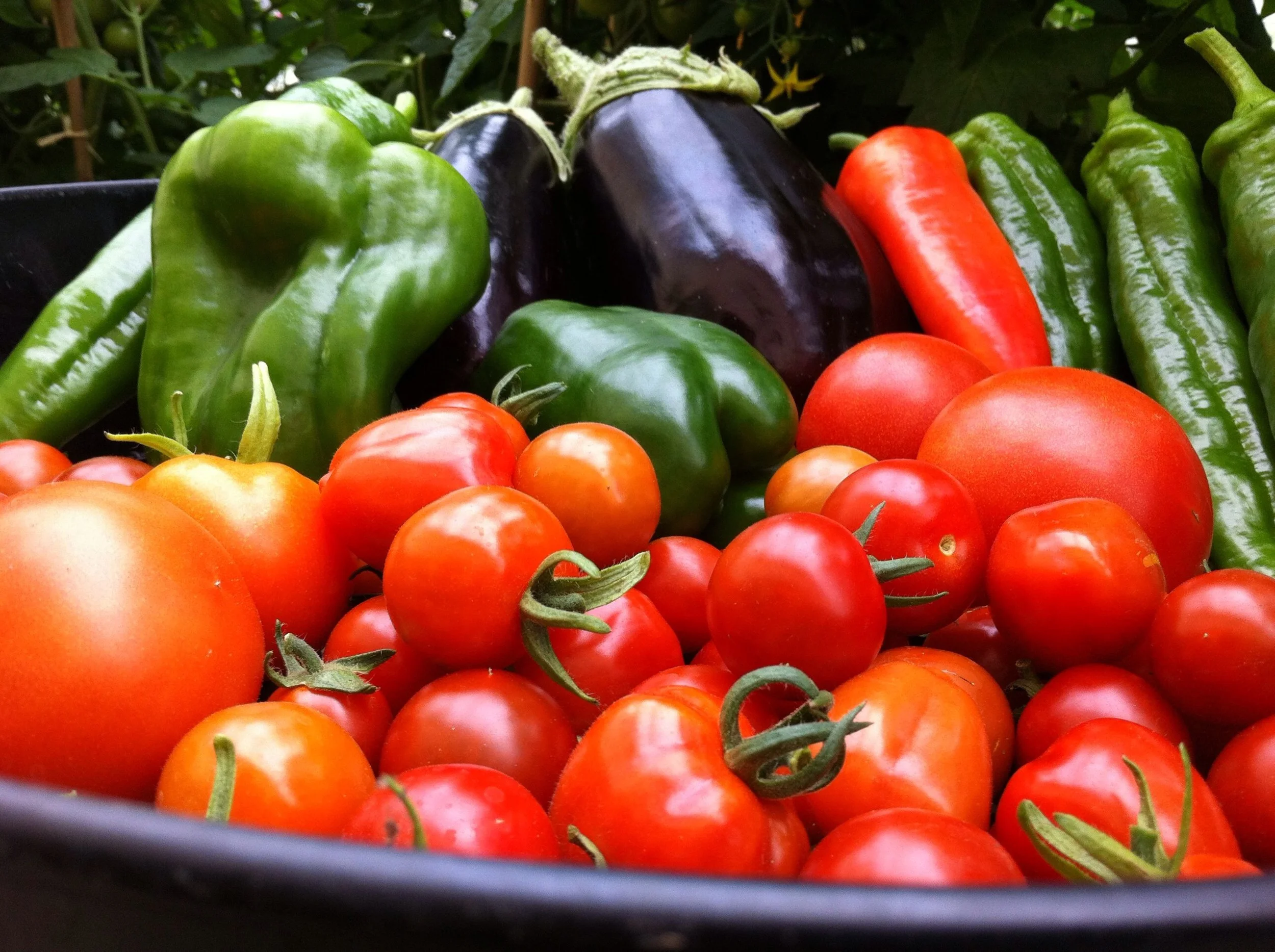
Would you like to learn how to grown your own produce? Not sure where to start? Then book onto this course of monthly workshops which will take you step by step through the process. The experienced garden tutors will help you learn practical techniques on how to grow vegetables with ease. Each workshop will cover every aspect of growing vegetables from seed sowing through to harvesting your produce.

The course is FREE for Fulham Palace Volunteers, and will run from 1:30pm to 4pm in the Walled Garden on the following dates:

  • Monday, 13 April – Seed Sowing
  • Monday, 11 May – Bed preparation and planting out
  • Monday, 15 June – Tour of the Fulham Palace Meadows Allotments
  • Monday, 13 July – Plant care and harvesting

Booking is essential and spaces are limited, so click here to book.
Mind Your Own Beeswax

In recent years bees, which play such a big part in the pollination and proliferation of plant life, have been under threat and their numbers declining. So it’s a great thing that even in an enormous city like London we can play our part in the regeneration of bees and beekeeping.

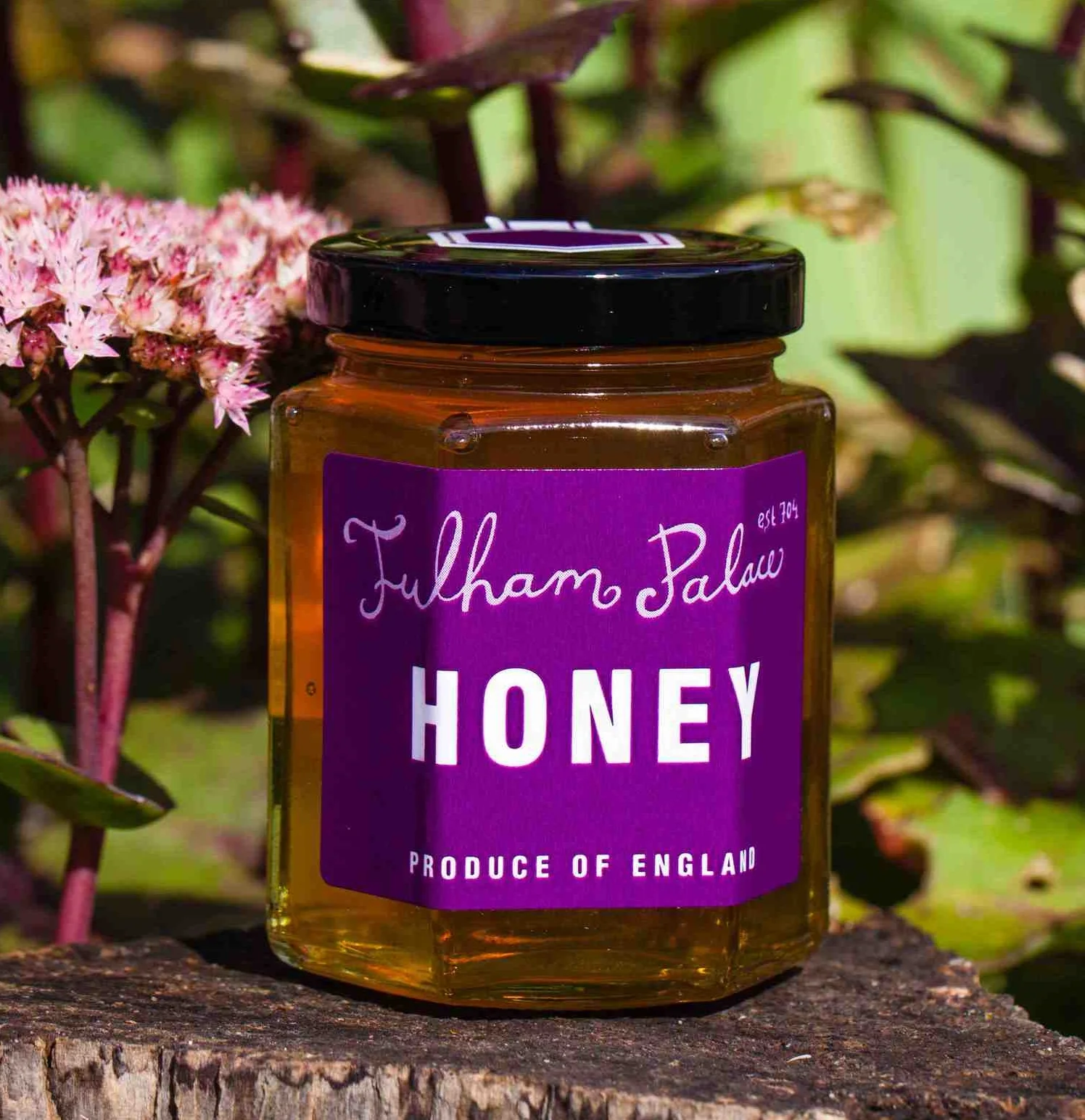
Some of you will be aware that in October 2013 honey was harvested at Fulham Palace for the first time in a century. Beehives were introduced to the Walled Garden, as previously three historic bee boles in the Tudor section had been uncovered. This indicated that honey production using traditional methods had been going on since at least Tudor times, so a partnership with Groundwork London and the London Beekeepers’ Association enabled the Palace to train staff and volunteers as beekeepers.

The honey produced, which has been described as ‘floral, with a strong presence of lime blossom, producing a tangy aftertaste’ had been on sale in the Museum Shop, and  proved such a great success that it quickly sold out.

So until more is available, which we hope will be later this summer, we will be selling honey produced by the LBKA hives based at East Dulwich. The Palace is a member of the Association so it is still all in the family and great for those of you who like to buy local produce.

Beeswax tables made by volunteers are now available in the Museum Shop for £1.50 each.

Museum opening hours: Monday - Thursday: 12.30pm-3.30pm Sunday: 12pm-4pm.

Free Lecture by Lucy Hart

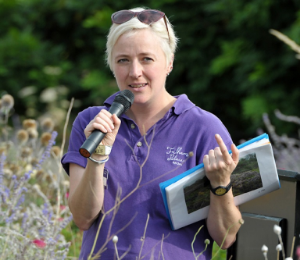
Head Gardener Lucy Hart will be giving a lecture as part of The Upper Room Winter Lectures 2015 series on Wednesday, 25 February.  

During her illustrated talk, titled 'The Gardens at Fulham Palace, past, present and future', Lucy will explore not only the past achievements and the present developments of the garden, but also what the future plans are for the continued restoration of the 13 acre estate.

The lecture takes place in St Savoir's Church, Cobbold Road, W12 9NL, starting at 8pm, with refreshments available from 7.40pm. This is a free event, and the charity welcomes donations.

If you would like to attend, please contact Alyson Sich on 020 8740 5688 or uradmin@theupperroom.org.uk to reserve a seat.

fulham_palace_lucy_hart_copyright_David_Spink.jpg

The Upper Room is a front line charity, based in Shepherd’s Bush, West London.  It began as a simple soup kitchen in 1990 and it still attends to the immediate survival needs of its beneficiaries but it uses the provision of food as the first point of contact with the excluded and then gives them access to two internal employability projects (UR4Jobs & UR4Driving) and a broad range of onward referrals to other specialist organisations.

For more information on The Upper Room, click here.

The New Apple Orchard

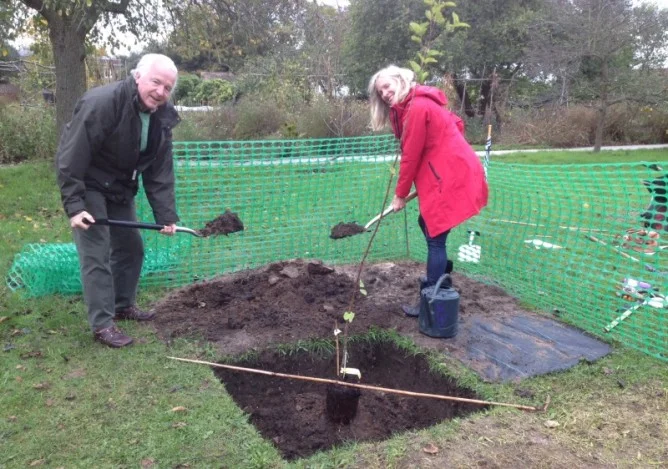
To reflect the historic orchards at Fulham Palace that were grown on the north and south side of the Palace grounds, an apple orchard has been  planted in the north east quadrant of the Walled Garden.  The orchard and archaeological dig was funded by Gordon and Paula Edington and other donors.  Gordon is the Property Trustee and Deputy Chairman of Fulham Palace.  We are very grateful for their generosity.

 The new orchard has an orthogonal layout which reflects the historical layout of the Walled Garden and allows good circulation for the public.  Forty-seven apple trees are being planted and arranged by an overriding transatlantic apple theme.  North America has no native domestic apples and so we are celebrating Fulham Palace’s North American botanical links by growing apples that were sent over to America from England in the mid 17th century. 

•Two quadrants will contain transatlantic varieties, those which were grown in England and Europe and sent to North America from the mid 1600s.  There are 23 trees of different varieties across these two quadrants (with one deducted due to the location of the bee hives).

•One quadrant will contain varieties recommended by George London and Henry Wise.  George London was Head Gardener at Fulham Palace to Bishop Compton in the late 1600s and most of these varieties were sent over to America.

•The final quadrant will have two themes: six varieties of apples that once growing in America, were bred there and then later sent back to England and apple trees that we know the Bishop grew here in the 1860s and 1870s.

fulham_palace_tree_planting9-502x376.jpg

The Archaeological Dig

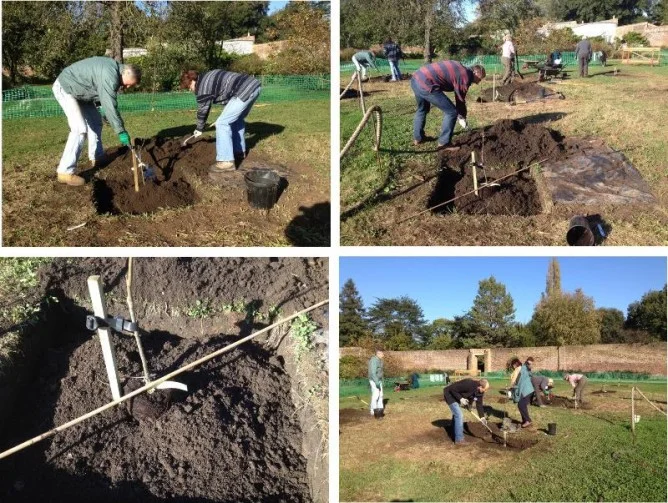
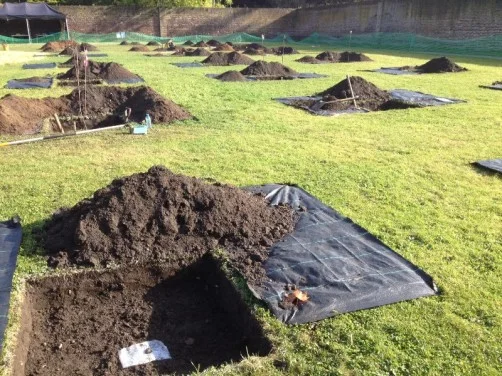
The Walled Garden Orchard Community Archaeological dig started on the 6th October for 3 weeks. This dig was to investigate the archaeology in the quadrant where the new orchard trees were being planted.

 In order to grow an orchard with horticultural promise and longevity we needed to have our apple trees grafted on a rootstock that would withstand our more extreme soil conditions.  Rootstocks are what apple varieties are grafted onto and influence the growth habit of the tree.  The semi vigorous rootstock, MM106, is the best rootstock for poorer soils.  However by using it we run a greater risk of the roots penetrating the archaeology, compared with a less vigorous rootstock such as the semi dwarf M26 or dwarf M9.  Therefore English Heritage agreed the orchard under the condition we dug 90cm deep under the supervision of qualified archaeologists, and then lined the hole with a permeable fabric but one that will not allow any adventurous roots to go any deeper into of the soil where we might find Roman remains. 

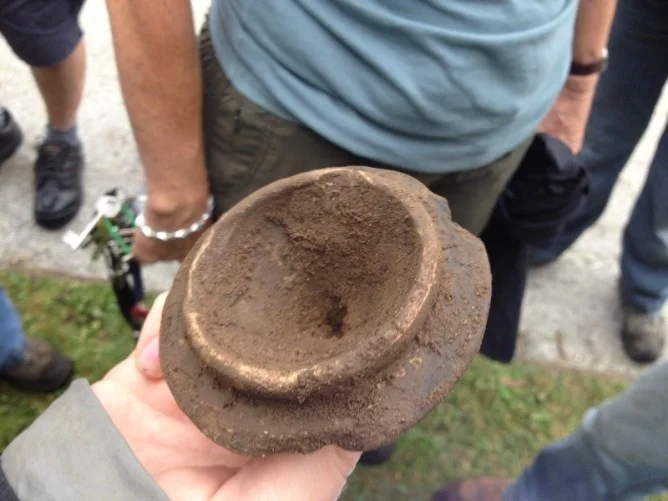
 The finds from the dig included a Roman pot lid still intact indicating possible Roman domestic activity, a Tudor coin, a blade from the Stone Age, and a Roman coin.  Thank you very much to all the archaeological volunteers that helped investigate the pits supervised by archaeologists from Pre Construct Archaeology.