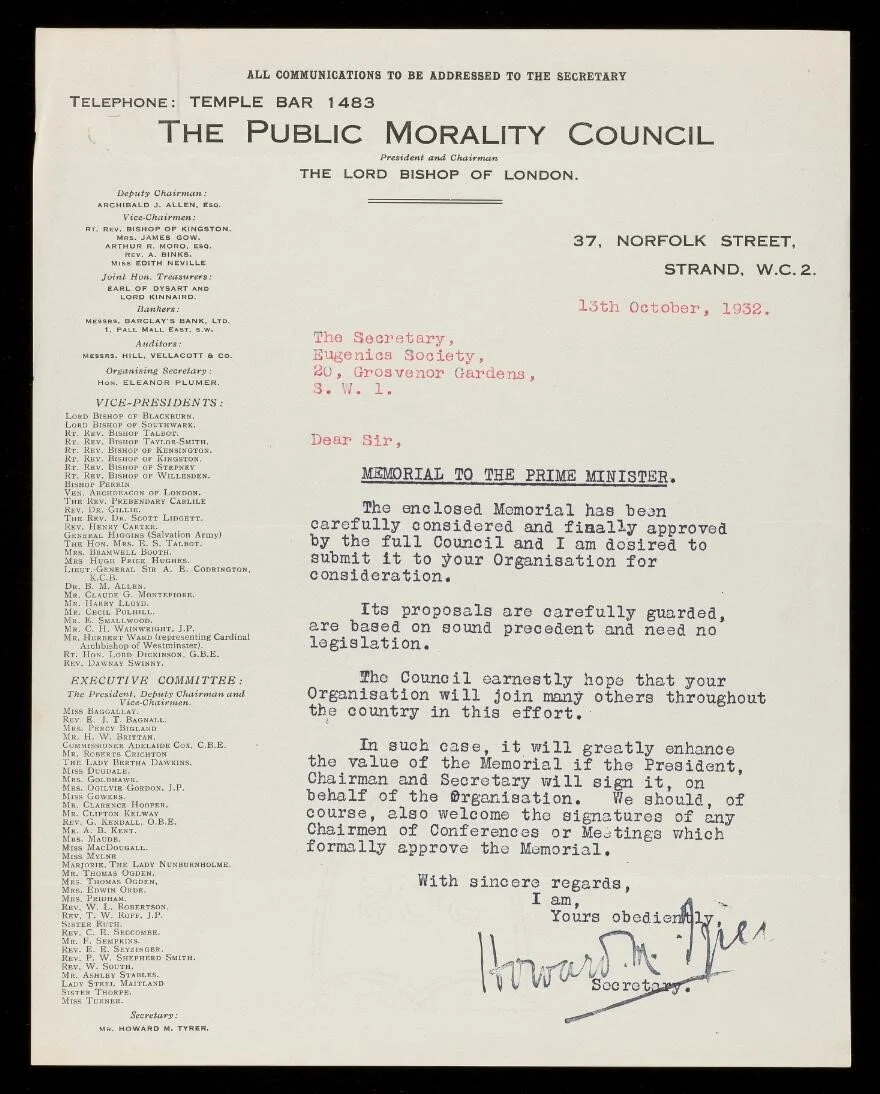
Anne Connaughton continues her series looking into the Public Morality Council (PMC) which played an integral part in the role of Bishop of London for many years. Here Anne discusses some of the more shocking aspects of their role and what they found.
As we continue on our travels with a London morality patrol, remember how the parent organisation, the Public Morality Council (PMC) was underpinned by a committee structure, which observed public activity on several fronts, and including, for the purposes of this blog, the Parliamentary, Patrol and Propaganda Sub-Committee. Its wider remit covered clubs; gaming houses; brothels; prostitution, souteners and male importuning; obscene literature; parks and open spaces and contraceptives.
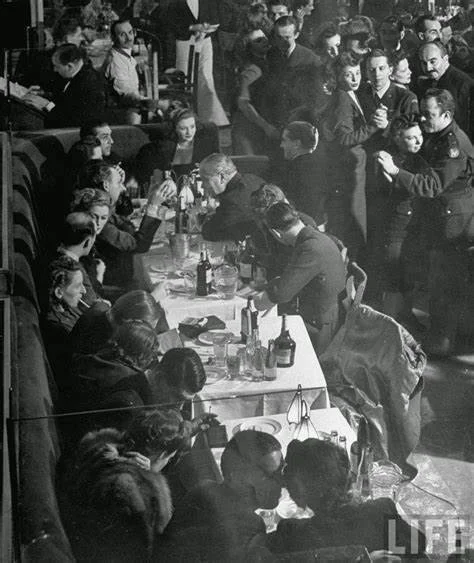
The work of the morality patrols kept the show firmly on the road, as they assiduously sought out the iniquities of fleshy pursuits. A patrolling officer's report from late 1942 records a conversation with a shop keeper who describes premises in the Paddington area as “nothing more than a common drinking den”. A patrolling officer named Arthur Wheal describes “the difficulty experienced by managers to weed out or decline to serve any person under 18 with alcoholic liqueur”. The Association of Moral and Social Hygiene (AMSH) which often worked alongside the PMC, speculates on a problem “2 with girls as young as 13-15, who ...........get themselves up to look 18”. Many couples, notably troops and young girls found their entertainment in such places. Arthur Wheal revealed the plight of a 14 year-old girl who had given birth to twins, and whose chief recollection was that she had been “drinking with American troops”.
Some newspapers described teenaged girls as frequenting public houses where “they bragged about their capacity for heavy drinking “(1). The AMSH, whose records hold a fulsome list of press cuttings, investigated a complaint about juvenile drinking in licensed premises at Liverpool Street station. These records tell of a 14 year-old girl who “had been the subject of assault by at least five soldiers” between December and February (1944-1945).
The “laxity of public morals since the blackout began”(2), was the raison d’etre of the patrols, which identified “undoubtedly an increase in the number of offences against young women “ (3) and how “shady clubs”(4) merely cloaked “morality offences by young women.” (5) Morality patrols believed that these circumstances were compounded by “allied troops coming home on leave who have found a girl before leaving the station.”(6) A female doctor told a newspaper that “I would like them to stand at a main London station, as I did.........and watch the kids of this (teenage) age loitering about, waiting for any soldier who is willing to pick them up.” (7)
Another newspaper proposed that “men on leave should be paid less.”(8). In November 1943, Arthur Wheal reports that the authorities intend tightening up on the discipline of the troops “particularly as regards their conduct......the accosting of women.” Having become “ deeply disturbed by the existence of questionable night clubs”, the PMC observes the conjoint experiment between the Home Office and the Military Police in permitting “extended hours” to selected restaurants accessible to the great railway stations. The wisdom was that given a rigorously enforced curfew, and no exceptions “with regard to foreign waiters, the undesirable night club problem will automatically solve itself”.
Next Time -
“........increase in depravity among the young “!
Visit a PMC meeting in Hyde Park.
Useful Sources, including italicised extracts:
PMA Files of Patrolling Officers’ Reports 1938-1942; 1941-1945; 1942-1947 (LMA)
File of Association of Moral and Social Hygiene (LMA)
1;2 & 5 “Naughty London Is Better “; p.3, Daily Herald, Tuesday 7 September, 1943
3/4 “London Morals Cause Concern”; p.7, Daily News, Wednesday 21 February, 1940
6/8 “These Men Must Know The Truth “; p.7, Sunday Mirror, Sunday 23 January, 1944.