
CONSERVATION IN ACTION. THE CIA
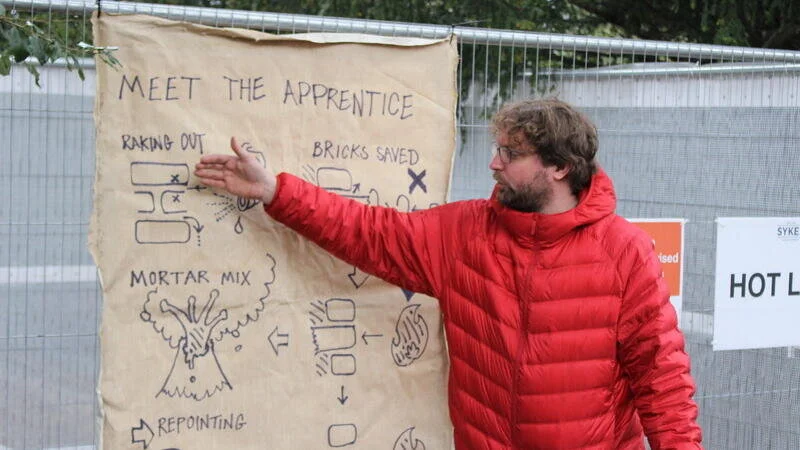
An apprentice using the hot lime method
Thanks to Lee for writing this detailed and engaging blog!
Back at the start of the 2018/2019 Major works Project at Fulham Palace, a new Volunteer role was established called Conservation in Action (CIA for short). Those interested in joining this new team were told our role would be to conduct tours, donning Hard Hats, good footwear and, amazingly, no masks!
We were about to embark on leading tour groups inside the previously rarely seen areas of the Palace. This would be an exciting time for us and the public, following the progress from start to finish, watching as transformations took place, bringing unseen spaces back to life. We uncovered hidden gems, like the wall paintings in the upstairs room, no. 109, to Tudor floor boards and much more. It was a real voyage of discovery, culminating in the now finished museum rooms where you can see many of the treasures found.
But a large part of the works were to be the Tudor Bricks.
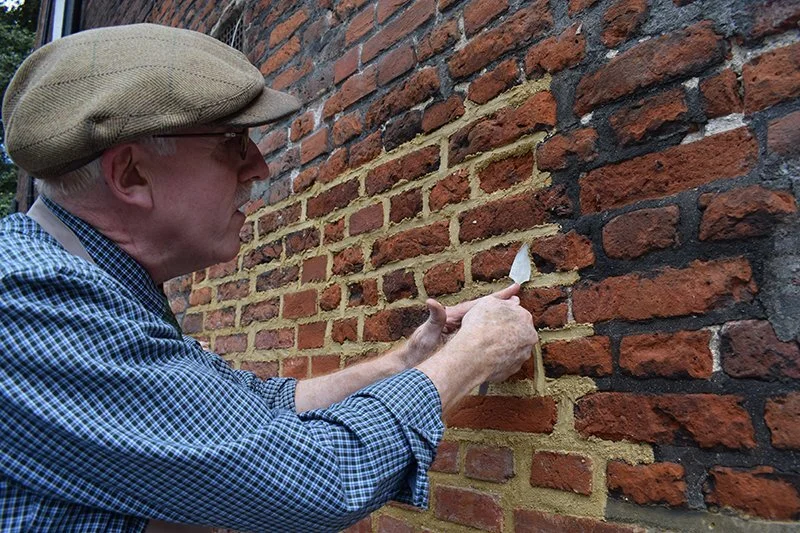
GERARD LYNCH, MA PhD, master brickmason, historic brickwork consultant and author. Gerard trained through the apprenticeship system and at Bedford College, where he later became Head of Trowel Trades. He is internationally recognised for his extensive specialist knowledge and skills in the conservation, repair and re-pointing of traditional and historic brickwork.
Tudor brickwork exudes confidence, being used for both utility and show.
Firstly, it had to be decided how best to proceed with the restoration of the Bricks. So, the Palace called upon:
Gerard carried out several tests on the Palace Brickwork.
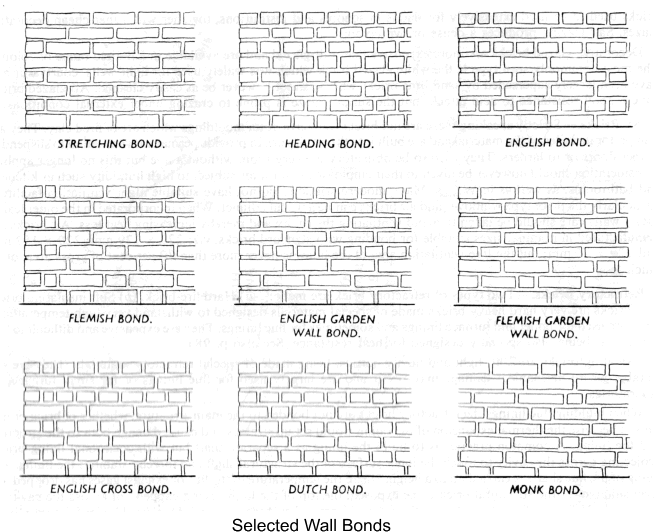
Types of Bonding
Bonding (The type of Pattern) was mainly based on variations of English bond. English cross-bond was particularly popular as it allowed bricklayers to create regular, quarter-bond offsets in every course that facilitated patterns, or diapers, utilising the flared headers to create a polychromatic effect.
Tudor brickwork is characterised by thick joints of lime-rich mortar that served as a flexible gasket. This was necessary for laying the typically irregular bricks to the line, level and overall gauge required to fit the dimensions of the architectural elements of a façade. The faces of the joints were finished, or jointed, using the trowel as work progressed to create either a flush face or, more usually, a struck or a double-struck
It was decided to use the Double-Struck and Hot Lime Mortar method for the Palace bricks.
And soon after, work began.
A caged-off area near the Bishops tree was erected to house the Hot Lime Mortar. Visitors were invited to watch and learn as the Brick experts prepared the Hot Lime safely inside their Cage. A hot-mixed lime mortar is based on three components: quicklime, water and an aggregate such as sand. In a conventional mix, aggregate is mixed with lime which has previously been slaked. 'Slaked' basically means using a shovel to mix. In this case, quicklime is mixed with the aggregate and then slaked with water. The process generates heat, hence the term Hot Lime. It may be used immediately as a hot mix or later when cool.
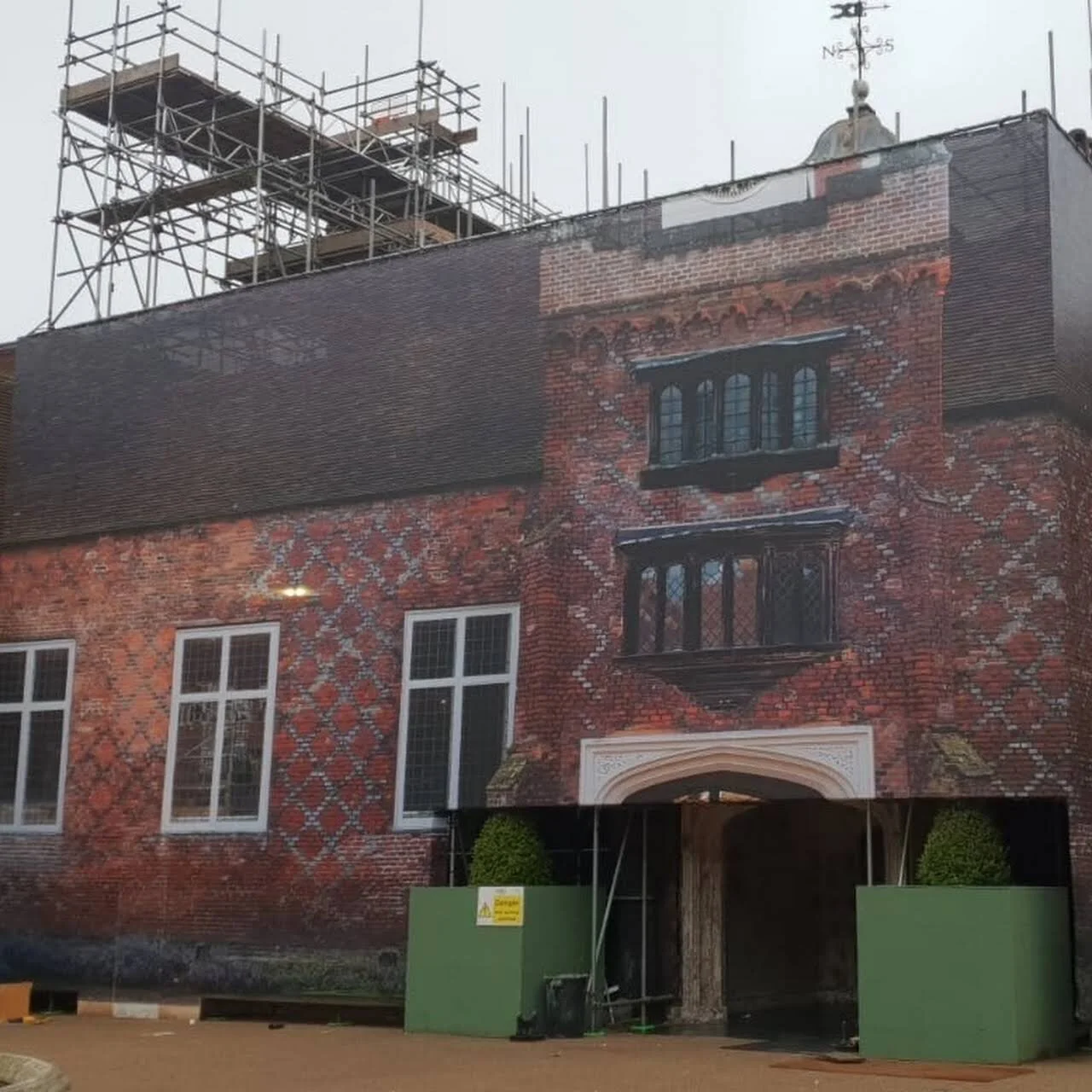
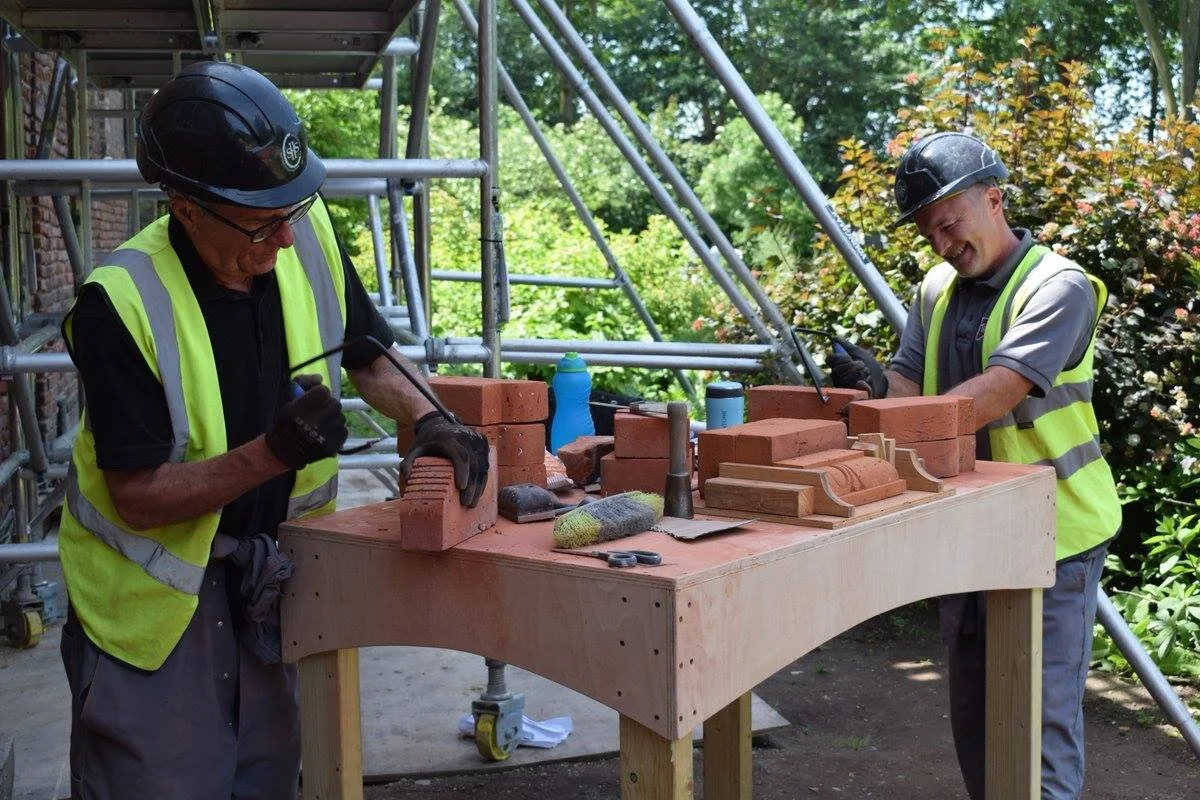
Brick laying experts painstakingly removed each brick from the Wall. Many experts in this highly specialist job are young women. They worked day after day behind the scaffolding that had been placed to the front of the Palace. They were hidden from sight behind a large printed picture of the Palace. They worked and endured The Beast from the East.
Bricks that could be reused were examined. Some were cleaned and ready to be replaced. New bricks were commissioned from Henry George Matthews, who has been producing traditional handmade bricks since 1923. H. G. Matthews established the brickworks that bears his name in Buckinghamshire. The bricks at the Palace are handmade in the Tudor style. Using traditional tools and techniques, the process has changed very little over the years. Amazingly, H.G. Matthews handmakers can make around 1000 bricks per day!
Colours are determined by the location of the brick in the kiln and the firing temperatures they reach. The colour of the brick ranges from orange (where the bricks are set at the edge of the kiln and temperature reaches around 900°C) to brown (where the bricks are set to the centre of the kiln and the temperature reaches up to 1200°C). Glazing occurs when the bricks are close to or in direct contact with the flames.
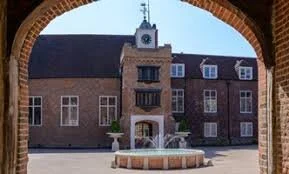
A new front
The Palace ran a 'Sponsor a Brick' campaign where the public could purchase one of the new bricks. Buyers could receive a certificate bearing their name and even come along to Brick Fest Days to sign their bricks before they would be installed in the Walls. I invited some of my friends to join us for a Brick Fest Day, which proved to be a very fun day, I must say!
Today the Tudor bricks look resplendent, impressive, very showy and very Tudor. I think they would have approved.
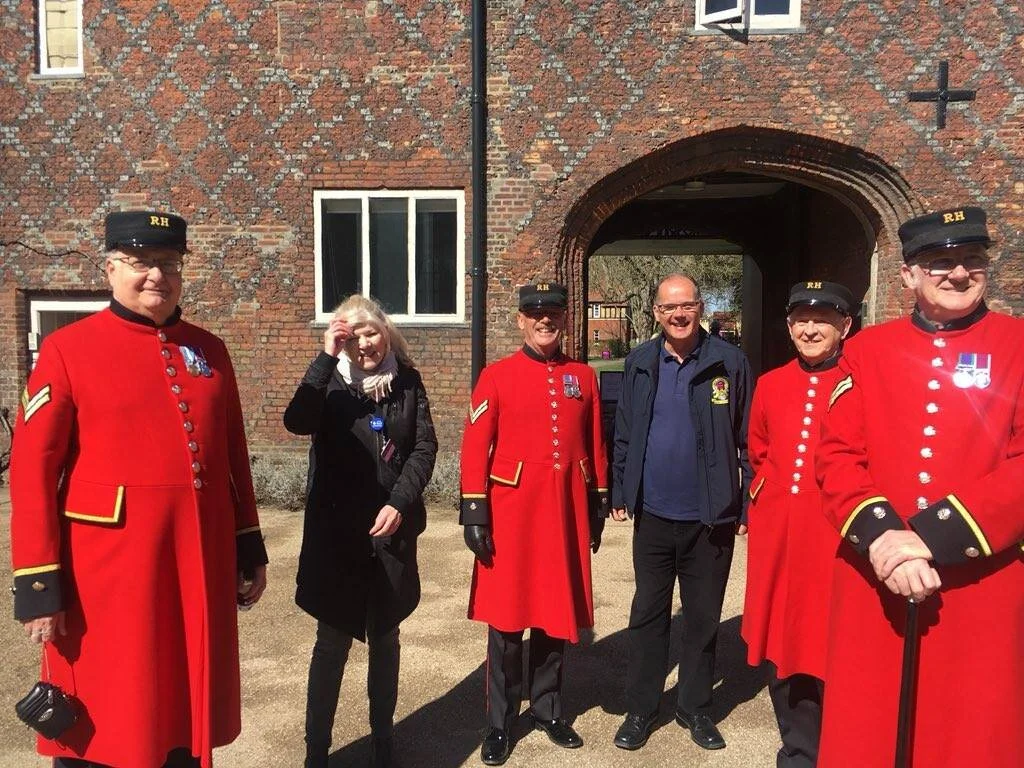
A tour with Veterans guided by Lee!