
Our final specimen of the month of 2020!
Every month we feature two blogs written by volunteers; one describes an object in the Palace and the other a feature from the Garden. There is no set format so you are free to experiment with research, prose, poetry or anything new! Thank you to Jamie Atwell, Garden and head gardener’s admin assistant volunteer for this fantastic piece.
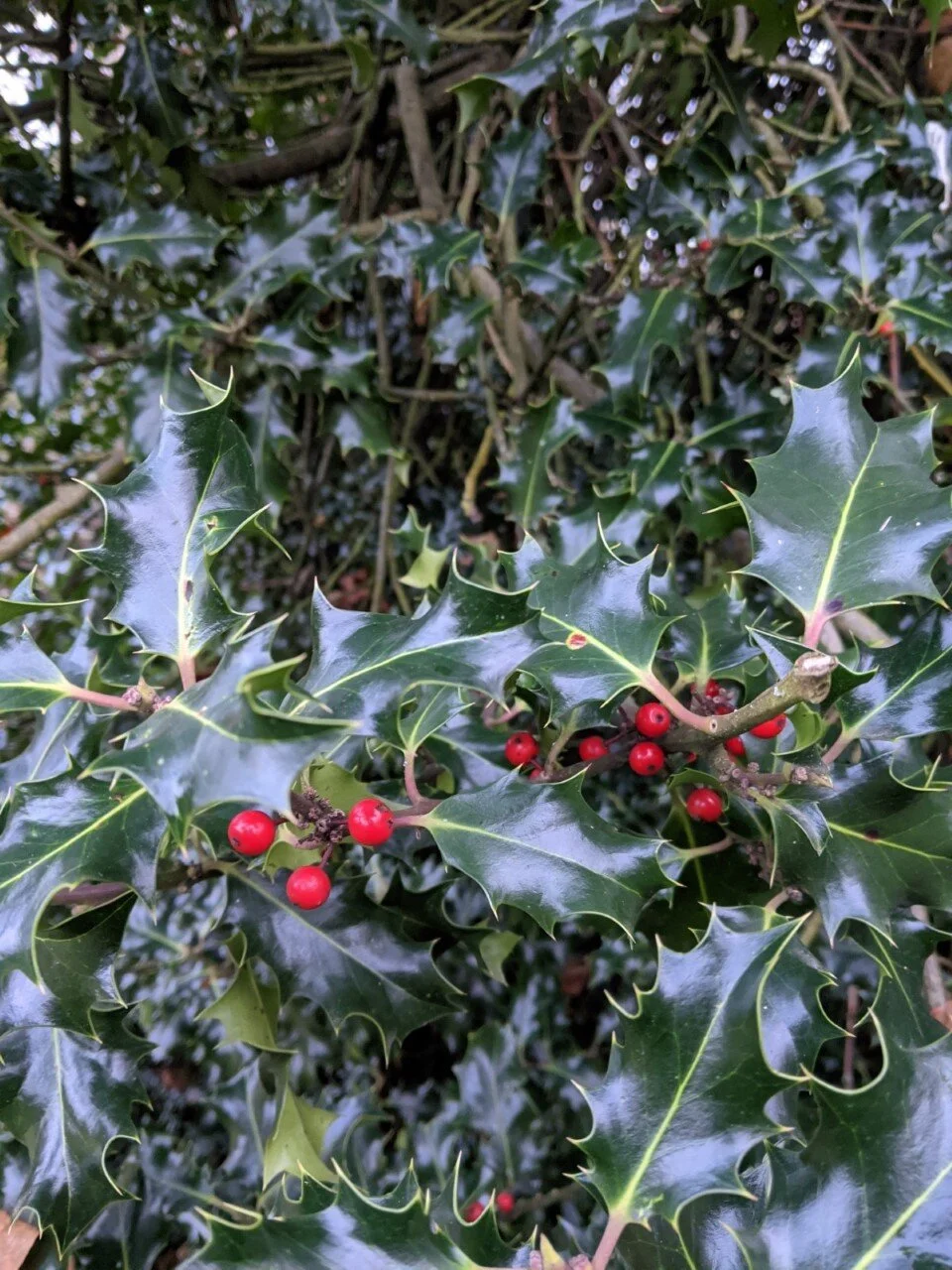
Holly in the Palace Gardens, taken by Rachel Bagnall-Bray this winter
Holly is not just for Christmas
What was Harry Potter’s wand made out of? What was the caffeinated beverage of choice for indigenous North Americans? Whose leaves act as miniature lightning conductors?
Like many of us, I’ve started to think about Christmas and particularly decorations. Exasperated by the tangle my Christmas tree lights had got into (how do they do that - they were neatly coiled up when I put them away last year ?) I began musing on another important Christmas feature - holly. It’s only at this time of year that I’ve ever given any thought to holly, or Ilex aquifolium, as the learned would call European holly. So is it just a Christmas adjunct or is there more to this plant than I thought? My researches revealed some interesting results.
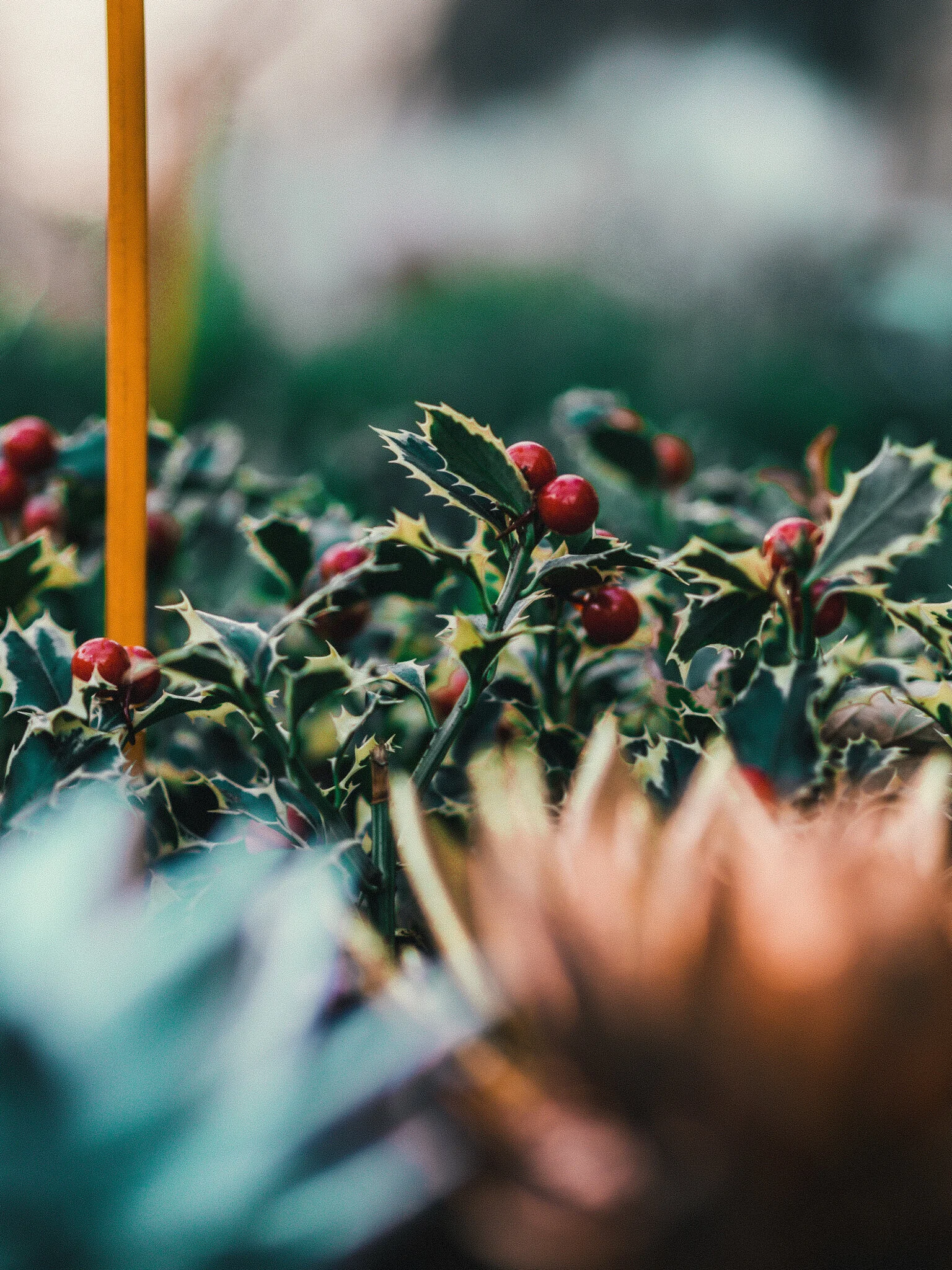
Holly is found all over the world, with more than 400 different varieties. We are used to our homegrown version with its red berries (or rather drupes to be pedantic) but other more exotic varieties have white or even yellow berries. George London, who was Head Gardener here at Fulham Palace in the late 17th / early 18th century went on to achieve fame as a nurseryman and garden designer. He incorporated holly into his designs for a number of gardens; Dyrham Park near Bath being a notable example.
In the past, when hedgerows were being trimmed, hollies were left uncut. Folklore says that it was to prevent witches running across the top, though the likelier answer is that they provided a line of sight for farmers during winter ploughing. The wood of the holly tree was widely used in marquetry. Their leaves were also prized as a nutritious winter feed for livestock, no really.
Oh, and my three questions above?
Harry Potter’s wand was made out of holly wood. A favourite drink of indigenous North Americans was Cassina which was brewed from a species of holly native to North America. It is a fact that the spines on holly leaves do act as miniature lightning conductors. Doubtless, that explains why, in olden times, holly trees were planted near to a house.
So this year, when I “deck the halls with boughs of holly” I’ll know that it’s not just a Christmas delight.