
Every month we feature two blogs written by volunteers, one describes an object in the Palace and one a plant from the Garden. It is a great way for us all to learn more about the Palace. If you would like to contribute there is no set format so please do send us your ideas!
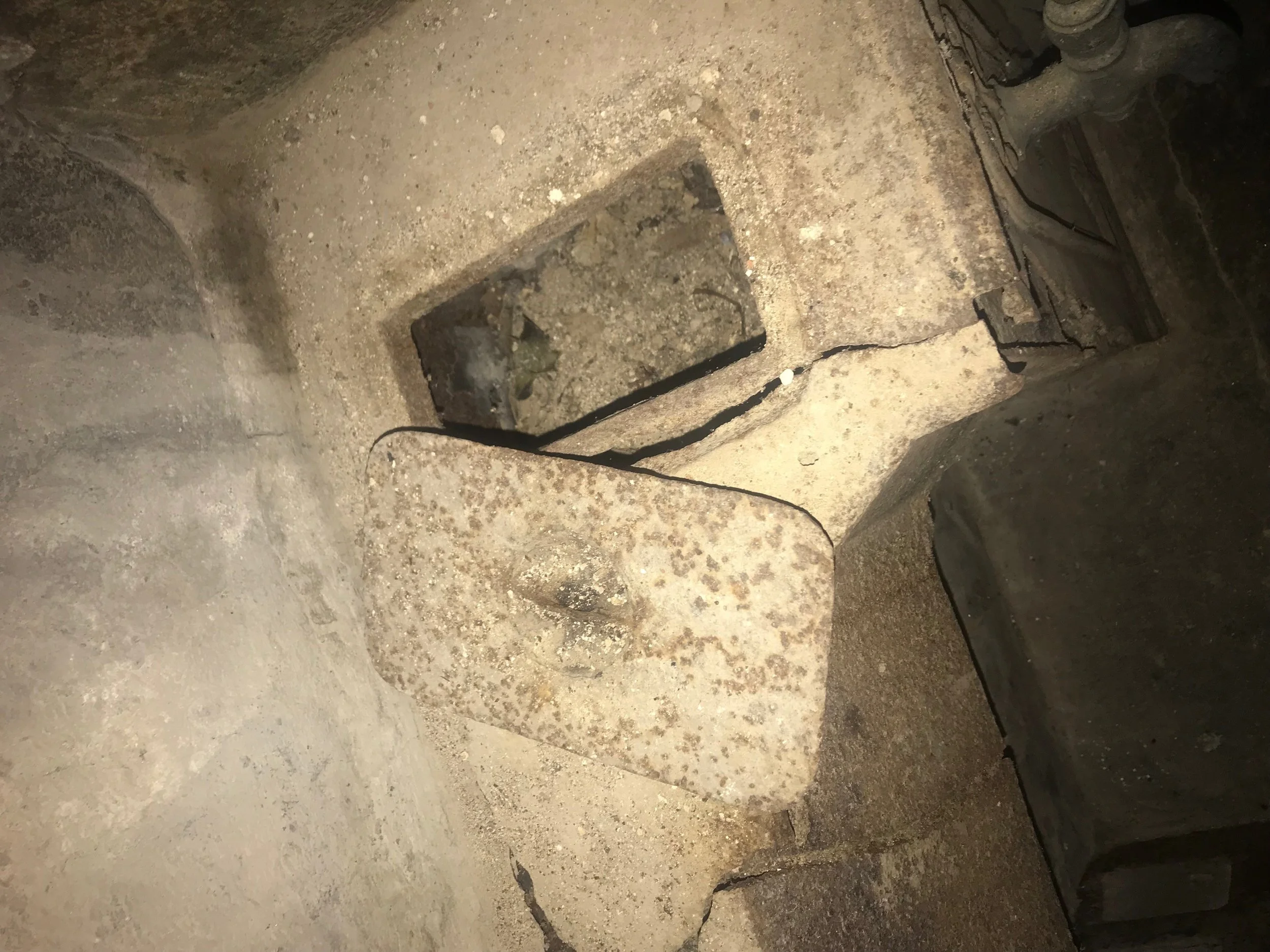
Opening on the range where the water would be poured in to fill up the hot water tank
In the middle of the Learning Centre, which was previously a Victorian stables, lies a historic feature with a mysterious history. Through some research, there seems to be lots to learn about it and many answers available for those seemingly impossible questions.
The stables were first built in 1869 as part of the farmhouses at Fulham Palace in order to shelter livestock. However, these first stables did not last long as they were unfortunately destroyed in a fire and rebuilt in 1873. Bishop Winnington-Ingram, who was Bishop of London from 1901-1939, had also bought a car which meant some of the stables were converted into garages during 1905. These changes in the stables were all in the Victorian era which would suggest that the antique range is Victorian.
From my initial investigations, the range in the stables is roughly 105cm in height and 82cm wide and it is created from cast iron (heavily rusted now). It includes a hot water tank with a tap which is why I think this is a range rather than a fireplace. However, ranges would be more likely to be found in the palace kitchens rather than in the stables. It was also created in the style found in Georgian kitchen ranges as it has elaborate carvings which contradicts the Victorian date of the stables. An explanation for this is perhaps that this range (which we originally saw to be a fireplace) was moved from elsewhere to the stables. As the palace has Georgian architecture, the range may have been originally placed there and relocated to the stables afterwards.
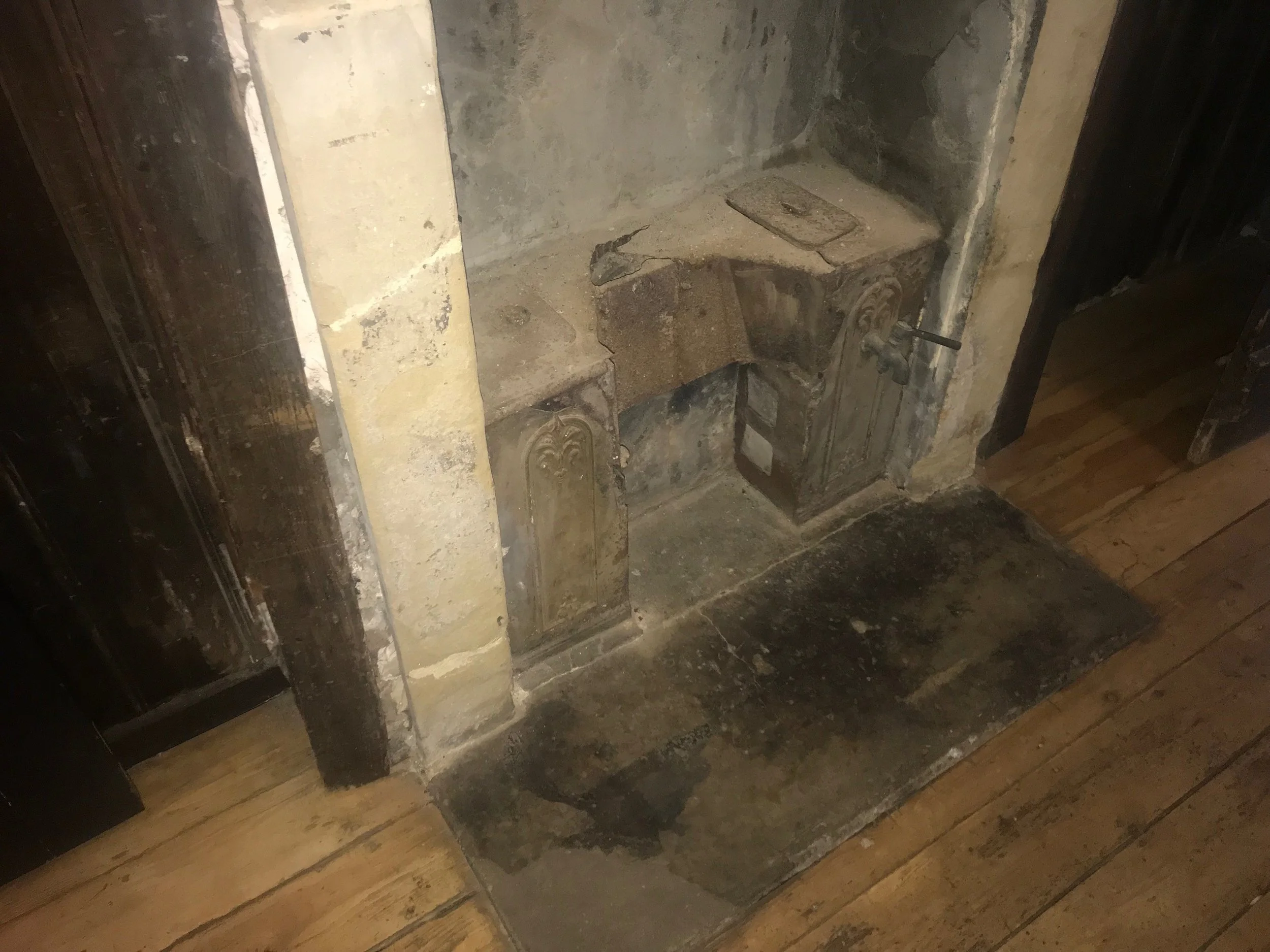
Here is a view of the range including the tap
A range is a stove with a built-in cooker top which replaced open fires during the 16th century. The range would have been useful in the stables as it would not only benefit the staff working in the stable but the animals living there would be living in warmth especially during the cold winter. One Victorian publication, Mrs. Beeton's Book of Household Management, by Isabella Beeton (1861), advises grooms and stable boys to keep the stable a constant temperature of 50-60 degrees during summer and winter so there was a need for a source of heat. Hot water could also have been used for laundry and domestic purposes, cleaning the carriages which were stored in the larger room and soaking the hay. In addition, staff would be able to cook and make hot drinks in the stables which would be advantageous especially in winter…!
Ladna Said, Learning Placement Student
Please send your ideas for Object / Specimen of the Month blogs to rachel.bagnall-bray@fulhampalace.org. If you would like some help, please let us know.