
Hi fellow Fulham Palace volunteers! I’m Lewis May, a third year Drama, Applied Theatre and Education student at the Royal Central School of Speech and Drama and I’m currently on placement all this term with the fantastic learning department at the palace. I haven’t met many of you yet, but I am certainly looking forward to getting to know everyone during my time on placement.
On Monday 14 October I took part in the Talking Heads tour of the palace, following collections and research officer Lisa Voden-Decker through the historic rooms to learn more about the previous residents of Fulham Palace through their portraits. Lisa’s tour was a free, public tour, bookable through the website or through the front of house team. The tour began in the Great Hall, and then through to Bishop Sherlock’s dining room, the Porteus library and even the cafe!
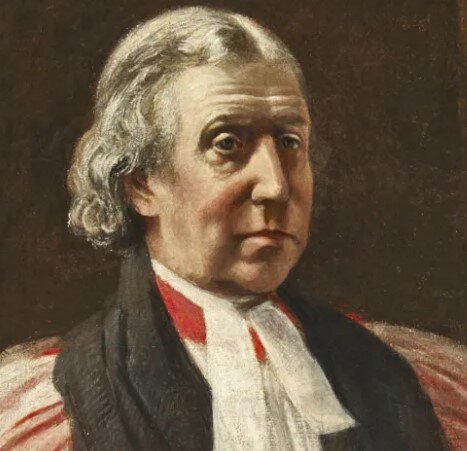
Bishop Tait’s portrait at Fulham Palace
The tour served a triple-fold purpose as an introduction to: the history of Fulham Palace, portraiture and the lives of former Palace inhabitants whose stories are rarely heard. Obviously there are too many portraits on display for Lisa to have given us an in-depth analysis of each, but the ones she did revealed much complexity and even tragedy. The greatest example for me was the portrait of Bishop Tait (1811-1882), who was made Bishop of London in 1856, the same year he lost five of his children to scarlet fever. Tait’s portrait hangs in Bishop Sherlock’s dining room and Lisa drew the attention of the tour-goers to the intricacy of the art. Firstly, the way the light hits Tait in a particularly striking way that makes his image seem more intensely dramatic than many others in the Palace collection, and secondly, the psychological details painted minutely into the eyes of the sitter that perhaps indicate the tragedy in his personal life.
As well as the history implicit in the art, Lisa used the image of Bishop Tait to illustrate (I had to make an art pun somewhere…) the flaws of the current collection. The case in point being that despite the eminence of Catherine Tait and her importance to Fulham Palace as the organiser of the first of the annual garden parties, there are currently no paintings of her or painting including her in the collection. The same is true of many other women involved in the palace’s history, such as the suffragist Louise Creighton.
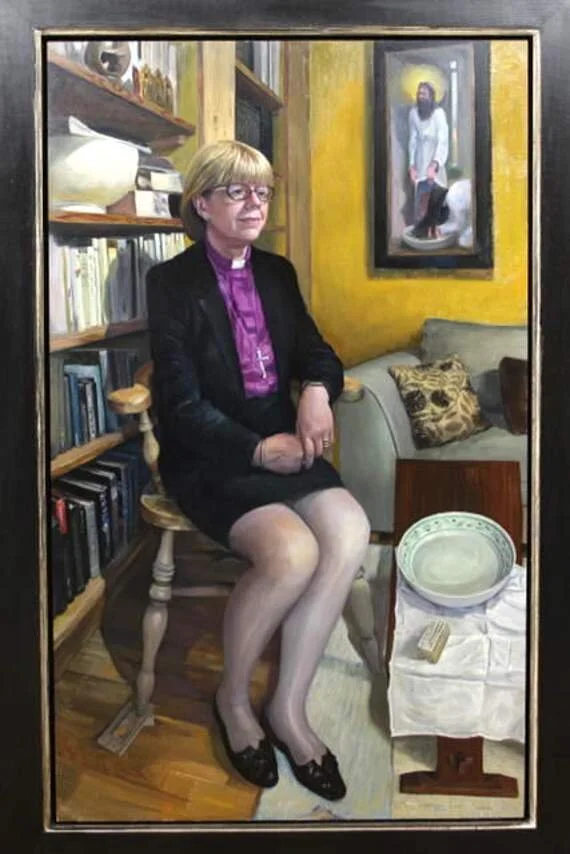
Dame Sarah Mullally’s portrait in the Palace cafe
A cheerier but no less engaging work of art, which really captured the interest of the tour group, was the portrait of Dame Sarah Mullally who is the current Bishop of London and first female to hold the post. Mullally’s likeness hangs above the sofa in the cafe (by the fridge) and is highly symbolic. She had insisted, for example, on the inclusion of a reference to Christ washing feet to symbolise her belief that the position of bishop is one of service. The portrait sparked lively conversation about what other elements might refer to within the context of Mullally’s life and faith as well as the details given to us by Lisa.
All in all, the fascinating tour deeply engaged me; educated me; and inspired me to learn much more about Fulham Palace and art. Turns out it’s not all the same as it ever was (a tour titled Talking Heads can’t go without a David Byrne reference. Sorry.).