
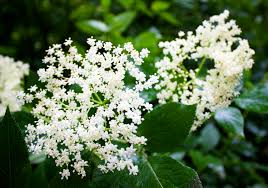
Elderflowers
You will need to be quick with the cordial recipe as the Elderflowers are at their peak now and will soon be over. They are abundant and you need surprisingly few heads to capture the delicious Elderflower scent and taste.
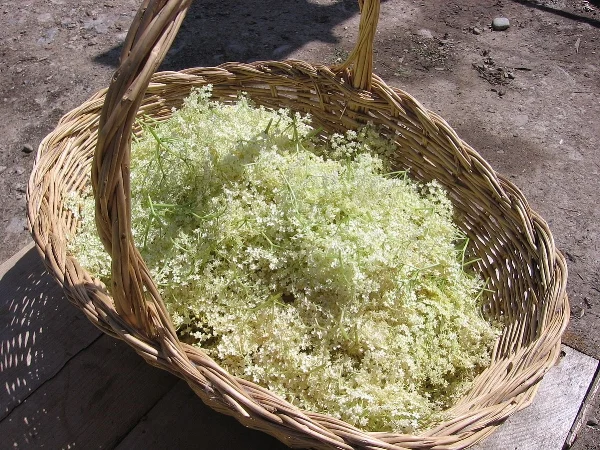
Homemade elderflower cordial
Mix with sparkling water to create elderflower pressé, or add to wine, Prosecco or Champagne for a delicious summer party drink
- 2½ kg white sugar, either granulated or caster
- 2 unwaxed lemons
- 20 fresh elderflower heads, stalks trimmed
- 85g citric acid (from chemists)
Put the sugar and 1.5 litres/2¾ pints water into the largest saucepan you have. Gently heat, without boiling, until the sugar has dissolved. Give it a stir every now and again. Pare the zest from the lemons using a potato peeler, then slice the lemons into rounds.
Once the sugar has dissolved, bring the pan of syrup to the boil, then turn off the heat. Fill a washing up bowl with cold water. Give the flowers a gentle swish around to loosen any dirt or bugs. Lift flowers out, gently shake and transfer to the syrup along with the lemons, zest and citric acid, then stir well. Cover the pan and leave to infuse for 24 hrs.
Line a colander with a clean tea towel, then sit it over a large bowl or pan. Ladle in the syrup – let it drip slowly through. Discard the bits left in the towel. Use a funnel and a ladle to fill sterilised bottles (run glass bottles through the dishwasher, or wash well with soapy water. Rinse, then leave to dry in a low oven). The cordial is ready to drink straight away and will keep in the fridge for up to 6 weeks. Or freeze it in plastic containers or ice cube trays and defrost as needed.
Recipe from BBC Good Food
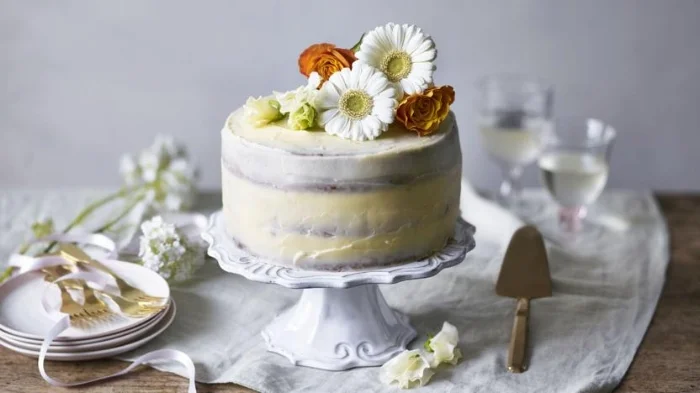
Lemon and Elderflower Cake
Made famous by that recent wedding, this is a lovely, delicate combination of flavours. This recipe can be made using the cordial recipe above or a good quality shop-bought cordial.
For the cake
- 450g/1lb unsalted butter, at room temperature
- 450g/1lb caster sugar
- pinch salt
- 4 unwaxed lemons, zest only
- 8 large free-range eggs
- 300g/10½oz self-raising flour, sifted
- 20g/¾oz ground almonds
- 4 tbsp elderflower cordial
- fresh flowers, to decorate
- fresh fruit, to decorate
For the drizzle
- 100ml/3½fl oz elderflower cordial
- 1 unwaxed lemon juice only
For the buttercream
- 250g/9oz unsalted butter at room temperature
- 500g/1lb 2oz icing sugar, sifted
- 75ml/2½fl oz double cream
- 4 tbsp elderflower cordial
1. Preheat the oven to 200C/180C Fan/Gas 6. Grease and base-line three 20cm/8in loose-bottomed round cake tins with baking paper.
2. Put the butter, sugar, salt and lemon zest into the bowl of a stand mixer fitted with a paddle attachment and beat until pale and fluffy. Gradually beat in the eggs, one at a time, adding a spoonful of flour occasionally to prevent the mixture from splitting.
3. Fold in the remaining flour and the ground almonds, then fold in the elderflower cordial. Divide the mixture equally between the three tins and bake for 20–25 minutes until risen and golden. To test that the cakes are cooked, insert a cocktail stick or skewer into the centre; if it comes out clean the cakes are ready.
4. Transfer the tins to a wire rack and use a cocktail stick or small skewer to prick holes all over the surface of the sponges. Mix together the elderflower cordial and lemon juice and spoon over the sponges. Leave to soak and cool in the tins for 30 minutes, then turn out and leave to cool completely.
5. Meanwhile, to make the buttercream, beat the butter in a stand mixer fitted with a paddle attachment (or use an electric hand whisk) until soft. Gradually beat in the icing sugar until pale and fluffy, then beat in the cream and elderflower cordial. (Take care not to over-beat the mixture as it can split.)
6. Put a spoonful of buttercream onto a cake stand or serving plate, then lay one of the sponges on top (if they’ve domed slightly during baking, trim with a bread knife to flatten the tops). Spread the sponge with a little of the buttercream then lay a second sponge on top. Repeat the layering process then spoon the remaining buttercream on top of the cake. Use a palette knife to spread the buttercream over the tops and sides of the cake in an even layer. Finally turn the cake whilst holding a palette knife down the side to scrape away some of the buttercream so the sponge is visible underneath. Decorate with fruit and fresh flowers and serve.
Recipe from BBC