
Preserving the Flavour
Although it can be busy in the garden in February getting ready for the year ahead, there is not much in the way of produce so this month the recipes are about capturing some of the flavoursome fruits, vegetables and spices available in the supermarket. Bold flavours to spice up winter eating.
February is the month when Seville oranges are in season and if you have never tried making Marmalade it's well worth it and pretty straightforward, although there is a lot of chopping. I have just used this recipe, I only made half the quantity and that made five pots, which is enough for the average Marmalade eater.
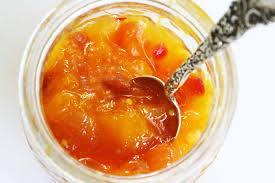
Mango Salsa Chutney
2 red peppers
500g red onions
3 tbsp olive oil
sea salt and freshly cracked black pepper
2 small garlic cloves
3 bird's-eye chillies
2 limes
30g fresh ginger
1/4 teaspoon ground cinnamon
1/2 tsp chilli flakes
250g light brown sugar
4 large mangoes
350 ml cider vinegar
(3-4 x 300ml jars)
Preheat the oven to 120C/100C (fan)/ gas 1/2
- Halve the red peppers, remove their stalks and seeds, then place them a baking tray and cook in the oven for at least an hour. Once soft and browned, remove from the oven, peel off their skins then finely slice and dice them.
- Peel and dice the onions. Heat the oil in a heavy-bottomed pan, then add the onions and a little salt and pepper and cook for about 10 minutes, until soft and transparent.
- Peel the garlic, deseed the chillies and finely chop them both.
- Zest the limes, halve them. Peel and grate the ginger. Add the garlic, chillies, lime zest and halves, ginger, cinnamon and chilli flakes to the onions and cook for another 10 minutes.
- Add the sugar to the pan and caramelise for 5 minutes.
- Peel stone and cube the mangoes. Add to the pan with the vinegar and gently bering to the boil.
- Simmer, stirring continuously for 20-30 minutes, until the chutney starts to thicken, add the diced red pepper and cook for a further 10 minutes.
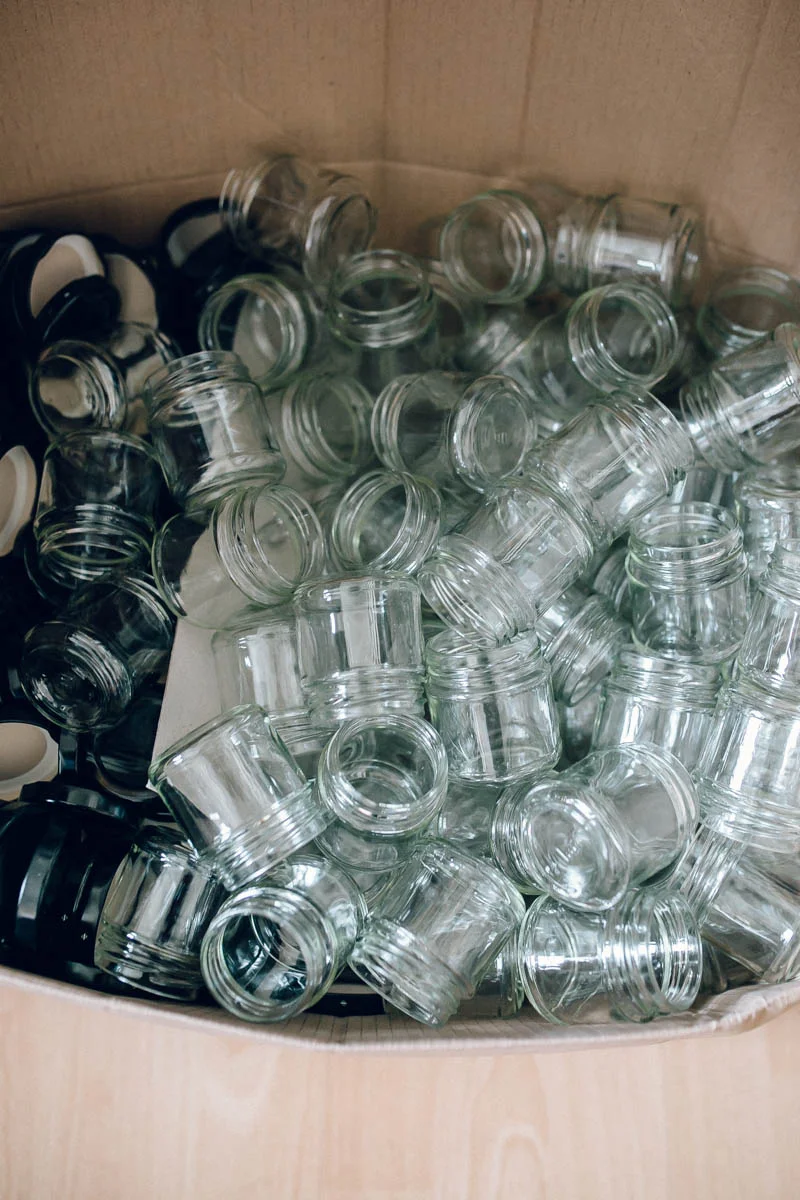
- Remove from the heat and take out the lime halves. Ladle into warm, dry sterilised jars and seal.
You can eat this one the next day but it will mature nicely for at least 4 weeks.
(Keeps for up to 6-8 months. Once opened refrigerate and use within 4 months.)
Za'atar Pickled Cauliflower
Pickling is back in fashion and lightly picked vegetables make an interesting addition to salads, a great addition to couscous or quinoa or eat with a selection of other dips and pickles with cold meats. Za'atar is a middle eastern spice blend that is now widely available. (This recipe makes 6 jars so could be halved to make 3 jars.)
600g cauliflower
6 pickling onions or shallots
600 ml white wine vinegar
300 ml water
1 tsp pink peppercorns
1 tsp cumin seeds
1 1/2 tbsp sea salt
1 1/2 tsp granulated sugar
3 tsp za'atar
makes 6-7 300ml jars
- Trim the cauliflower and break into florets. Peel and finely slice the onions or shallots.
- In a medium, stainless steep pan, combine the vinegar, water, peppercorns, cumin seeds, salt and sugar, bring gently to a simmer, dissolving the salt and sugar far about 5 minutes. Remove from the heat and allow to cool completely.
- Put 3/4 tsp of za'atar in the bottom of each warm, dry sterilised jar then pack with the florets and sliced onions until they are 1cm from the rim.
- Pour in the brine, distributing the peppercorns and cumin seeds evenly and leave 5 mm between the fill level and the top of the jar.
- Tap the jars gently on a hard surface to remove any air bubbles and top up with more liquid if the level has dropped more then 5mm below the rim. Seal.
- Keep sealed in a cool dark place for at least 4 weeks to allow the florets to pickle, turning the jars intermittently to distribute the spices throughout.
Keeps for up to a year. Eat within 4 weeks once opened and keep refrigerated.
Both these recipes are from The Modern Preserver: Chutneys, Pickles, Jams and More by Kylee Newton, Vintage Publishing
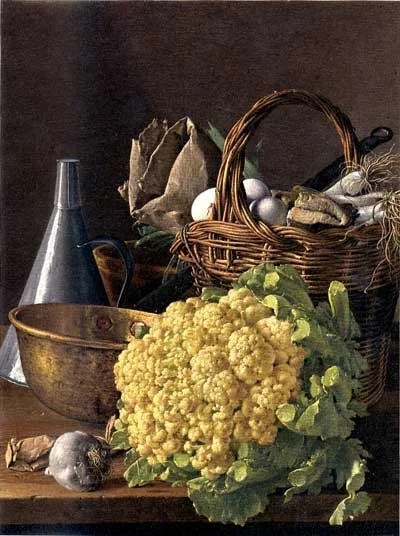
Luis Meléndez, 1715-1780, Spanish, Sill Life with Cauliflower