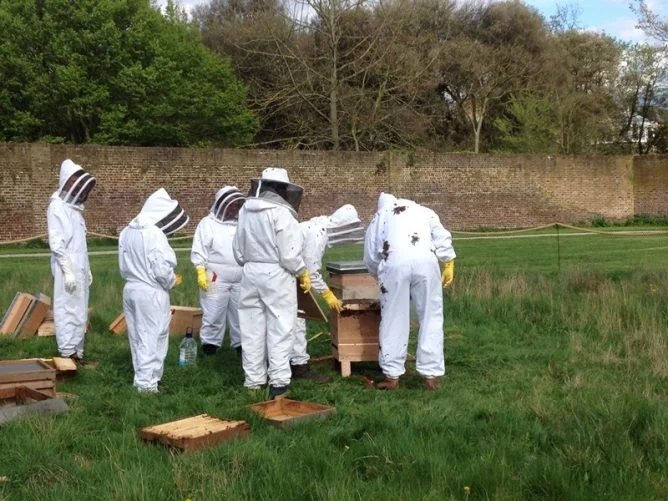
Fulham Palace Apiarists at work.
Honey
With the best will in the world there is not much in the garden in January to get the heart racing or the tastebuds tingling, so this month the recipes will feature honey. The Fulham Palace bees excelled themselves in 2017, producing record quantities of delicious honey. All is quiet in the hives at the moment but we can enjoy the harvest. Their is an interesting blog written by Sarah Nicholl-Carn on the main Fulham Palace website describing the work of the volunteer beekeepers, read it here.
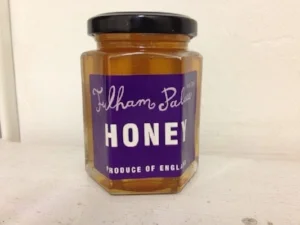
The Fulham Palace Honey is a bit too special to cook with, best enjoyed on a piece of toast!
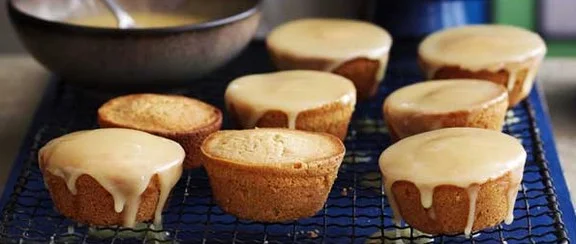
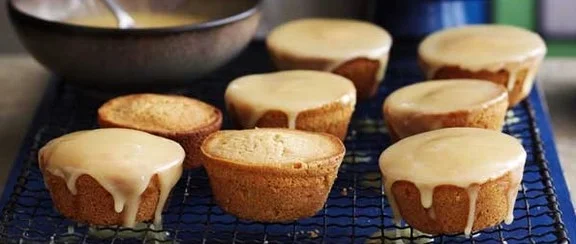
Sticky Honey Cakes
This recipe for sticky honey cakes is really easy to make and they look great. The combination of honey, lemon and ginger works really well together and they are surprisingly low in calories.
- 125g salted butter, very soft
- 75g light soft brown sugar
- 140g runny honey
- 2 eggs, beaten
- 225g self-raising flour, sifted
- 1 tbsp lemon juice
- 1 tsp ground ginger
HONEY GLAZE
- 100g salted butter
- 70g runny honey
- 125g icing sugar, sifted
- 1. Use 10g butter to grease either 2 × 12-mould bun tins or if you want larger cakes, 1 × 12 hole cupcake tin. Heat the oven to 180c/160c fan/gas 4.
2. Beat the butter and sugar together for 2 minutes, until light. Add the honey and beat for a couple more minutes.
3. Beat in the eggs, one by one, then fold in the flour and ginger, finishing with the lemon juice. Divide between the buttered moulds and bake for 20 minutes, until risen, golden and springy. Cool on wire racks for 15 minutes.
4. To make the glaze, melt the butter in a small pan, remove from the heat and stir in the honey and icing sugar using a balloon whisk.
5. Dip the tops of the honey cakes into the warm glaze or drizzle over thickly with a spoon. If the glaze gets too solid, warm it through very gently to melt. Put the glazed cakes back on the wire racks to set, iced-sides up.
This recipe is from Olive Magazine.
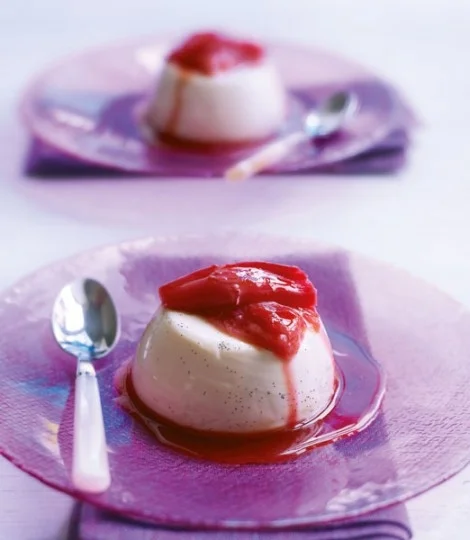
Honey pannacotta with ginger-poached rhubarb
This is an elegant, light-tasting dessert that is quite easy to make.
- 6 fine gelatine leaves
- 600ml double cream
- 200ml semi-skimmed milk
- 75g orange-blossom honey
- 2 vanilla pods, split lengthways and seeds scraped out
For the poached rhubarb
- Juice of 2 blood oranges (about 200ml) or ordinary oranges
- 75g caster sugar
- 1 piece stem ginger, thinly sliced, plus 1 tbsp syrup from the jar (optional)
- 600g rhubarb, trimmed and cut into 3cm chunks
- Soak the gelatine leaves in a bowl of cold water for 5 minutes until soft.
- Put the cream, milk, honey, vanilla pod and seeds into a pan and bring to the boil, then remove from the heat and discard the vanilla pod.
- Squeeze out the gelatine leaves, stir into the cream mixture until dissolved, then pour into a jug.
- Rinse 6 x 150ml metal dariole moulds with cold water but don’t dry them. Divide the mixture among them, leave to cool, then chill for 3-4 hours or overnight until set.
- Make the poached rhubarb. Put the orange juice, sugar, ginger and syrup in a wide, shallow pan. Simmer, stirring, for 10 minutes until syrupy.
- Stir in the rhubarb, then reduce the heat to low. Cover with a lid and poach for about 5 minutes until the rhubarb is tender. Remove from the heat and leave to cool a little.
- To serve, dip the base of the moulds in hot water for 10 seconds, loosen around the inside edge with a small palette knife, then turn out onto plates. Top each pannacotta with a little of the rhubarb and serve.
This recipe is from Delicious Magazine.