
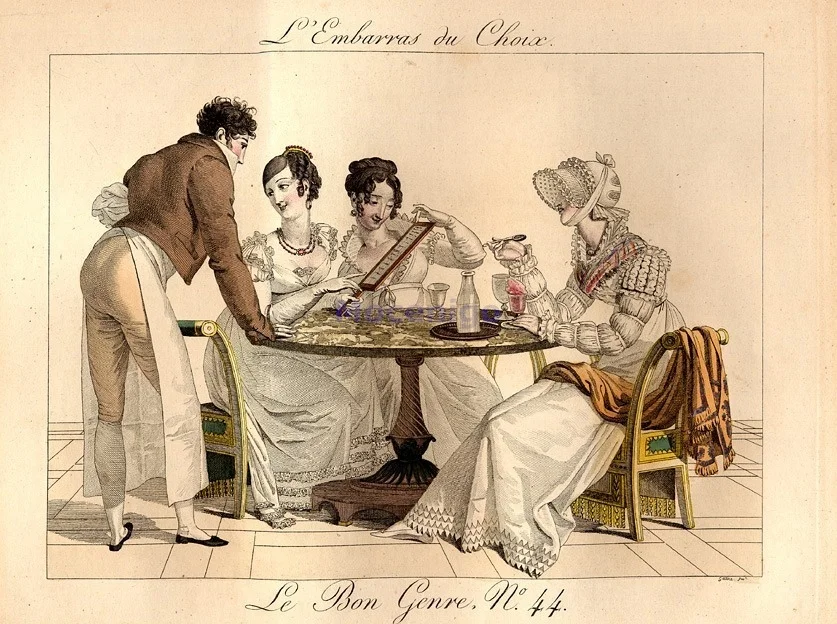
Did you know that Fulham Palace was once the revered host of lavish garden parties, famously serving strawberry ice cream? Our very own Miranda Poliakoff leads us in to the historical social affair…
Catharine Tait started the garden parties around 1860 and by the late 19th Century there were 4000 guests. There are references to the Fulham Palace garden parties dating back to circa 1885, revealing the abundance of lemonade, cakes and ices served at the Bishop of London’s. In particular, there is a reference to strawberry ice cream as far back as Bishop Jackson (1869-85). Even Vanity Fair mentions the “ices” at the garden parties in an 1886 issue. In the biography of Edward Marsh by Christopher Hassall, the Victorian is said to have annually frequented the garden parties: “There Eddie first discovered strawberry ices, which he thought a special invention of the Bishop of London, and was much put out when later found them being sold…”
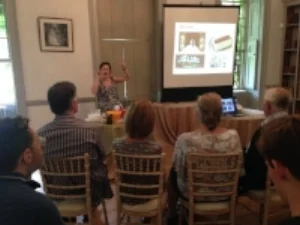
Annie Gray, food historian, talking at the Palace, http://www.anniegray.co.uk/
Were the cream and the strawberries locally sourced?
Of course they had the cream on hand with the cows in the home farm (although they might have had to buy more in) and the 1869 inventory refers to 288 strawberry plants so they had the strawberries on hand as well.
The “ice-house”, where the strawberries grew, is visible on the 1906 map. Later marked by a circle of paving stones, it is not known if this is still there or whether it has overgrown.
As a means to measure what it would cost to produce so many quarts of ice cream, Miranda found that one article suggested quantities for a party of 100 with 10 quarts of ices at 5s to add up to £2 or if home-made, 2s per quart.
When was ice cream served?
Many references indicate “ices” being served at the garden parties in June or July. However, Bishop Winnington-Ingram had it served at his Christmas parties for all the teenage children of the clergy and their mothers. There were usually around 350-400 guests. The Christmas parties took place on Holy Innocents Day (28 December) each year. Reminiscences of these events by different people include references to the unlimited “ices” served all evening.
In Carpenter’s biography of W-I, he includes the following overheard in a Vicarage:
“Pig!”
“Pig! I like that. Who ate seven ices at the Bishop of London’s Party?”
A lavish depiction of an 1800s tea party
-Content by Miranda Poliakoff, edited by Ahou